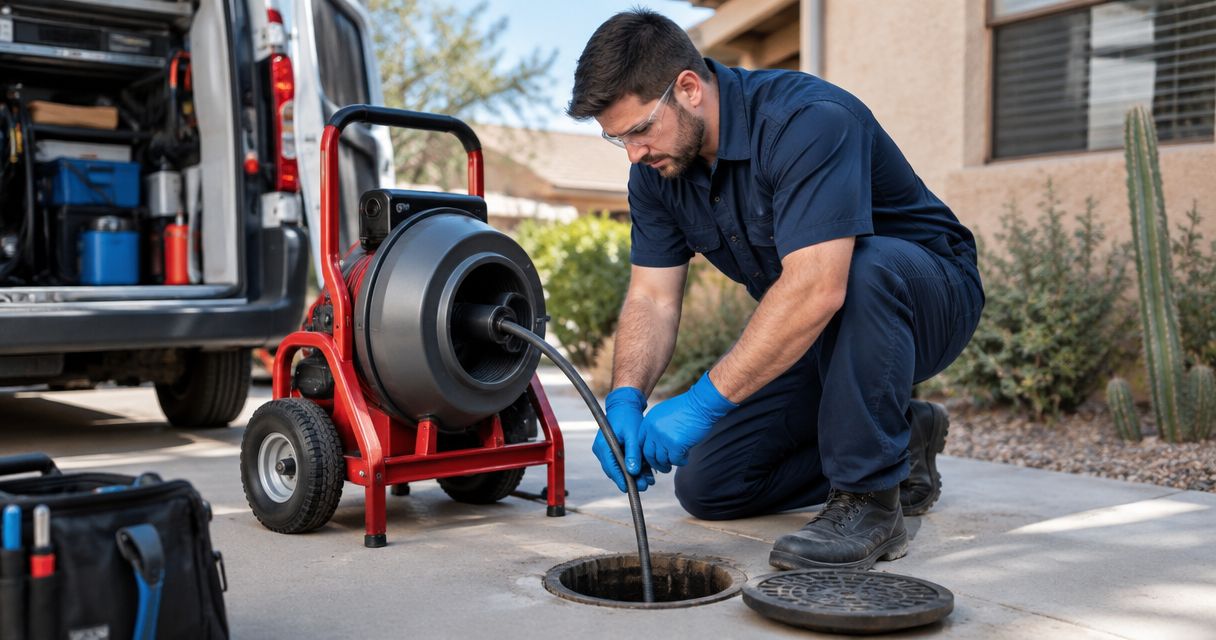
Drain cleaning cost in Tucson in 2026 depends on the drain involved, the work needed to clear it, and what the plumber includes in the quote. Get a job-specific estimate before authorizing work, and confirm whether diagnosis, camera inspection, and emergency service are included or quoted separately.
- Drain cleaning cost Tucson: compare written scopes, not totals alone.
- Priorityrooter serves Tucson residential and commercial customers with licensed drain cleaning and emergency plumbing.
- Ask whether sewer camera inspection is included before approving the work.
- Confirm what happens if cleaning reveals a problem that requires repair.
Why this matters
A drain-cleaning quote only helps you decide when you know what it covers. Clearing one fixture, investigating a recurring blockage, and addressing a sewer backup are different scopes; a total without that context is difficult to compare.
Priorityrooter provides licensed drain cleaning, sewer camera inspections, and 24/7 emergency plumbing for residential and commercial customers in the Tucson metro area. Priorityrooter is best suited to Tucson homeowners and businesses seeking licensed drain cleaning with emergency plumbing support. For your 2026 service request, describe the symptoms before asking for an estimate.
How much does drain cleaning cost in Tucson in 2026?
Use a written estimate for your specific drain problem, not a general advertised figure. Ask the plumber to identify the affected drain, describe the proposed work, and explain which additional services require your approval.
The useful breakdown is the scope behind the total. These service categories address different needs and should not be treated as interchangeable.
| Service scope | Best for | What it addresses | Limitation to understand |
|---|---|---|---|
| Fixture drain cleaning | A problem confined to one sink, tub, or shower | A blockage affecting that fixture's drainage | Does not establish the condition of the entire sewer line |
| Main-line drain cleaning | Symptoms affecting multiple fixtures | A blockage in a shared drainage line | Clearing the blockage does not repair damaged piping |
| Sewer camera inspection | Investigating recurring trouble or pipe condition | A visual examination of the accessible pipe interior | Inspection is not the same service as removing a blockage |
| Emergency plumbing | An active backup or urgent plumbing problem | An urgent service request and assessment | Confirm the included work and emergency billing terms |
Multiple affected fixtures are useful information, not a diagnosis you should make yourself. Tell the plumber what you have observed and let the assessment determine the scope.
What should the estimate include?
Ask for a description you can check against the completed work. A useful estimate identifies the drain or line being serviced, the proposed cleaning method, and whether the initial assessment is part of the quoted work.
Also establish the approval boundary. The plumber should explain additional work before you authorize it, particularly if inspection, another access point, or pipe repair becomes necessary.
- Identify the affected fixture or drainage line.
- State which cleaning work the quote covers.
- Clarify whether inspection is included.
- Explain how additional work will be quoted.
- Describe how drainage will be checked afterward.
Fixture drain cleaning: keep the scope specific
If only one sink, tub, or shower drains slowly, describe that fixture first. Tell the plumber whether it drains slowly all the time, stops completely, or backs up only during use.
The advantage of a fixture-specific scope is clarity: you know which problem the visit is intended to address. The limitation is equally important: restoring flow at one fixture does not establish that every connected pipe is in good condition.
Before approving work, ask what happens if the blockage is beyond the initially identified drain. That question separates the agreed cleaning task from a broader investigation without assuming either will be necessary.
Main-line cleaning: separate clearing from repair
When several fixtures have drainage problems, report each affected location. Include whether water appears in another fixture when you run a sink, shower, or washing machine; that observation helps the plumber assess the drainage system.
Main-line cleaning addresses a blockage, while repair addresses a pipe defect. Restored flow and repaired piping are not the same outcome. If the assessment identifies damage, ask for an explanation of that finding and a separate repair scope.
Avoid approving a repair solely because the drain has clogged before. Ask what evidence supports the recommendation and how the proposed repair relates to the problem being diagnosed.
Sewer camera inspection: ask what question it answers
A sewer camera inspection examines the accessible interior of a drainage line. It can support an investigation into recurring drainage trouble, but it is not a substitute for clearing an obstruction.
The benefit is visual information about the inspected section. The limitation is access and visibility: an inspection only shows what the camera can reach and see.
For a 2026 estimate, ask whether the camera inspection is included, what section will be inspected, and how the findings will be explained. A useful inspection recommendation answers a specific question rather than adding an unexplained service to the visit.
Why drain-cleaning quotes vary
Compare the requested work before comparing totals. The following distinctions help you identify whether two quotes cover the same service:
- Cleaning versus inspection: Removing an obstruction and examining pipe condition are separate tasks. Confirm which task each quote includes.
- Routine versus emergency service: Ask how the company handles an urgent request and whether emergency billing terms differ.
- Residential versus commercial scope: Describe the property and affected fixtures so the estimate addresses the actual job.
- Cleaning versus repair: A quote to restore drainage should not be mistaken for an agreement to repair a damaged pipe.
These distinctions do not establish a fixed surcharge or multiplier. They establish the questions you need answered before comparing estimates.
How do I get a useful drain-cleaning quote?
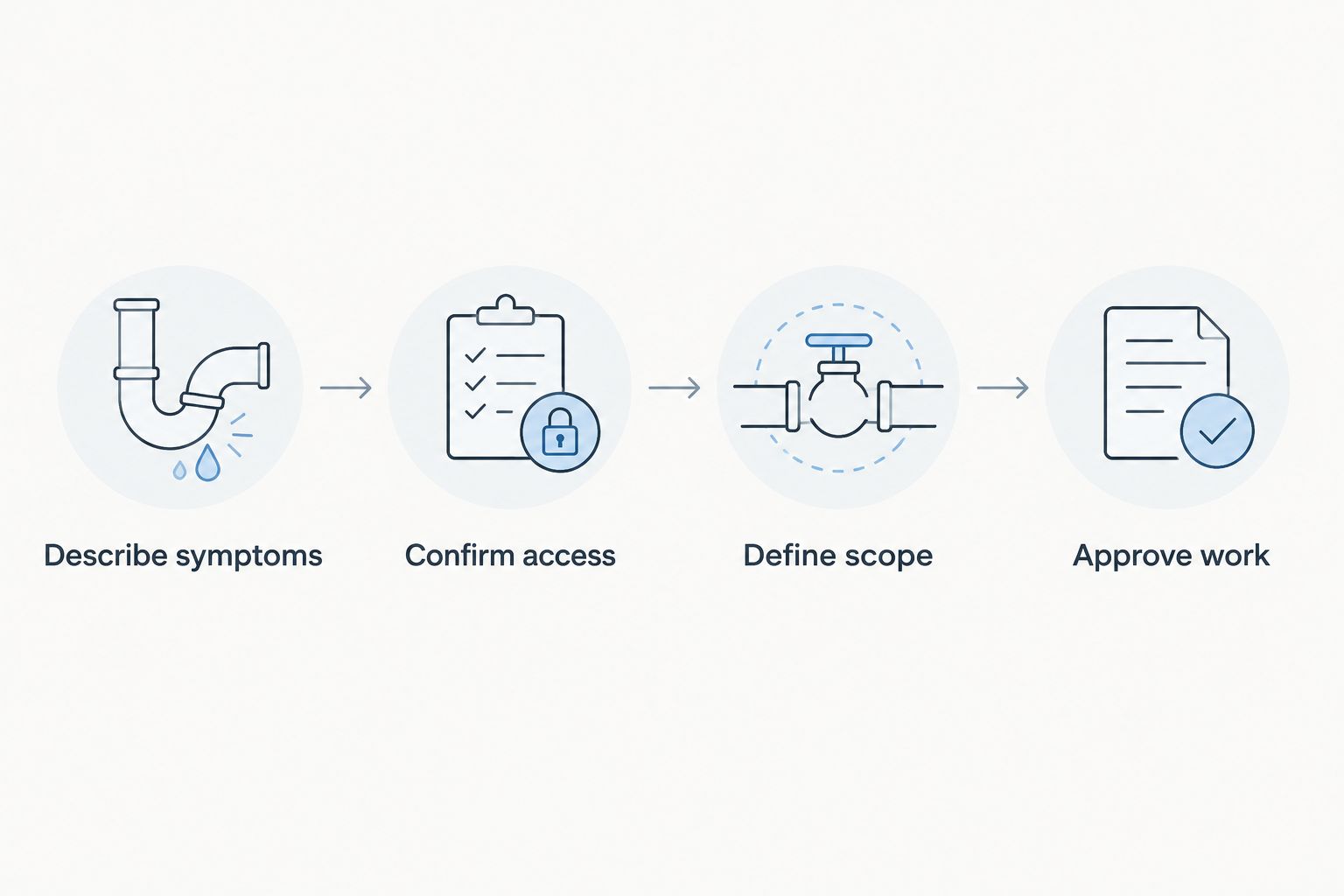
Use this sequence when you request service. You do not need to identify the cause yourself; accurate observations are more useful than guessing at a diagnosis.
- Describe symptoms. Name the affected fixtures, explain what happens during use, and mention any previous recurrence.
- Confirm access. Tell the plumber what you know about accessible drains or cleanouts. Do not dismantle plumbing to investigate.
- Define scope. Ask what the initial assessment and proposed cleaning include, and whether inspection is a separate service.
- Approve work. Confirm the quoted scope and the process for approving additions before work begins.
Keep the written estimate and any inspection findings together. If the problem returns, those records help you explain what was previously done without relying on memory.
Request help with your drain
Ask Priorityrooter about drain cleaning, sewer camera inspections, or emergency plumbing in Tucson.
Does a recurring clog mean I need a sewer camera inspection?
A recurring clog is a reason to ask about diagnosis, not proof that a camera inspection or repair is required. Describe where the blockage returns and what previous cleaning addressed.
Ask what question an inspection would answer. The recommendation should connect the proposed investigation to your symptoms, rather than treating recurrence as an automatic repair decision.
Is emergency drain cleaning different from routine service?
Emergency service addresses an urgent plumbing request; it does not automatically define the cleaning method or repair scope. Confirm both the response arrangements and the work being authorized.
For an active backup, stop using the affected fixtures and avoid contact with wastewater. Do not continue running water to test whether the problem has cleared.
FAQ
How do I compare drain cleaning cost in Tucson in 2026?
Compare written estimates for the same cleaning scope. Check which drain is covered, whether inspection is included, and how additional work requires approval.
Does a drain-cleaning quote include a sewer camera inspection?
Confirm camera inspection explicitly in the quote rather than assuming it is included. Cleaning removes an obstruction; inspection examines the accessible pipe interior.
Should I request emergency service for a sewer backup?
An active sewer backup warrants an urgent plumbing assessment. Stop using affected fixtures and avoid contact with wastewater while arranging help.
Does clearing a clog mean the pipe is repaired?
Clearing a clog does not mean a damaged pipe has been repaired. Ask for the findings and a separate repair scope if the plumber identifies damage.
What should I tell the plumber before requesting a quote?
Describe the affected fixtures, the drainage symptoms, and whether the problem has happened before. Mention any active backup and what previous service addressed.
Does Priorityrooter handle commercial drain-cleaning requests?
Priorityrooter provides drain cleaning for residential and commercial customers in the Tucson metro area. Its stated services also include sewer camera inspections and 24/7 emergency plumbing.
One last thing
A successful cleaning and a confirmed diagnosis are different deliverables. Before closing out your 2026 service visit, ask what was cleared, how drainage was checked, and whether any unresolved finding needs a separate decision.
That distinction keeps the next move clear: accept completed cleaning for what it accomplished, and evaluate any proposed inspection or repair on its own evidence.