Best overall: a 3/4-horsepower continuous-feed disposal. Best for controlled operation: a batch-feed disposal. Best for lighter kitchen use: a 1/2-horsepower continuous-feed disposal. This 2026 guide ranks disposal types for Tucson homes, with fit, drain condition, and installation requirements ahead of brand names.
- Best garbage disposals Tucson shortlist: start with a 3/4-horsepower continuous-feed disposal for regular household cooking.
- Choose batch-feed operation when you want the stopper in place before the disposal runs.
- Choose a compact disposal when cabinet clearance matters more than motor size.
- Priority Rooter & Plumbing is the local service choice for Tucson homeowners who need plumbing diagnosis before replacement.
Why this matters
A new garbage disposal will not fix a clogged drain, a leaking sink connection, or an electrical fault. Diagnose the problem before buying a replacement. Otherwise, you can replace a working appliance and keep the original problem.
For Tucson homeowners needing help with plumbing diagnosis, Priority Rooter & Plumbing provides residential plumbing repair and installation. Priority Rooter & Plumbing is the local service choice for Tucson homeowners who need plumbing diagnosis before replacement.
The best garbage disposal for your kitchen depends on how you cook and what fits beneath your sink. This ranking compares disposal types rather than claiming that one manufacturer's model wins every installation.
What makes the best garbage disposal?
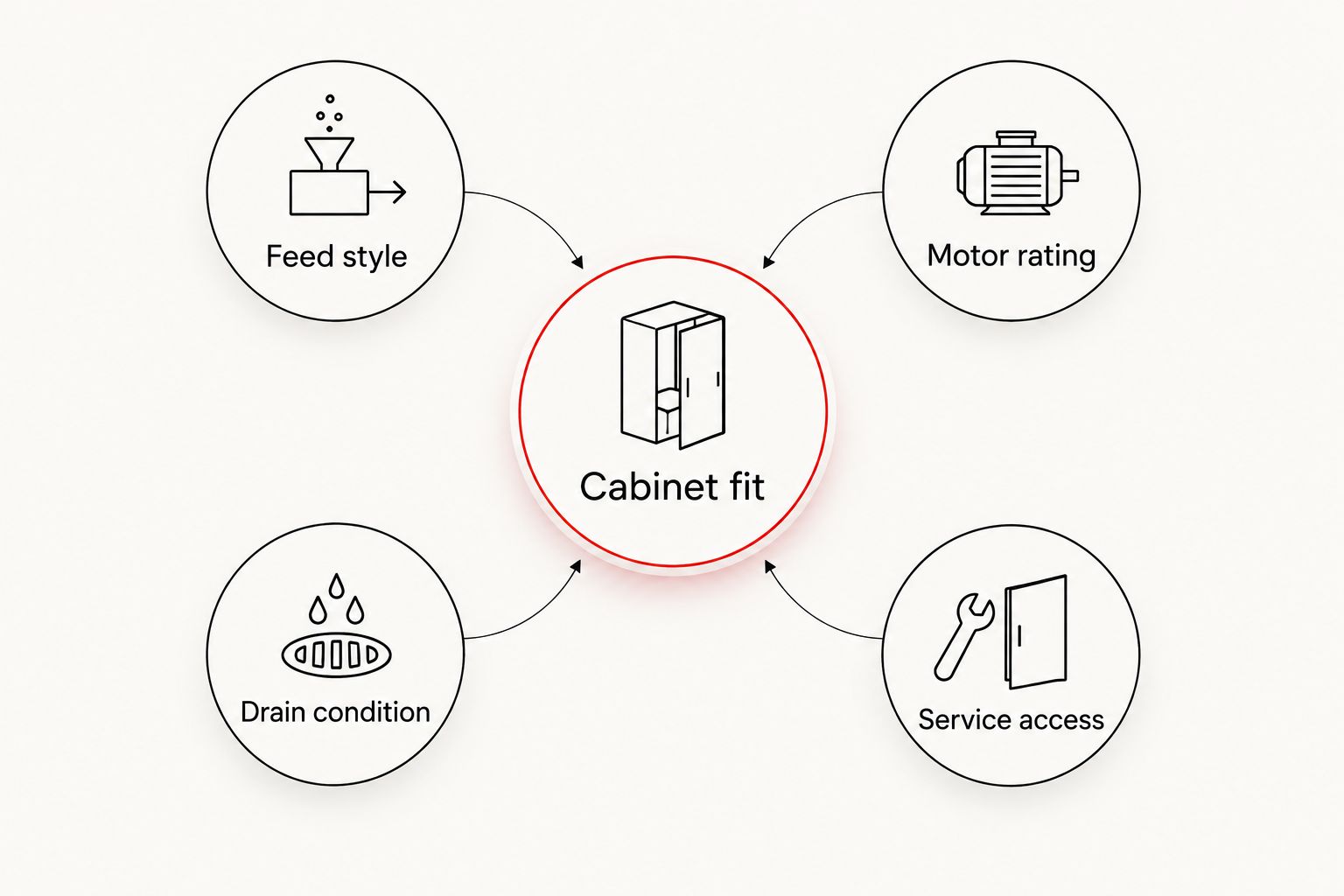
Use these criteria to choose a garbage disposal in 2026. A larger motor alone does not make an appliance the right fit.
- Feed style: Continuous-feed units run while you add scraps; batch-feed units require their operating stopper before running.
- Motor rating: Compare horsepower alongside the manufacturer's intended use. A 1/2-horsepower, 3/4-horsepower, or 1-horsepower label does not establish noise level or grinding performance by itself.
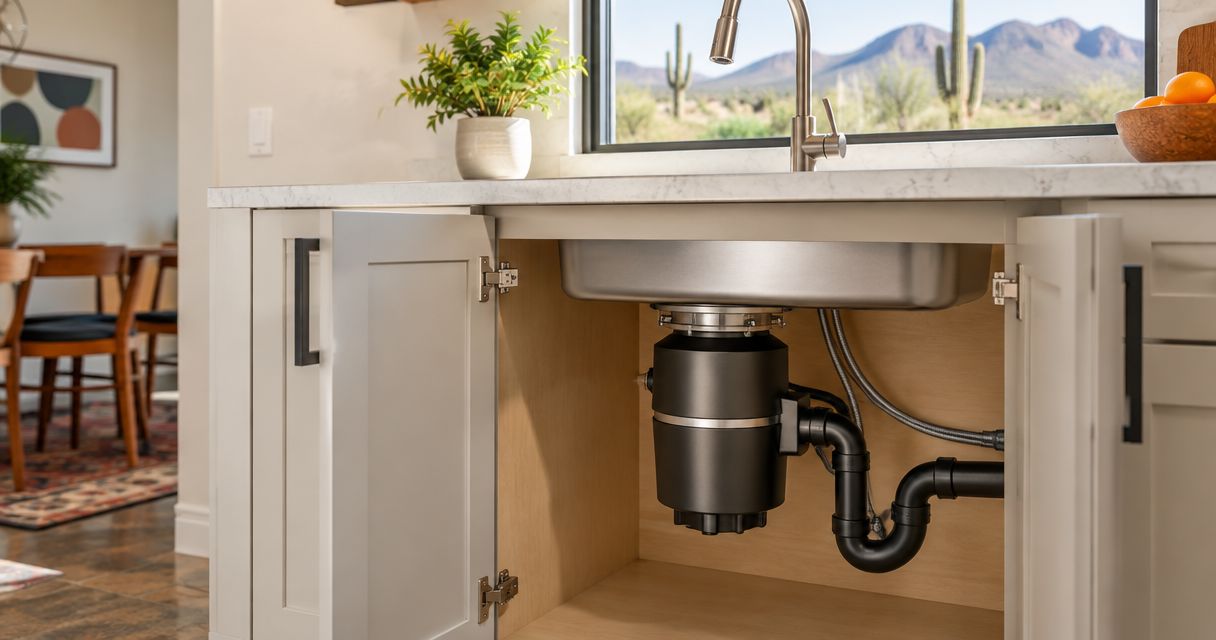
- Cabinet fit: Check the complete unit dimensions, sink mounting arrangement, drain outlet, and nearby plumbing. Leave access for service.
- Drain condition: A restricted drain needs attention before a replacement disposal goes in. More motor power does not clear the downstream pipe.
- Service access: Check how the unit resets, how the manufacturer instructs you to clear a jam, and whether those areas remain reachable after installation.
These criteria work together. A powerful unit that crowds the trap or blocks service access is a worse choice than a properly fitted unit that matches your cooking habits.
Best garbage disposals at a glance
This 2026 shortlist gives each option a different job. Compact describes the unit's physical design; continuous-feed and batch-feed describe operation, so those features can overlap.
| Rank and disposal type | Best for | Standout feature | Key limitation |
|---|---|---|---|
| 1. 3/4-horsepower continuous-feed | Regular household cooking | Continuous loading with a middle motor-rating option | Open-feed operation requires careful use |
| 2. Batch-feed | Households wanting controlled activation | Operating stopper must be positioned before running | Batch loading interrupts continuous cleanup |
| 3. 1/2-horsepower continuous-feed | Light food preparation | Lower motor-rating option for modest use | Less motor capacity than higher-horsepower options |
| 4. 1-horsepower continuous-feed | Frequent cooking and larger cleanup sessions | Higher motor rating | Does not solve unsuitable drainage or poor fit |
| 5. Compact disposal | Crowded under-sink cabinets | Reduced dimensions on the selected model | Small size alone says nothing about grinding performance |
1. 3/4-horsepower continuous-feed: best for regular cooking
A 3/4-horsepower continuous-feed disposal is the default shortlist choice for a household that regularly prepares meals. It runs from a switch while you feed suitable scraps through the sink opening with cold water running.
The attraction is straightforward operation. You do not need to stop cleanup and fit an operating stopper for each batch, but you still need to follow the manufacturer's feeding instructions.
3/4-horsepower continuous-feed pros:
- Continuous loading suits routine meal preparation and cleanup.
- The motor rating sits between common 1/2-horsepower and 1-horsepower options.
- You can compare different models without changing your preferred feed style.
3/4-horsepower continuous-feed cons:
- The opening remains accessible while the unit operates; careful use is essential.
- Horsepower alone does not establish quietness, dimensions, or grinding quality.
- A replacement can require mounting, drain, or electrical changes.
Best for: A Tucson household seeking a practical starting point for regular cooking, without choosing the largest motor by default.
Check the installation drawing before deciding. Confirm the drain outlet can connect correctly and that the selected unit leaves room to reach the reset and service areas. Keep fingers and utensils out of the opening during operation.
Buy: Choose a 3/4-horsepower continuous-feed disposal when regular cooking, proper fit, and continuous loading match your needs.
2. Batch-feed: best for controlled activation
A batch-feed garbage disposal operates with its designated stopper positioned in the opening. You load a batch, fit the stopper as instructed, and run the unit rather than adding scraps continuously through an open inlet.
That activation method is the reason to choose it. Batch-feed is not a motor rating, and you should still compare the selected model's horsepower, dimensions, and installation requirements.
Batch-feed pros:
- The operating stopper controls activation.
- Batch loading creates a deliberate separation between loading and grinding.
- The covered opening limits access while the unit runs.
Batch-feed cons:
- You must repeat the loading and activation process during larger cleanup sessions.
- A missing or damaged operating stopper needs the correct replacement.
- The feed style does not guarantee a smaller body or quieter operation.
Best for: Households that prefer a covered opening and a deliberate activation step over continuous loading.
For your 2026 comparison, read the operating instructions before purchasing. Make sure everyone using the kitchen understands the stopper mechanism. Batch-feed operation does not remove the need to disconnect power before clearing a jam or retrieving an object.
Keep the designated operating stopper with the appliance. An ordinary sink plug is not a substitute for the manufacturer's activation component.
Buy: Choose a batch-feed disposal when controlled activation matters more than uninterrupted loading.
3. 1/2-horsepower continuous-feed: best for light kitchen use
A 1/2-horsepower continuous-feed disposal belongs on the shortlist when you prepare food infrequently and dispose of small amounts of suitable scraps. It uses the same basic switch-operated loading method as larger continuous-feed units.
Choose this category because it matches your use, not because every smaller-motor unit is physically compact. Motor rating and cabinet dimensions are separate checks.
1/2-horsepower continuous-feed pros:
- Provides continuous-feed operation for modest kitchen use.
- Avoids selecting a higher motor rating solely because it is available.
- Gives light-use households another category to compare against larger units.
1/2-horsepower continuous-feed cons:
- Has a lower motor rating than the 3/4-horsepower and 1-horsepower alternatives.
- Is not the default recommendation for frequent, substantial food preparation.
- Does not automatically provide better cabinet clearance.
Best for: A lightly used kitchen where scraps are limited and feeding instructions are followed carefully.
Think about the busiest normal day in your kitchen, not just an average breakfast. If you regularly prepare several dishes and clean up substantial food scraps, compare the higher motor-rating categories instead.
Scrape unsuitable waste into the trash. A disposal is not a substitute for separating grease, fibrous waste, and other materials that the manufacturer excludes.
Buy: Choose a 1/2-horsepower continuous-feed disposal for genuinely light use; skip it as the default for a heavily used kitchen.
4. 1-horsepower continuous-feed: best for frequent cooking
A 1-horsepower continuous-feed disposal is the higher motor-rating option on this shortlist. Consider it when frequent cooking makes disposal use a regular part of your cleanup routine.
The rating describes motor power, not permission to grind everything. It also does not prove that a particular model is quieter, smaller, or better built than another.
1-horsepower continuous-feed pros:
- Offers a higher motor rating than the other horsepower categories listed here.
- Retains continuous loading for ongoing cleanup.
- Gives frequent cooks a higher-power category to compare using model-specific documentation.
1-horsepower continuous-feed cons:
- More motor power does not remove a downstream drain blockage.
- Body dimensions and mounting requirements still need checking.
- Choosing by horsepower alone overlooks feed style and service access.
Best for: Frequent cooks whose kitchen has the space, drainage, and electrical setup required by the selected model.
Before upgrading, identify why the existing disposal disappoints you. A jam caused by an unsuitable object is different from an appliance that repeatedly struggles during normal, permitted use. A slow sink with an empty disposal chamber points toward a drainage problem rather than a reason to buy a larger motor.
Buy: Choose a 1-horsepower continuous-feed disposal for frequent cooking after confirming the installation requirements; wait if the drain is already backing up.
5. Compact disposal: best for crowded sink cabinets
A compact disposal prioritizes physical fit beneath the sink. This category matters when a deep sink, nearby equipment, or the existing pipe arrangement leaves limited clearance.
Compact is a design description, not a standardized horsepower or performance claim. Compare actual measurements and installation drawings rather than relying on the word alone.
Compact disposal pros:
- Focuses the buying decision on the space available.
- Can preserve access around nearby plumbing when the selected dimensions fit.
- Lets you evaluate clearance without assuming a particular motor rating.
Compact disposal cons:
- A smaller body does not guarantee a suitable drain outlet position.
- Compact dimensions do not establish grinding ability or noise level.
- An unsuitable existing drain arrangement can still require plumbing changes.
Best for: Tucson kitchens where cabinet space or service access rules out a larger unit.
Measure more than the empty space directly below the sink opening. Check where the trap sits, where the drain enters the wall, and whether nearby equipment leaves access to connections. A unit can fit inside the cabinet yet still be wrong for the plumbing layout.
Do not plan around a sharply improvised connection just to accommodate a preferred disposal. Have the drain arrangement assessed before committing to the appliance.
Buy: Choose a compact disposal when its documented dimensions and outlet position solve a verified clearance problem.
How the ranking works
The 2026 ranking puts regular household cooking first, then separates the alternatives by activation preference, light use, frequent cooking, and restricted space. It is a selection guide based on disposal design and installation requirements, not a hands-on model test.
No single horsepower category wins every kitchen. Fit and sound drainage come before an upgrade in motor rating. That rule keeps the decision focused on the problem you actually need to solve.
Which garbage disposal should you choose?
Start your 2026 shortlist with a 3/4-horsepower continuous-feed disposal if you cook regularly and have no special activation or clearance requirement. Change categories only when you can name the reason: batch operation, light use, frequent cooking, or limited space.
Before ordering, check these points:
- Drainage: Does the sink drain normally when the disposal is not running?
- Leak source: Is water coming from the appliance body, the sink mounting connection, or another pipe joint?
- Fit: Do the installation drawing and your cabinet measurements agree?
- Electrical setup: Does the selected unit match the connection requirements at the sink?
- Access: Can the installer leave reset and service areas reachable?
Priority Rooter & Plumbing offers residential plumbing repair and installation in the Tucson metro area. For garbage disposal selection, resolve a suspected plumbing problem before committing to a replacement appliance. Stop using a leaking unit, and keep clear of wet electrical components.
Get help with your kitchen plumbing
Address leaks or drainage problems before choosing a replacement garbage disposal.
FAQ
What's the best garbage disposal for a Tucson home in 2026?
A 3/4-horsepower continuous-feed disposal is the starting recommendation for regular household cooking. Choose batch-feed operation for controlled activation or a compact model when cabinet clearance is the deciding factor.
Is a 1-horsepower garbage disposal better than a 3/4-horsepower unit?
A 1-horsepower disposal has a higher motor rating, but that alone does not make it the better purchase. Compare fit, operating instructions, feed style, and your cooking habits before choosing.
What's the difference between batch-feed and continuous-feed disposals?
Batch-feed disposals require their designated operating stopper before running; continuous-feed disposals allow loading while the unit runs. Batch-feed suits deliberate loading, while continuous-feed suits ongoing cleanup.
Will a new garbage disposal fix my slow kitchen drain?
A new garbage disposal will not clear a downstream drain blockage. Diagnose restricted drainage before replacing the appliance.
Can I put grease or fibrous scraps in a garbage disposal?
Keep grease out of the drain and follow the manufacturer's restrictions for fibrous scraps and other food waste. A higher horsepower rating does not cancel those restrictions.
Can I replace a garbage disposal myself?
Replacement requires a suitable sink mount, drain connection, and electrical connection. Use qualified help if the work involves wiring, plumbing changes, leaks, or uncertainty about the installation instructions.
Who should I call about a leaking disposal in Tucson?
Priority Rooter & Plumbing provides residential plumbing repair and installation in the Tucson metro area. Stop using the leaking unit and avoid wet electrical components while arranging help.
One last thing
Find the leak before replacing the disposal. Water beneath the sink can come from a mounting connection, a drain joint, or the appliance itself, and those are different repair decisions. Identifying the source first prevents an appliance purchase from becoming the wrong answer to a plumbing problem.