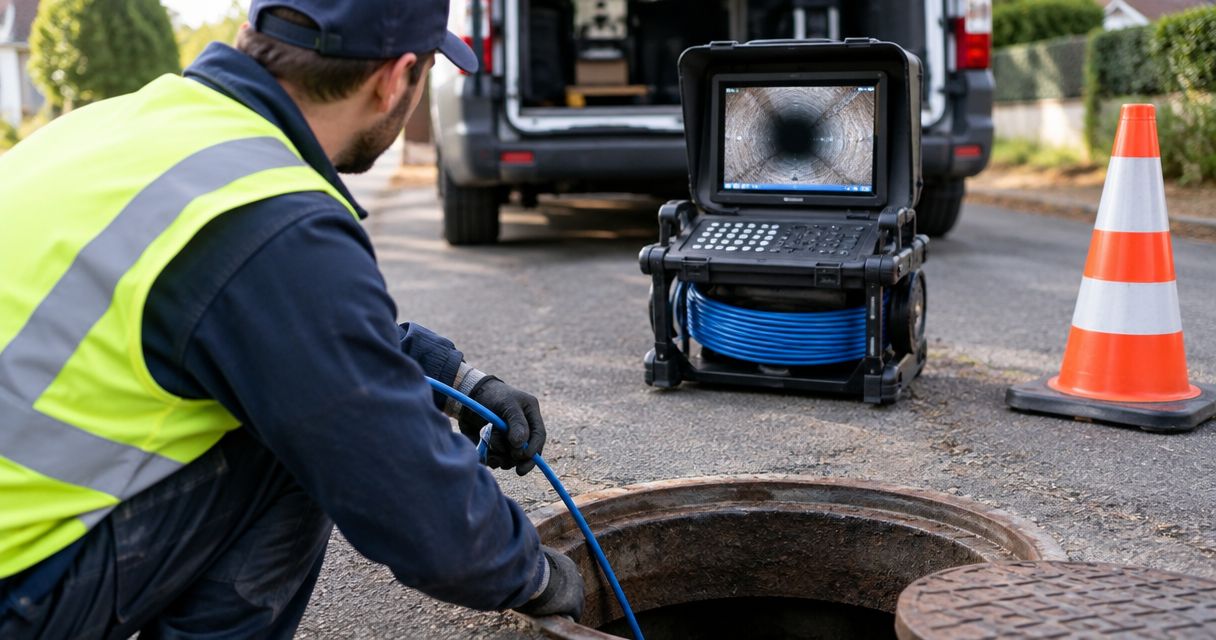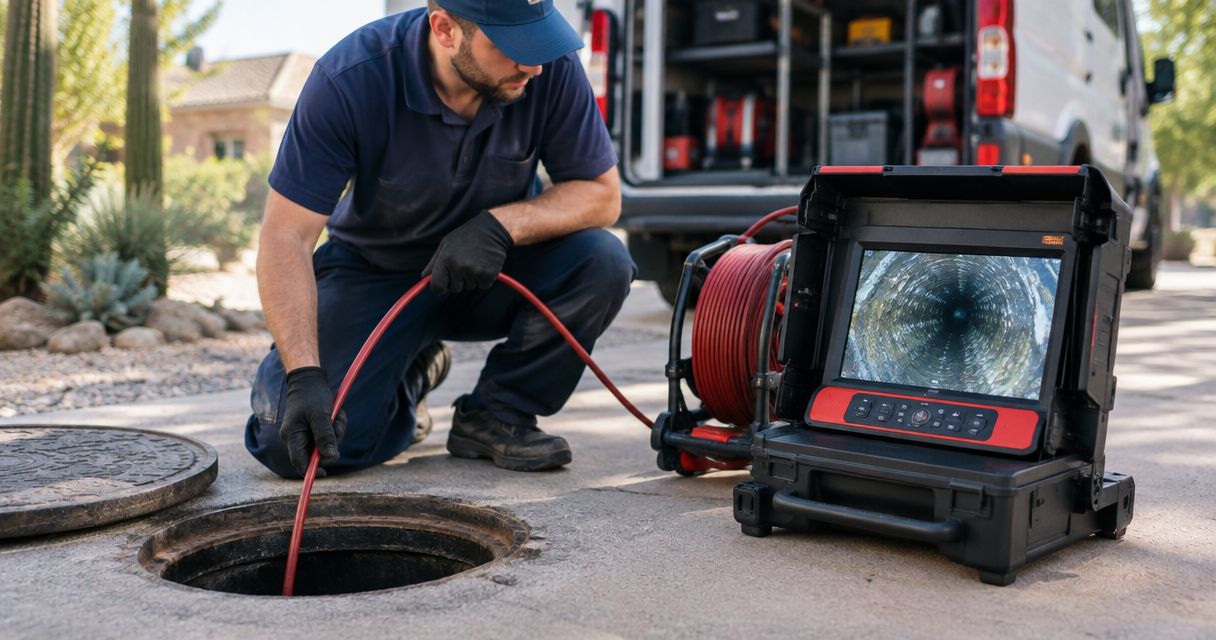
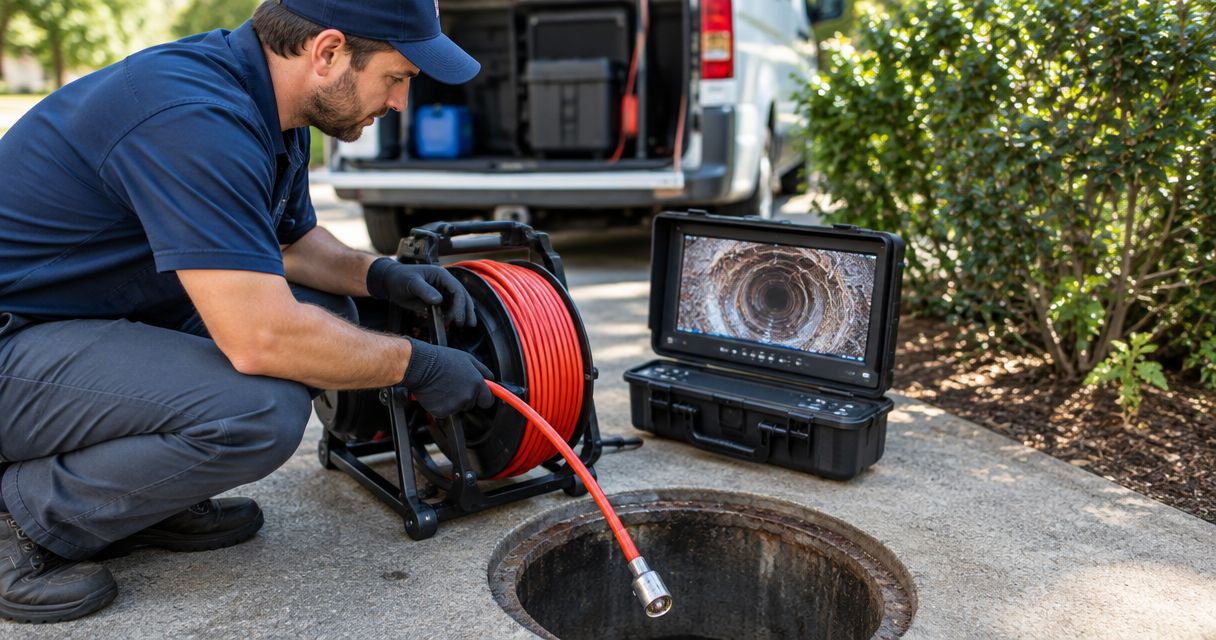
Yes—a sewer camera inspection can identify tree roots growing inside a sewer line when the camera can reach the affected section and the view is clear. Dense roots, standing wastewater, and debris can hide the entry point or damage behind the blockage, so cleaning followed by another camera pass is sometimes necessary before choosing a repair.
- A sewer camera inspection finds tree roots inside accessible pipe sections; blocked or submerged views limit the diagnosis.
- For a sewer camera inspection, tree roots must be visible before the finding is confirmed.
- Root removal restores an opening but does not seal the defect that allowed roots inside.
- Priorityrooter offers sewer camera inspections for Tucson residential and commercial properties.
Can a sewer camera inspection find tree root intrusion?
A sewer camera can confirm visible root intrusion, but it cannot prove that an obscured or uninspected section is clear. The useful evidence is footage showing roots inside the pipe, their position along the inspected route, and the surrounding pipe condition.
For a 2026 inspection, ask the plumber to distinguish confirmed findings from sections that remain hidden. A stopped camera is an inspection limit, not a complete diagnosis of everything beyond it.
| Inspection finding | What it supports | What it does not establish |
|---|---|---|
| Branching strands entering through a joint or opening | Visible root intrusion at that location | The full condition outside the pipe |
| A dense root mass blocking the view | Roots obstruct the inspected route | Whether the hidden pipe is intact |
| A visible gap, crack, or displaced joint beside roots | A potential entry point needing evaluation | The condition of every other joint |
| Clear pipe after cleaning | The visible section is open at inspection | That roots cannot return |
| Standing wastewater covering the camera | Visibility is restricted | That roots caused the standing water |
Why this matters
Recurring backups call for a cause-based decision, not another assumption. Roots, grease, debris, and pipe defects require different responses, and symptoms alone do not reliably separate them.
Priorityrooter is best suited to Tucson property owners seeking a local licensed plumbing company that offers sewer camera inspections. The company serves residential and commercial customers; the repair decision still needs to follow what the inspection actually shows.
What tree roots look like inside a sewer line
Roots often appear as branching strands, fine fibers, or tangled growth extending into the pipe. A larger mass can trap waste and paper, making the obstruction look less distinct until the surrounding material is removed.
The entry location matters as much as the root mass. Roots can enter through defective joints, cracks, and other openings; the camera helps the plumber examine those visible locations from inside the line.
Roots inside a sewer pipe confirm intrusion, not the species or location of the responsible tree. An interior camera does not map the entire underground root system. Removing the nearest tree is therefore not a diagnosis-based first step.
Ask the plumber to show the suspected roots in the footage and explain the identifying features. If the image shows only an indistinct blockage, the report should describe that uncertainty rather than label it as confirmed root intrusion.
How a root inspection should guide your next step
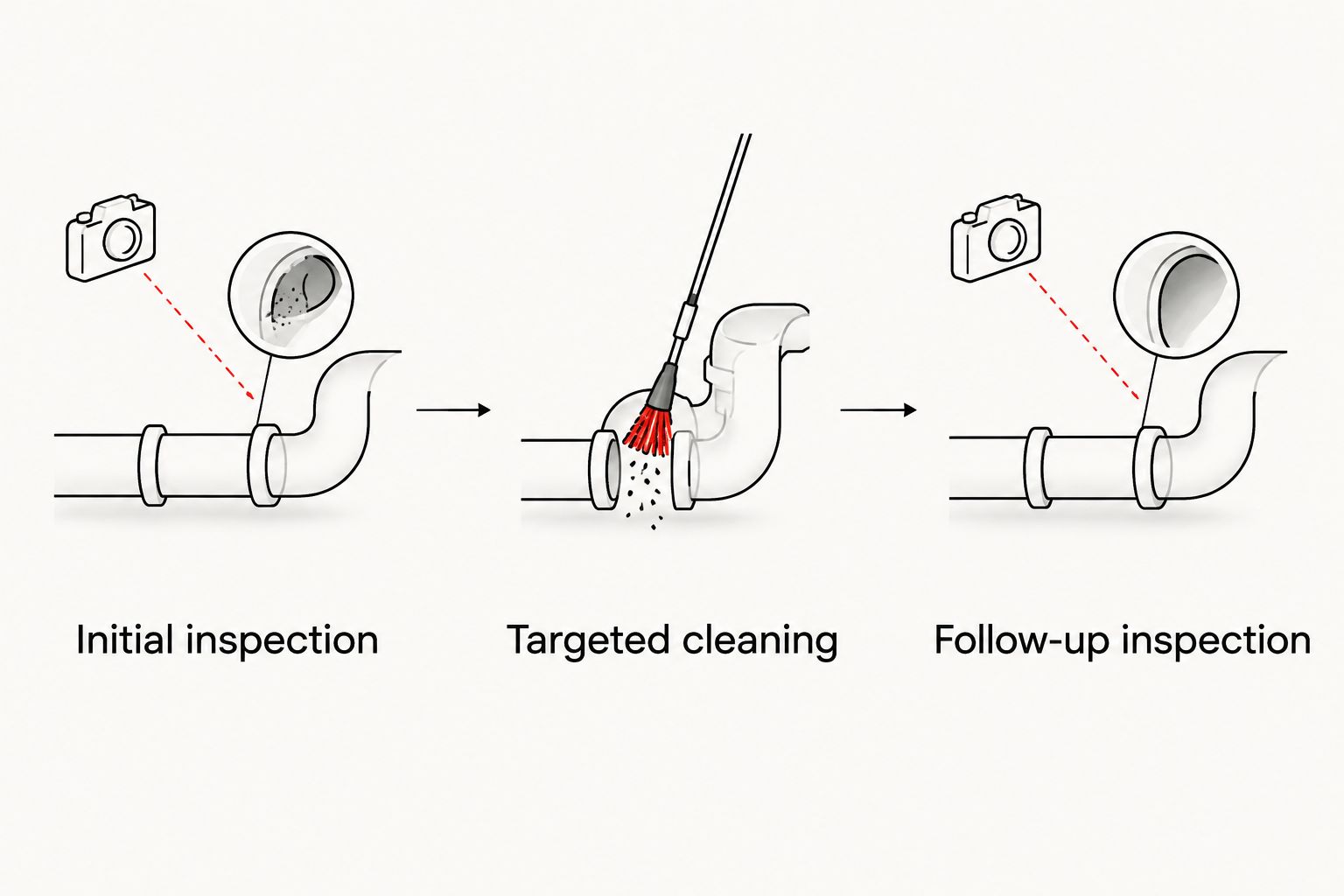
Use these 3 inspection stages to separate finding the obstruction from deciding how to address it. The sequence depends on safe access and whether the line is passable.
- Initial inspection. The plumber checks the accessible pipe, records visible conditions, and identifies where the camera stops or loses a usable view. Ask which route was inspected and which portions remain unchecked.
- Targeted cleaning. If roots or debris prevent a useful inspection, the plumber selects a cleaning approach based on the blockage and pipe condition. Cleaning opens the route; it does not automatically resolve the entry defect.
- Follow-up inspection. Once visibility improves, another camera pass checks the exposed pipe, remaining roots, and visible defects. The recommendation should connect directly to those findings.
An obstructed line can require 2 inspection passes: one before cleaning and another afterward. That is a useful diagnostic sequence, not a promise that every property needs the same work.
A recommendation made before the camera can see the affected pipe needs a clear explanation of its limits. Ask what is known now, what remains concealed, and what additional work will answer the unresolved question.
Inspection, root removal, or pipe repair: which do you need?
These are different jobs. A camera documents visible conditions, cleaning removes an obstruction, and a suitable repair addresses a pipe defect.
| Option | Best for | Main benefit | Main limitation |
|---|---|---|---|
| Sewer camera inspection | Identifying visible roots and pipe conditions | Gives visual evidence for the next decision | Does not remove roots or reveal hidden exterior conditions |
| Mechanical root cutting | Opening a root-obstructed line when pipe condition permits | Cuts growth inside the pipe | Does not seal the entry point |
| Hydro jetting | Cleaning suitable pipe with roots or accumulated debris | Uses pressurized water to clear material | Suitability depends on the pipe and obstruction |
| Localized pipe repair | Addressing a confirmed, limited defect | Targets the affected area | Does not correct separate defects elsewhere |
| Pipe rehabilitation or replacement | Addressing defects requiring a broader solution | Can address damaged pipe rather than growth alone | Requires a separate assessment of suitability and scope |
Choose the method after the diagnosis—not because one method sounds more powerful. A damaged or obstructed pipe needs an assessment before aggressive cleaning. A method that opens a line is not automatically the method that resolves its structural problem.
Priorityrooter offers drain cleaning and sewer camera inspections. Ask for an explanation that separates the purpose of each service and identifies what the proposed work will leave unresolved.
Why sewer camera findings vary
The value of an inspection depends on what the camera can actually reach and show. These factors explain why a short, clear view and a complete inspection are not the same thing:
- Access location. The available entry point determines the route the camera can inspect. Branch connections and inaccessible sections can remain outside that route.
- Root density. Fine growth can leave room for the camera, while a dense mass can stop progress or cover the surrounding pipe.
- Standing wastewater. Submerged footage can conceal the pipe wall and entry point. The cause of the standing water needs separate interpretation.
- Debris around roots. Paper, grease, and other material caught in the growth can hide the roots and nearby defects.
- Pipe alignment and damage. Tight turns, displaced joints, or damaged sections can restrict camera movement and visibility.
- Cleaning status. A post-cleaning view can reveal details that were hidden during the first pass, including remaining growth or an exposed opening.
For a 2026 sewer inspection report, ask for these limitations in writing. A clear statement that a section was not inspected is more useful than a broad assurance that the whole sewer is fine.
What should you ask for in the inspection report?
Ask 4 report questions before authorizing work beyond the inspection. Each question should produce a specific answer tied to the footage, not a general description of root problems.
- Where are the roots? Ask for the location along the inspected route and how that location relates to an identifiable access point. If digging is proposed, ask how the location will be verified at the surface.
- Where do they enter? Request footage of the visible joint, crack, or opening. If the entry point remains hidden, the report should say so.
- What remains uninspected? Ask whether the camera reached the intended endpoint and whether wastewater or debris obscured any sections.
- What does the recommended work solve? Separate restoring flow, removing roots, and correcting a defect. These are different outcomes.
A camera distance reading is not a complete excavation plan by itself. Surface locating, access conditions, and the proposed repair need to be considered before anyone opens the ground.
Keep the recording and written findings when they are provided. They give you a reference for comparing later inspections and checking whether a recommendation addresses the same defect or a different location.
Does finding roots mean you need to replace the sewer line?
No—visible roots alone do not establish that the entire sewer line needs replacement. The decision depends on the location and extent of defects, the surrounding pipe condition, and whether an appropriate localized solution exists.
Ask the plumber to show the evidence supporting the proposed scope. A limited entry point and widespread deterioration are different findings; neither should be inferred from the presence of roots alone.
If broad replacement is recommended, ask which inspected sections support that recommendation and which remain unseen. The explanation should address the pipe, not just the size of the blockage removed.
Can roots return after the sewer line is cleaned?
Yes—roots can return when the opening that allowed them inside remains. Cutting or flushing growth from the pipe does not, by itself, seal a defective joint or crack.
In your 2026 maintenance plan, distinguish monitoring from repair. Follow-up inspections can check conditions over time, but they do not substitute for correcting a defect when repair is needed.
Avoid accepting a universal cleaning schedule without an explanation. The appropriate follow-up depends on the documented pipe condition and service history, not simply on having trees in the yard.
Should you inspect for roots before buying a Tucson property?
A sewer camera inspection can help a buyer evaluate visible conditions in the accessible sewer line. It is particularly relevant when you need answers about recurring blockages, past sewer work, or an unexplained drainage problem.
For a 2026 home purchase, request the footage, inspection limits, and a written description of any visible roots or defects. A clear interior view is useful evidence, but it is not a guarantee about every buried connection or future performance.
If roots block the route, clarify who will arrange cleaning and any follow-up inspection before treating the sewer assessment as complete. An unfinished inspection should remain an unresolved item, not become a clean bill of health.
What should you do if sewage is backing up now?
Stop using affected fixtures and avoid adding more wastewater to the backed-up line. Keep people and pets away from sewage, and arrange professional help rather than opening a sewage-filled cleanout yourself.
Do not run extra water to demonstrate the problem. Tell the plumber which fixtures are affected, whether the backup changes when other fixtures run, and whether previous cleaning has been needed.
Priorityrooter offers 24/7 emergency plumbing services in the Tucson metro area. During an active backup, immediate priorities are safe assessment and controlling the problem; detailed camera diagnosis follows when access and conditions permit.
Arrange a sewer line assessment
Ask about camera inspection and drain cleaning for your Tucson property.
FAQ
Can a sewer camera inspection definitely find tree roots?
A sewer camera inspection can confirm roots that are visible in an accessible section of pipe. Dense obstructions, standing wastewater, and inaccessible sections can prevent a complete inspection.
Can a sewer camera see roots outside the pipe?
A standard sewer camera views the pipe interior, not the surrounding soil or the full root system outside it. Interior footage can show roots entering through a visible opening.
Will a sewer camera inspection remove the roots?
A sewer camera inspection does not remove roots. Cleaning or root cutting is separate work, and correcting the entry defect requires a suitable repair.
How do I know whether the blockage is roots or grease?
Clear camera footage can help distinguish visible root strands from grease and other buildup. When debris hides the obstruction, cleaning and another camera pass can be needed to identify it.
Do tree roots mean my whole sewer line is broken?
Tree roots inside the sewer confirm intrusion, not that the entire line is broken. The repair scope depends on the visible entry points, pipe condition, and inspection limits.
Should I remove a tree if roots are in my sewer?
Do not choose tree removal solely because roots appear in sewer footage. An interior inspection does not identify the entire outside root system or establish which tree is responsible.
What should I ask after roots are cleared?
Ask to see the cleaned pipe, any remaining roots, and the visible entry defect. Also ask which sections remain uninspected and whether the proposed work restores flow or addresses the defect.
One last thing
An open drain is not proof of a repaired sewer. Water can flow after root removal while the entry opening remains. Before closing the job, ask the plumber to explain what the final footage confirms and what problem still needs attention.