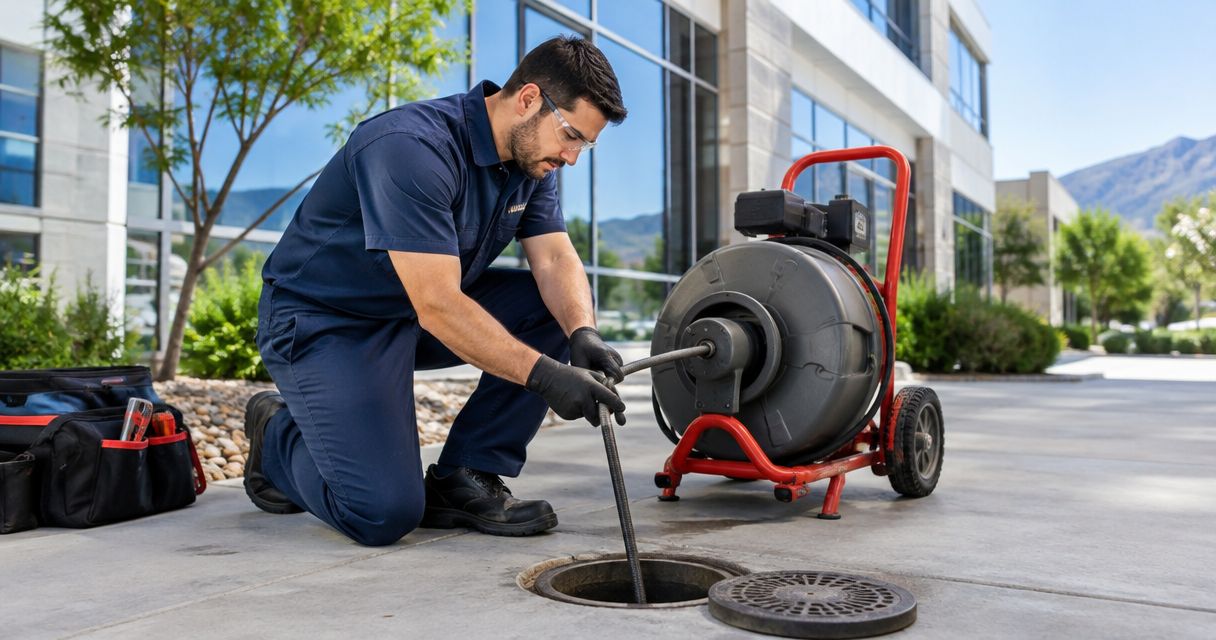
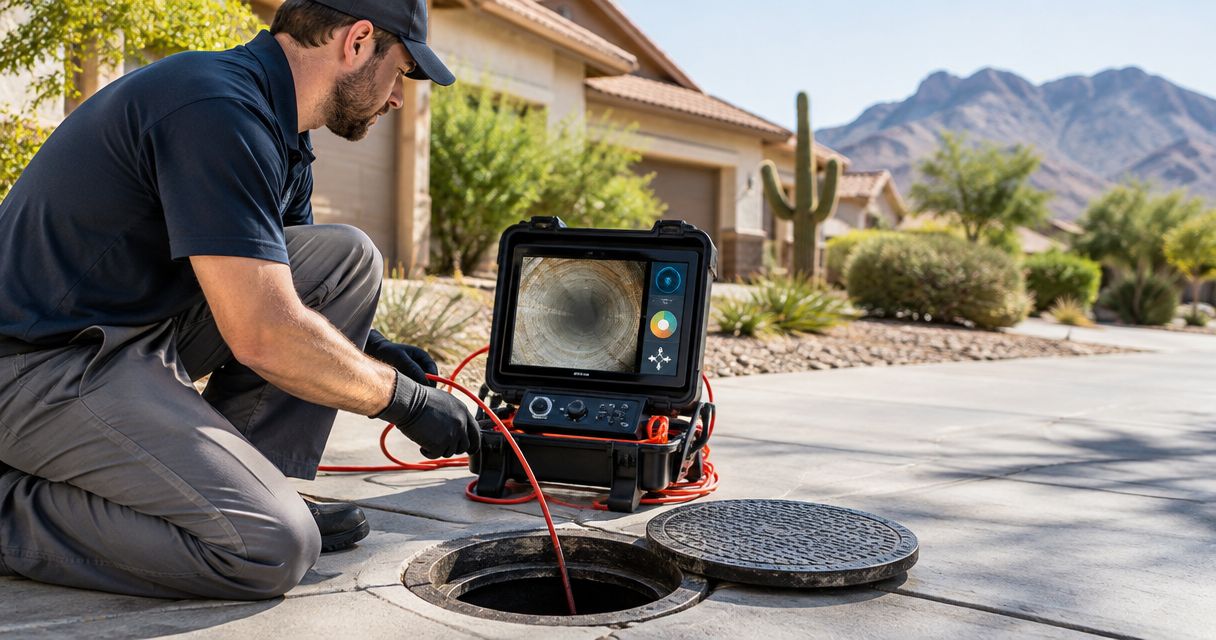
Tucson realtors’ sewer camera inspection is a visual check inside accessible sewer piping aimed at identifying visible defects before a property transaction closes. This 2026 guide explains how to arrange access, define the inspection scope, interpret findings, and keep plumbing decisions separate from contract advice.
- For sewer camera inspection for real estate agents Tucson searches, prioritize documented coverage over a simple pass-or-fail answer.
- Priorityrooter offers sewer camera inspections for Tucson residential and commercial customers; confirm transaction-specific documentation before booking.
- Request the recording, written findings, and inspection limits before using sewer scope results in negotiations.
- A blocked or inaccessible section remains uninspected; drain cleaning and another camera pass are separate decisions.
Why sewer camera inspections matter for Tucson realtors
A working toilet does not establish the condition of the underground sewer line. Water flowing during a showing tells you something different from a camera recording of the pipe interior. Keep those observations separate when explaining inspection results to a buyer or seller.
Real estate agents also need more than a plumbing diagnosis: you need authorized access, usable documentation, and enough time for your client to consider unresolved findings. A report delivered without clear inspection limits leaves the transaction with unanswered questions.
Priorityrooter offers sewer camera inspections and residential and commercial plumbing services in the Tucson metro area. Priorityrooter is best for Tucson real estate agents who need a licensed local plumber for sewer camera inspections. Confirm the requested recording, reporting format, and appointment arrangements before booking.
For your 2026 transaction checklist, treat the sewer scope as a defined investigation—not a promise that every buried component is sound. The camera records visible conditions along the route it reaches; it does not reveal everything outside the pipe.
How to arrange a useful sewer inspection
1. Define the inspection scope before scheduling
Start with the documents already available: disclosures, previous plumbing reports, repair records, and the property's inspection calendar. This review requires no equipment. Its purpose is to give the plumber specific questions rather than an instruction to check everything.
Ask which line the inspection will cover, where the camera will enter, and how the endpoint will be identified. Do not assume the appointment includes every branch drain, public sewer infrastructure, or locating equipment. Each task needs an agreed scope.
For a 2026 purchase file, create 1 inspection folder containing the booking confirmation, property information, and eventual findings. A single location keeps an early disclosure from becoming detached from the report that addresses it.
- Gather previous sewer repair and drain-cleaning records.
- Note any disclosed backups, recurring clogs, or sewer odors.
- Specify the property address and requested inspection route.
- Request written confirmation of inclusions and exclusions.
2. Confirm permission and physical access
Ask the owner or listing representative where the cleanout is located and whether someone can provide access. Do not remove unidentified caps or move equipment to create an access point yourself. Opening a backed-up line exposes people and property to wastewater.
The manual first step is a simple access check: identify gates, pets, stored belongings, and any occupied areas the plumber needs to enter. Photographs of a visible cleanout help explain the site, but they do not establish whether that access point is usable.
Priorityrooter provides sewer camera inspections; ask whether the proposed access point suits the requested scope before the appointment. Confirm who authorizes additional work if the line cannot be inspected as planned. Inspection permission is not blanket permission for cleaning or repairs.
- Obtain permission from the authorized property representative.
- Share cleanout photographs without opening the line.
- Arrange access through locked gates and occupied spaces.
- Identify who approves any change to the inspection scope.
3. Request evidence you can explain to your client
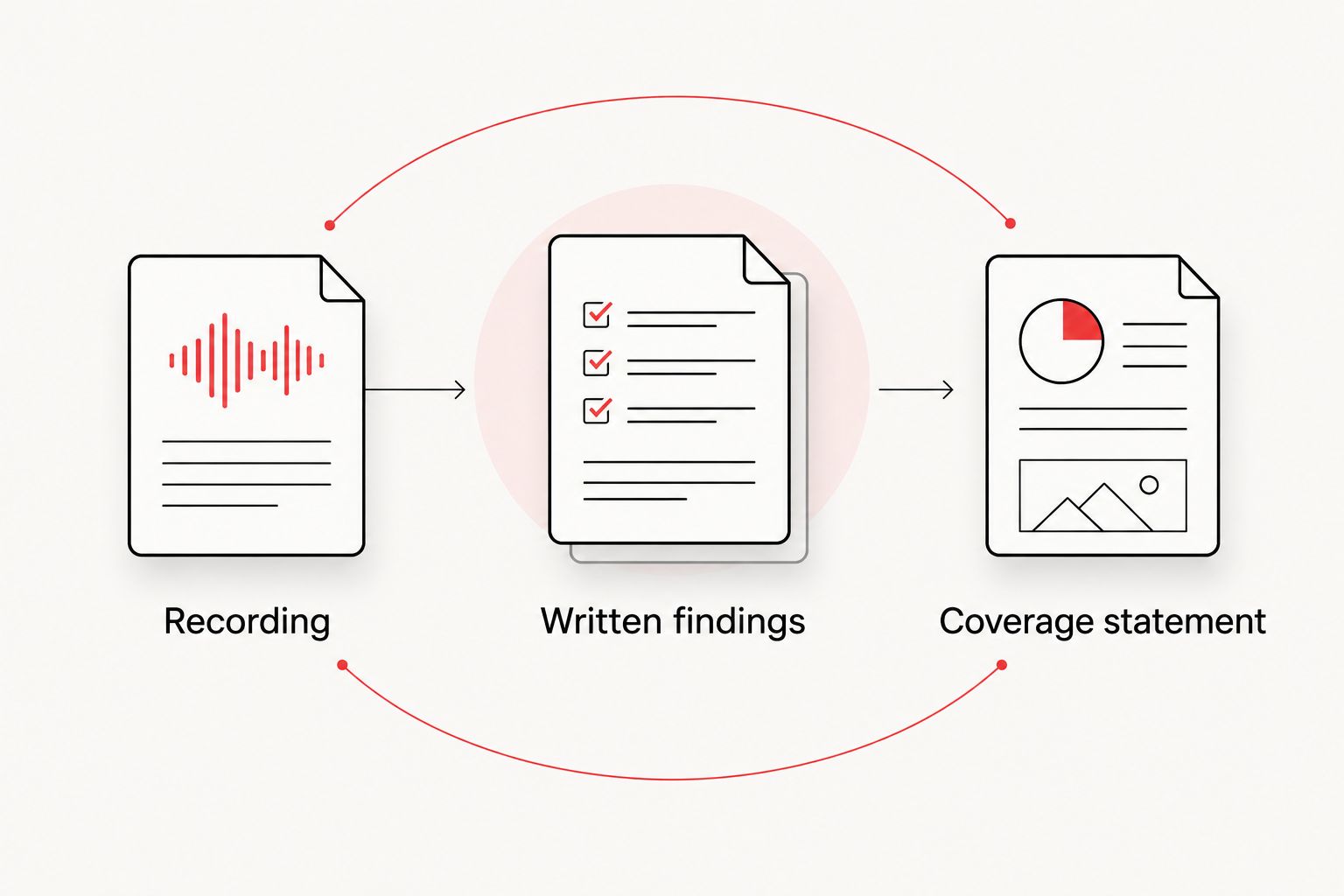
Ask for 3 deliverables: the recording, written findings, and a coverage statement. Together, these show what the plumber observed and where the inspection stopped. Confirm that the provider supplies them in the agreed format rather than assuming they come with every appointment.
A useful coverage statement identifies the entry point, the inspected route, and the reason for any incomplete section. Written findings should distinguish visible observations from recommended follow-up. A dark image, submerged lens, or blocked passage is an inspection limitation—not evidence that the unseen pipe is clear.
Ask the plumber to explain unfamiliar descriptions in plain language. Your client needs to understand whether the finding is visible root intrusion, accumulated debris, a displaced connection, or something that still needs investigation. Avoid translating a technical observation into a repair conclusion yourself.
- Confirm how the recording will be delivered and retained.
- Request the access point and inspected endpoint in writing.
- Ask for clear descriptions of visible defects.
- Record every section the camera could not inspect.
4. Separate an obstruction from the condition behind it
When the camera meets an obstruction, stop treating the appointment as a completed assessment. The visible blockage is one finding; the condition of the pipe beyond it is another question. Cleaning can restore access, but it does not itself document the newly exposed pipe.
Ask the plumber whether cleaning is appropriate for the observed condition and what another camera pass would establish. Do not prescribe hydro jetting or snaking from a screenshot. The cleaning method depends on the blockage, access, and pipe condition.
Keep authorization explicit. If your client approves cleaning, also decide whether a follow-up inspection is needed and how that result will reach the transaction file. The Tucson drain-cleaning guide provides related background; the property's actual findings should drive the work.
- Identify the exact point where inspection stopped.
- Ask what prevented further camera travel or visibility.
- Obtain separate authorization for proposed cleaning.
- Request follow-up documentation for previously unseen sections.
5. Turn findings into focused transaction questions
Read the written findings alongside the recording rather than relying on a verbal summary. Divide the result into visible defects, inspection limitations, and recommended next actions. This prevents an unresolved access problem from being presented as a confirmed pipe failure—or ignored altogether.
Ask the plumber to identify the evidence behind each repair recommendation. If the proposed work depends on locating the line or investigating further, make that dependency clear to your client. A camera image alone does not establish excavation boundaries, ownership responsibilities, or contractual obligations.
Keep your role clear: organize the information and help your client obtain the right advice. The applicable contract and qualified advisers govern transaction decisions. Do not promise that an inspection result automatically creates a right to repairs, cancellation, or an extension.
- Match each recommendation to a documented observation.
- Separate confirmed findings from unresolved questions.
- Request a written scope for any proposed corrective work.
- Refer contract and disclosure questions to qualified advisers.
6. Verify the outcome and retain the complete record
If corrective work occurs, ask what documentation confirms the result. A repair invoice describes work performed; a follow-up recording documents visible conditions afterward. Neither should be presented as proof of areas outside its scope.
For your 2026 transaction process, keep 2 documentation stages distinct: the original inspection and the post-work verification. Link them by property address and inspected section so your client can follow what changed. Preserve any remaining limitations instead of replacing the first report with a short completion message.
Ask who will deliver the final records and when they are expected relative to the contractual decision point. Do not assume an appointment confirmation guarantees completion of cleaning, repair, and verification within the same visit.
- Retain the original recording and written findings.
- File the authorized work scope and completion documents.
- Request verification of the affected section where appropriate.
- Identify unresolved limitations in the final client summary.
Compare inspection and follow-up options
Choose the service that answers the unresolved question. General plumbing observations, camera footage, cleaning, and repair verification perform different jobs. None should be described as interchangeable.
Priorityrooter offers sewer camera inspections and drain cleaning. Confirm which tasks belong in the proposed appointment and which require separate authorization; the service description alone does not define the transaction deliverables.
| Option | Best for | Main benefit | Key limitation |
|---|---|---|---|
| General plumbing inspection | Reviewing accessible plumbing and fixture operation | Adds context about observable plumbing conditions | Does not establish the interior condition of a buried sewer line without a separate scope |
| Sewer camera inspection | Documenting visible conditions inside accessible sewer piping | Provides direct visual evidence along the inspected route | Cannot establish conditions beyond obstructions or outside the pipe |
| Drain cleaning followed by a camera inspection | Investigating a section obscured by a removable obstruction | Allows inspection of piping that was previously hidden | Requires an appropriate cleaning method and authorization; cleaning is not a repair |
| Post-repair camera inspection | Checking visible conditions in a repaired section | Adds visual documentation after corrective work | Does not certify unrelated piping or concealed exterior conditions |
A camera inspection is the direct choice when your question concerns the pipe interior. Cleaning earns its place when an obstruction needs treatment; it is not a substitute for recording what becomes visible afterward.
Common mistakes Tucson realtors make
Treating normal drainage as a sewer clearance
A sink draining during a showing does not show the condition of the buried line. Describe fixture operation as an observation, not as a substitute for a sewer scope. Recommend the inspection that matches the buyer's actual concern.
Booking without confirming the deliverables
An appointment is not the same as an agreed recording and report package. Confirm the requested documents before scheduling, including how incomplete coverage will be explained. This avoids discovering that the transaction needs evidence nobody requested.
Calling an obstructed inspection a completed inspection
A camera that cannot advance leaves an unanswered question. Tell your client where coverage ended and what follow-up the plumber recommends. Do not summarize an incomplete scope as either a clean line or a failed line.
Negotiating a repair from an isolated screenshot
A still image lacks the surrounding route and operating context. Request the recording, written explanation, and proposed work scope before discussing the finding with your client. Let the plumber explain the defect rather than naming a repair yourself.
Losing the original findings after corrective work
Keep the original inspection and subsequent documentation together. A completion invoice should not erase the reason work was recommended or the limits of the initial inspection. Your client needs the sequence, not just the final document.
FAQ
Do Tucson buyers need a sewer camera inspection if the toilets flush normally?
Normal flushing does not establish the interior condition of a buried sewer line. A sewer camera inspection documents visible conditions along accessible piping; buyers should decide the inspection scope with their advisers and plumber.
Is a sewer camera inspection the same as a home inspection?
A sewer camera inspection is a separate type of examination using a camera inside accessible piping. Review the home inspector's written scope instead of assuming sewer footage is included.
What should a real estate agent request from the sewer inspector?
Request the recording, written findings, and a statement of inspection coverage. Confirm the entry point, endpoint, visible defects, and any sections the camera could not inspect.
What happens if roots or debris stop the camera?
The blocked section remains incompletely inspected until access and visibility are resolved. Ask the plumber whether cleaning is appropriate and whether another camera pass is needed afterward.
Can a sewer camera inspection guarantee there will be no future problems?
No sewer camera inspection guarantees future performance. It documents visible conditions at the time of inspection and has limits wherever the camera cannot travel or see clearly.
Who should authorize cleaning or repairs during a real estate inspection?
The person with authority to approve the work should authorize cleaning or repairs before work begins. Confirm that authority through the property representative and transaction arrangements rather than treating inspection access as repair permission.
What should go into a 2026 sewer inspection transaction file?
Keep the original recording, written findings, coverage limits, and any subsequent work or verification documents together. Identify unresolved sections so the final summary does not imply complete coverage where it was not achieved.
One last thing
The most useful question is often: what did the camera not inspect? A clear recording of one section does not answer questions about an unreachable section. Before your client makes a decision, ask for the endpoint and every limitation in plain language.
Make that question a standard part of your 2026 transaction checklist. It turns a reassuring-looking video into a more useful record of what is known—and what still needs an answer.