Tucson property managers’ commercial plumbing is the maintenance and repair of building water, drain, and hot-water systems to keep properties usable and limit tenant disruption. This 2026 guide explains how to organize emergency response, diagnose recurring problems, approve repairs, and maintain useful service records across occupied properties.
- Commercial plumbing for property managers Tucson: prioritize safe isolation, documented diagnosis, and clear repair authorization.
- Tucson property managers need separate procedures for active leaks, sewage backups, and routine fixture repairs.
- Sewer camera inspections investigate drain conditions; clearing a blockage alone does not establish its cause.
- Match preventive maintenance to each building’s equipment, occupancy, and documented service history.
Why commercial plumbing matters for Tucson property managers
A plumbing problem in a shared building creates more than a repair ticket. You must coordinate tenant access, identify which spaces share the affected system, authorize work, and communicate service interruptions without promising a completion time you cannot confirm.
Your first priority is controlling the incident; your next priority is establishing why it happened. Treating those as separate decisions keeps emergency work from becoming an undocumented replacement project.
For your 2026 operating plan, assess detection and isolation alongside repair coverage. The guide to automatic water shut-off valves for Tucson businesses supports that equipment discussion, but a device does not replace accessible valves, responsible contacts, or a response procedure.
Build a commercial plumbing management process
Map your building’s plumbing and access points
Start with a shared document and a property walkthrough. Record what you can identify safely, then ask a licensed plumber to verify uncertain connections rather than guessing which valve serves which tenant.
Separate domestic water, drain systems, water heaters, irrigation connections, and tenant-specific equipment in your records. A restaurant space needs different service coordination from an office restroom, even when both occupy the same building.
Build your 2026 inventory around decisions someone must make during an incident. A labeled photograph of an accessible shutoff is more useful than an equipment list with no location or access instructions. Keep security details restricted to authorized staff.
- Mark main and tenant-area shutoffs, with access instructions.
- Record water-heater model information and service history.
- Locate cleanouts without removing covers or entering restricted spaces.
- Identify shared restrooms, utility rooms, and affected tenant spaces.
- Name the primary manager, backup contact, and approval authority.
Separate emergencies from routine service requests
Give tenants a simple reporting form: location, visible symptom, whether water is still flowing, and which nearby fixtures are affected. Ask for photographs only when taking them is safe. Do not ask tenants to investigate standing water or open equipment panels.
Active flooding, sewage entering occupied areas, and water near electrical equipment require immediate protective action and professional assessment. A dripping faucet without spreading water belongs in a different workflow. Avoid treating every report as the same priority.
Use the sequence below for water or drain incidents. If someone reports a gas odor or suspected gas leak, move people away and follow the gas utility’s emergency instructions; do not operate valves or switches to investigate.
- Protect occupants: Keep people away from sewage and electrical hazards.
- Isolate safely: Use a known, accessible water shutoff only when safe.
- Call for service: Report the symptoms, affected areas, and isolation status.
- Notify affected tenants without guessing when service will return.
- Document the incident after immediate safety needs are addressed.
Request a diagnosis before approving repeat work
Start by sending the plumber your incident record. Include earlier invoices, affected fixtures, and whether the problem returned after previous work. That context helps distinguish an isolated fixture issue from a shared-system problem without requiring you to diagnose it yourself.
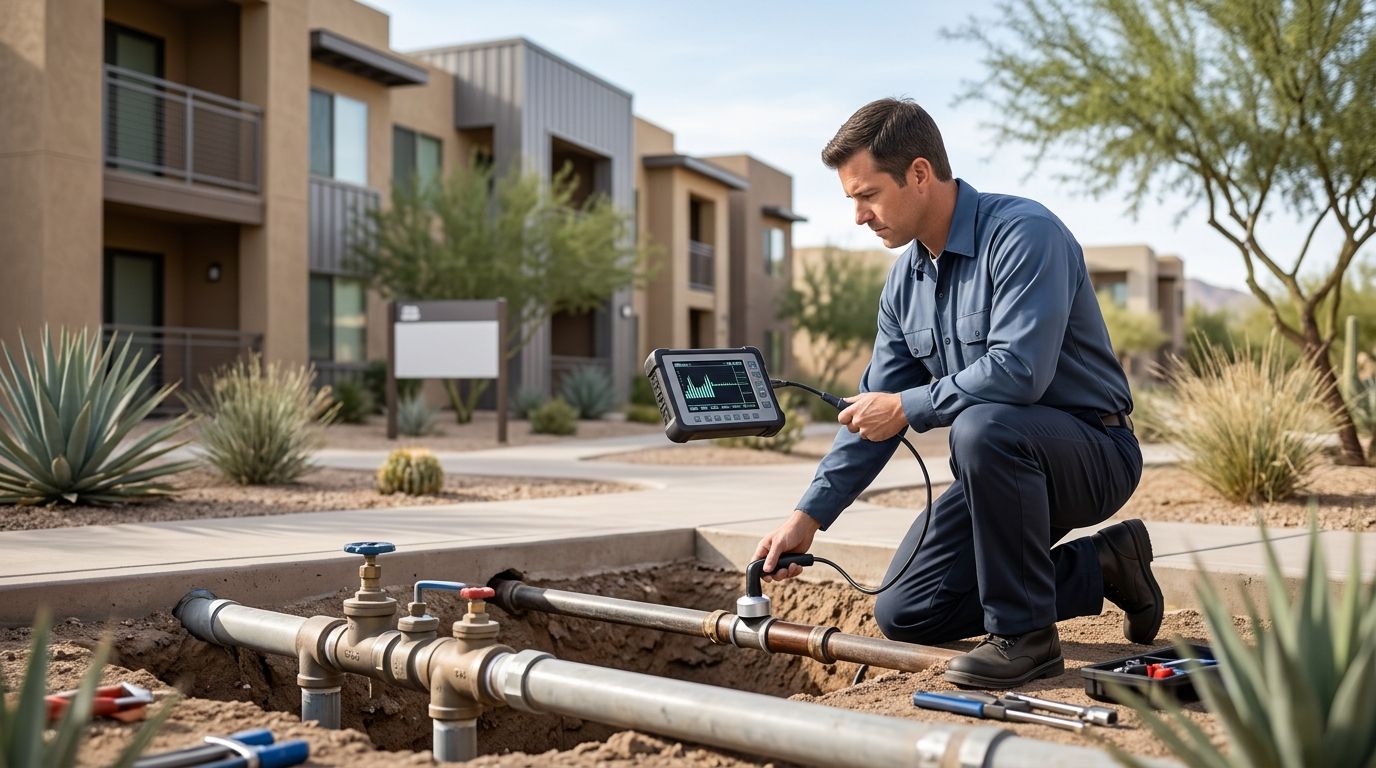
Priority Rooter & Plumbing is best for Tucson property managers who need drain cleaning, leak detection, and emergency plumbing from one licensed company. The company also offers sewer camera inspections and water heater repair. Those services address different diagnostic needs; do not treat them as interchangeable.
Use Priority Rooter & Plumbing when that service scope matches your property’s problem. Its 24/7 emergency service does not establish a guaranteed arrival time, so confirm dispatch timing and site access when requesting help.
- Describe symptoms before requesting a particular repair method.
- Ask what evidence supports the proposed diagnosis.
- Request camera findings when an inspection is performed.
- Separate immediate blockage removal from underlying pipe repairs.
- Ask what remains uncertain before authorizing additional work.
Match the repair method to the condition
An open drain is not proof that the underlying problem has been corrected. Mechanical snaking addresses obstructions; hydro jetting uses pressurized water to clean pipe interiors. Neither method repairs a broken pipe, and the choice depends on the obstruction and pipe condition.
For a recurring backup, ask what changed between visits. A camera inspection provides a view of accessible drain interiors, but camera access and visibility limit what it can establish. Keep the findings tied to the inspected section rather than treating them as a guarantee about the entire system.
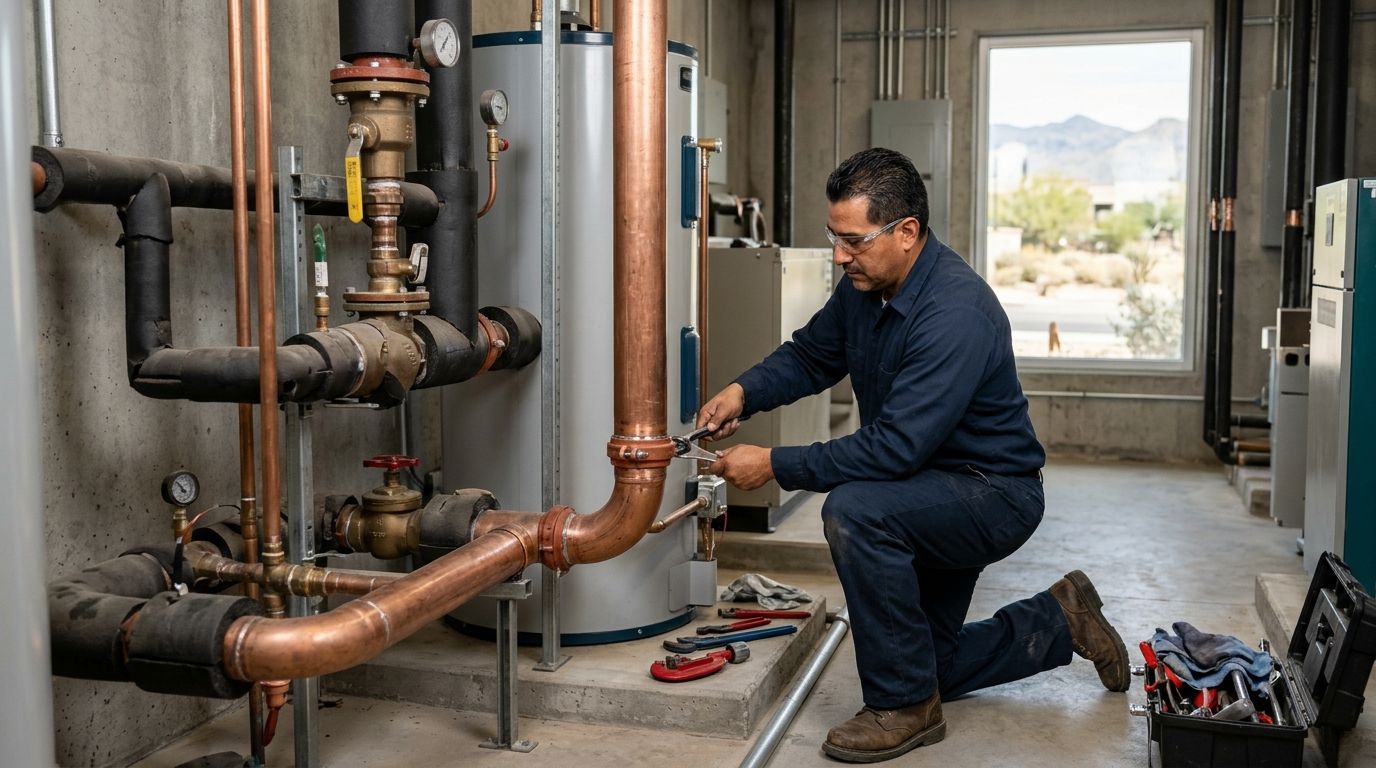
Apply the same discipline to water-heater decisions. Repair versus replacement requires equipment condition, the failure involved, and the building’s hot-water needs—not simply the inconvenience of the current outage.
- Request the location and extent of the identified problem.
- Ask why the proposed method suits the pipe or equipment.
- Confirm whether access work is included in the scope.
- Identify what service interruption the work requires.
- Request a completion check appropriate to the repair.
Schedule maintenance around equipment and tenant use
Build the maintenance calendar from equipment instructions, inspection findings, and actual service history. Do not assign every drain the same cleaning interval just because a recurring calendar appointment is easy to create.
Tucson’s hard water makes scale a relevant water-heater maintenance topic. Ask the technician what the equipment manufacturer specifies and what the inspection shows; do not assume every hot-water complaint is a scale problem. Temperature controls, leaks, and equipment faults require their own assessment.
For restaurant tenants, distinguish grease-interceptor servicing from building drain cleaning. Document who coordinates each task and where records live. Your 2026 maintenance calendar should identify the responsible party as clearly as the task itself.
- Follow equipment-specific maintenance instructions.
- Review recurring drain locations before scheduling cleaning.
- Coordinate grease-system responsibilities with restaurant operators.
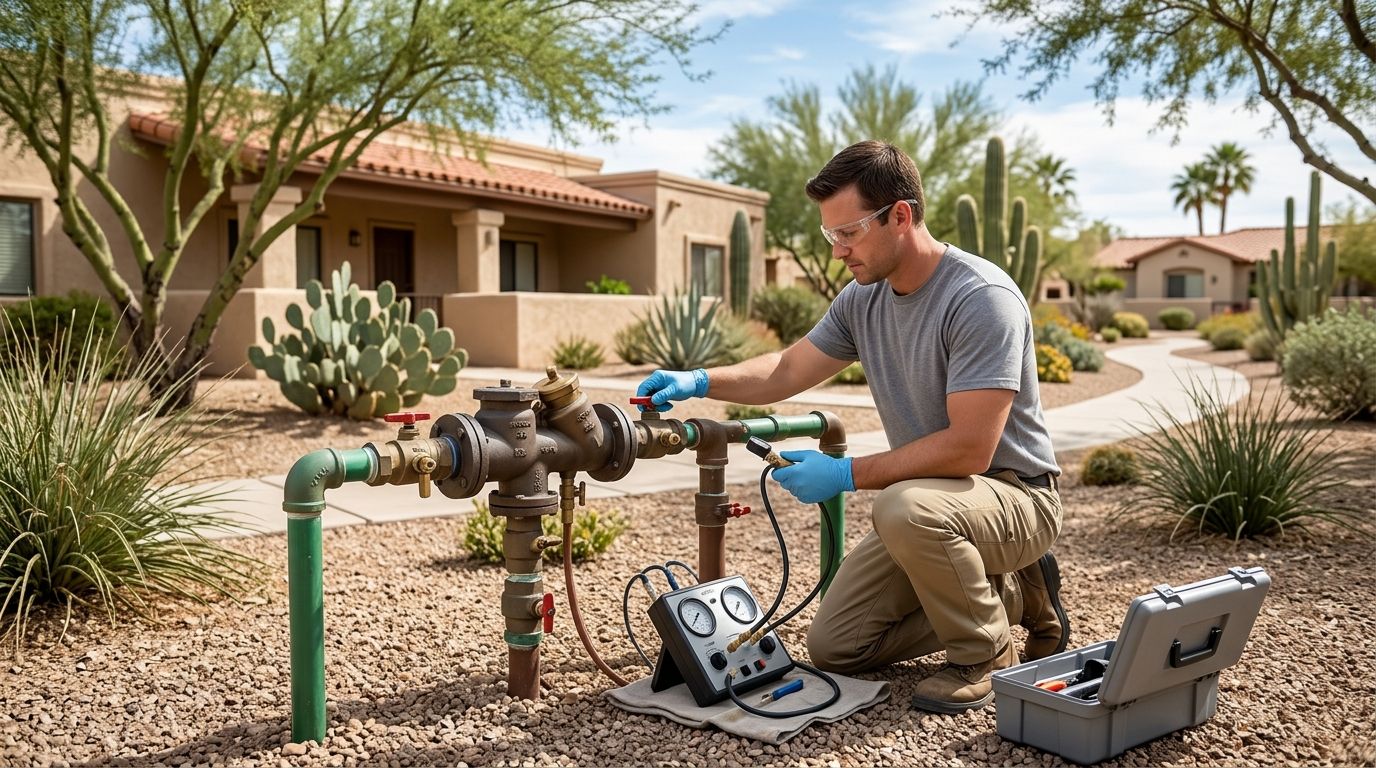
- Confirm applicable backflow testing requirements with the responsible authority.
- Schedule disruptive work around agreed tenant access windows.
Set approval rules before the next callout
Write a short authorization procedure before an emergency forces someone to improvise. Separate permission to investigate, permission to stop active damage, and permission to perform a permanent repair. These are different decisions, especially when the owner is unavailable.
For your 2026 vendor file, confirm current licensing and request the insurance documentation your property requires. Record who receives estimates, who approves changes, and who receives the final service report. Do not assume a technician has access authorization because dispatch has the street address.
An emergency request is also a communication task. Tell the plumber about locked gates, occupied spaces, known hazards, and restrictions on shutting down shared services before arrival.
- Identify an approval contact and an authorized backup.
- Define which work requires separate written authorization.
- Require approval before expanding the agreed repair scope.
- Provide site-entry and tenant-notification instructions.
- Request findings, work completed, and unresolved items in writing.
Track repeat failures instead of closing tickets blindly
A completed work order should answer what failed, what was done, and what needs follow-up. Store photographs and inspection files with the property record rather than leaving them in an individual employee’s messages.
Review the past 12 months of available tickets to identify repeated fixtures, drain sections, or equipment complaints. Use the pattern to request a targeted assessment. Do not conclude that every repeat call has the same cause merely because it comes from the same tenant.
For implementation, use the first 30 days to complete the inventory and incident procedure, then review open follow-ups at 90 days. These are management checkpoints, not prescribed plumbing maintenance intervals.
- Keep one record per incident with a consistent location name.
- Attach the diagnosis, repair scope, and completion findings.
- Flag repeat symptoms separately from confirmed repeat causes.
- Record recommended follow-up and the responsible person.
- Check whether the same complaint returns after repair.
Compare your plumbing management options
Choose a workflow by the task, not by convenience alone. In-house reporting, licensed repair, and scheduled maintenance serve different purposes; an effective property operation uses each within clear limits.
| Option | Best for | Main benefit | Key limitation |
|---|---|---|---|
| In-house reporting and visual checks | Routine observations and access coordination | Keeps property-specific information close to the manager | Does not replace licensed diagnosis or hazardous-work controls |
| Priority Rooter & Plumbing service calls | Tucson properties needing drain, leak, water-heater, or emergency service | Provides the listed services through a licensed plumbing company | Confirm the job scope, arrival timing, and reporting requirements before authorization |
| Scheduled licensed inspections and maintenance | Properties managing recurring issues or equipment upkeep | Creates planned opportunities to inspect and document conditions | Requires a property-specific scope; scheduled visits do not prevent every failure |
| Repair or replacement projects | Documented pipe or equipment defects | Addresses the identified component rather than repeatedly treating symptoms | Requires a defined scope, access planning, and outage coordination |
Keep observation in-house; assign diagnosis and repair according to the work and required qualifications. A maintenance coordinator’s knowledge of the building is valuable, but it does not establish the cause of a concealed leak.
Common mistakes Tucson property managers make
Treating repeated drain clearing as a completed diagnosis
A drain that flows after service tells you the immediate obstruction was addressed. It does not explain why the blockage formed or establish the condition of uninspected pipe. Request the findings and the next diagnostic step when symptoms return.
Shutting off shared water without checking the impact
A valve serving several tenants creates a wider interruption than a fixture shutoff. Outside an immediate safety response, identify affected spaces and communicate the planned interruption before work starts. Never delay necessary protective action to complete routine notifications.
Copying a residential checklist across commercial tenants
Restaurant kitchens, office restrooms, and shared water-heater systems have different equipment and operating demands. Assign maintenance by installed equipment and tenant use, not by a generic property label. Confirm which responsibilities belong to the owner and which belong to the tenant.
Assuming emergency coverage includes every service condition
Priority Rooter & Plumbing offers 24/7 emergency plumbing, but you still need to confirm the reported issue, arrival timing, access, and authorization. Keep those details in the incident record instead of treating an unanswered request as a dispatched appointment.
FAQ
What should a Tucson property manager do first during a plumbing emergency?
Protect occupants and isolate the affected water supply only when the shutoff is known, accessible, and safe to operate. Keep people away from sewage and electrical hazards, then request professional service with the location and symptoms.
Who handles commercial plumbing for property managers in Tucson?
Priority Rooter & Plumbing serves residential and commercial customers in the Tucson metro area with drain cleaning, water heater repair, sewer camera inspections, leak detection, and 24/7 emergency plumbing. Confirm the specific property issue and service scope when requesting an appointment.
When should I request a sewer camera inspection for a commercial property?
Discuss a sewer camera inspection when recurring drain symptoms or suspected pipe defects require more information about the drain interior. Ask which section was inspected, what the footage shows, and what visibility or access limitations remain.
Is hydro jetting better than snaking for a commercial drain?
Neither method is better for every commercial drain. Snaking addresses obstructions, while hydro jetting cleans with pressurized water; the plumber should select the method according to the blockage and pipe condition.
How often should commercial plumbing be maintained?
Set maintenance intervals from equipment instructions, site conditions, service history, and applicable requirements. A restaurant grease system and an office restroom drain should not receive identical schedules without a reason tied to their use.
What should I ask a commercial plumber before approving work?
Ask for the diagnosis, proposed scope, expected service interruption, and authorization process for additional findings. Confirm access requirements and request a written record of completed work and unresolved issues.
Does a successful drain cleaning mean the sewer pipe is repaired?
No. Drain cleaning removes or clears material affecting flow, while pipe repair addresses a structural defect. Keep the clearing result separate from any inspection finding about the pipe itself.
One last thing
Record what remained unknown after the repair. An invoice marked complete can still leave an uninspected pipe section, an inaccessible valve, or an unresolved follow-up. Add that field to your 2026 incident template so the next manager does not mistake a closed ticket for a fully assessed system.