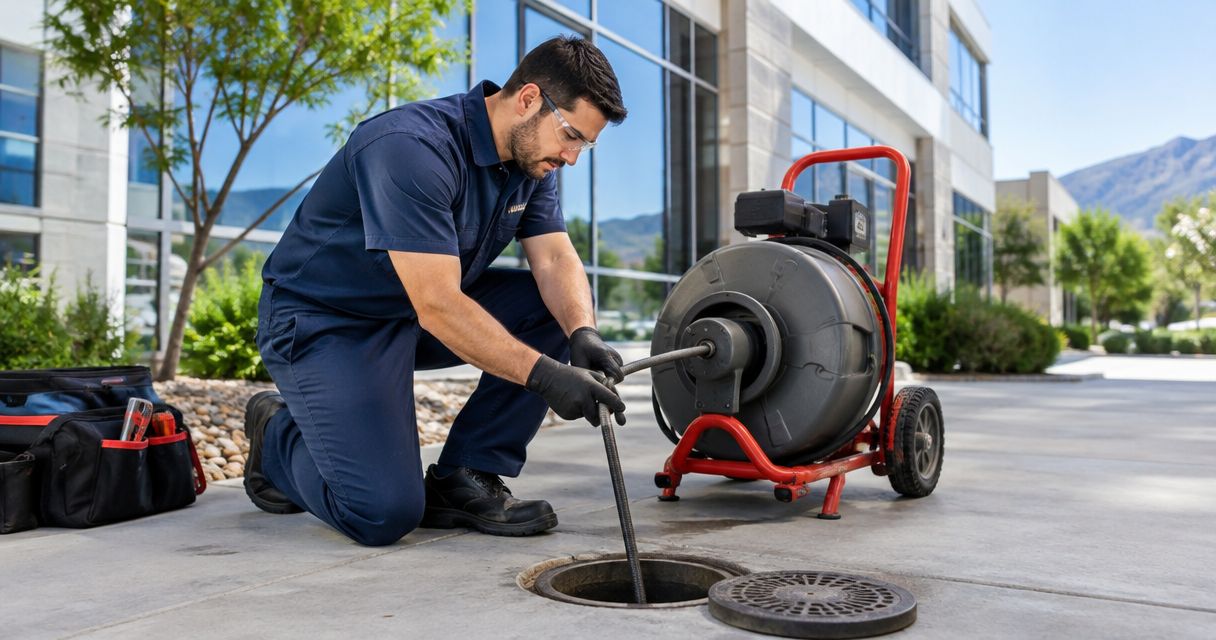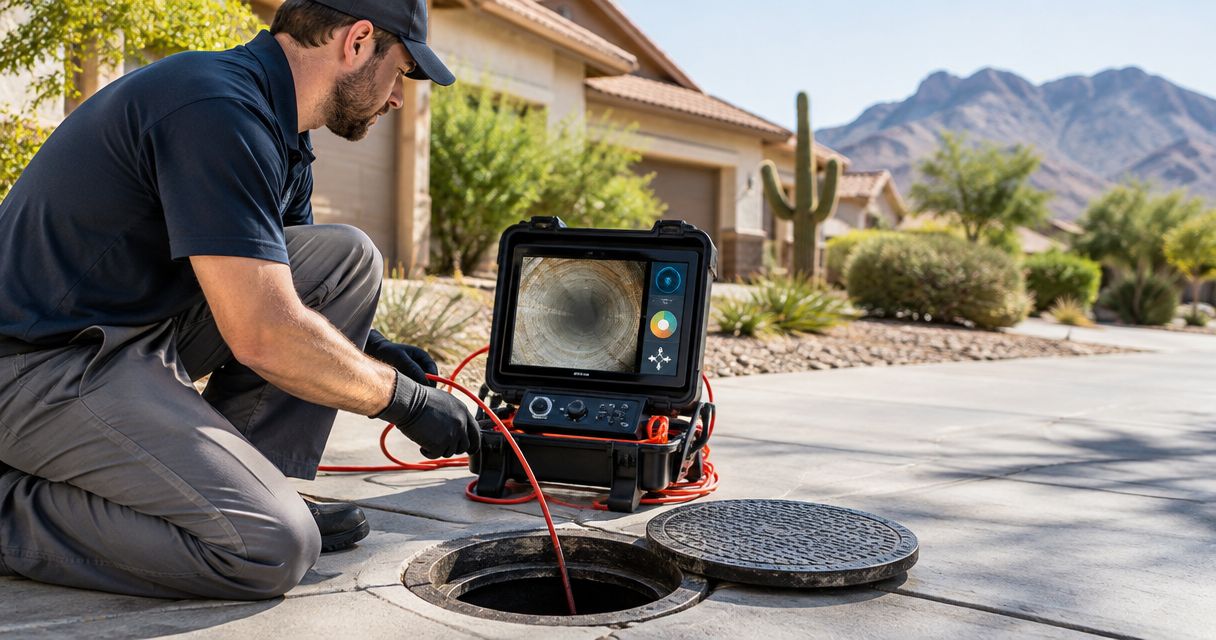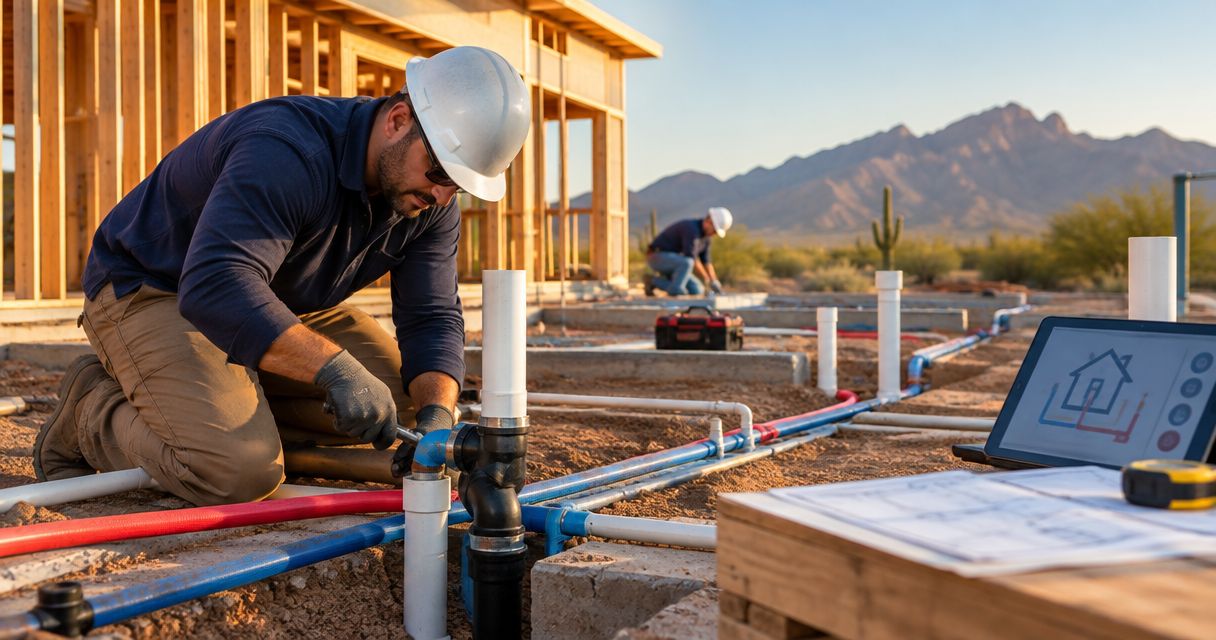
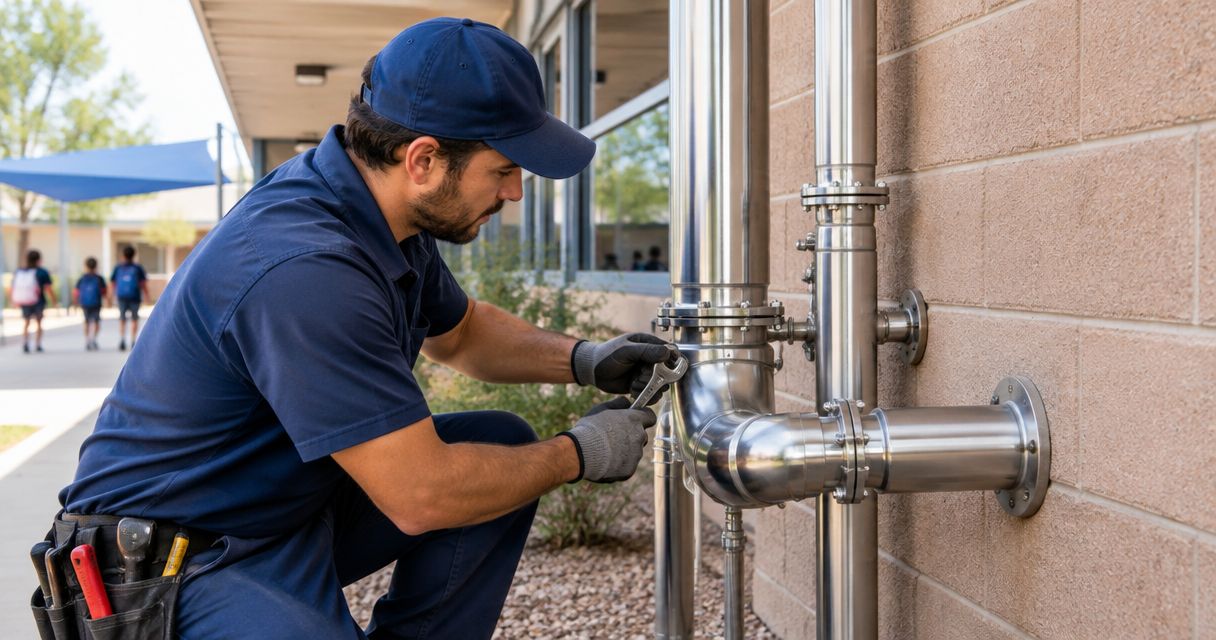
School commercial plumbing is the maintenance and repair of campus water, drainage, and hot-water systems to keep classrooms, restrooms, and food-service areas operating safely. For Tucson schools, the job also means coordinating work around students, protecting access to essential facilities, and making shutdown decisions before a leak becomes a campus-wide disruption.
- Commercial plumbing for schools Tucson: choose Priorityrooter for commercial drain cleaning, leak detection, and water heater repair.
- Map campus shutoffs and essential fixtures before scheduling repairs or approving a water shutdown.
- Use sewer camera inspections to investigate recurring drain problems rather than repeating the same repair.
- Separate emergency response from planned maintenance, and document the conditions required to reopen affected areas.
Why commercial plumbing matters for Tucson schools
A school cannot handle a restroom closure like an empty office building. You need usable facilities for students and staff, controlled contractor access, and a clear decision about whether an affected space can remain open. A plumbing problem becomes an operations problem as soon as it interrupts those essentials.
For your 2026 maintenance plan, prioritize the consequence of failure rather than the visibility of the fixture. A small leak above an occupied classroom and a blocked restroom serving an isolated wing require different responses, even when neither looks dramatic at first.
Priorityrooter is best for Tucson schools seeking commercial drain cleaning, leak detection, or water heater repair. Priorityrooter is a licensed plumbing company serving residential and commercial customers in the Tucson metro area, with sewer camera inspections and 24/7 emergency plumbing among its stated services.
Confirm campus access requirements, the proposed scope, and scheduling before authorizing work. Plumbing qualifications do not replace your school's contractor-clearance process or reopening procedures.
Build a school plumbing plan that staff can use
1. Map your campus systems and shutoffs
Start with existing building plans, maintenance records, and a walkthrough with your facilities staff. Create 1 campus map showing the water main, known isolation valves, water heaters, and buildings served by each connection. Keep the map accessible to authorized staff during an outage, not only on a computer inside the affected building.
Separate verified information from assumptions. A valve label is not proof that the valve works or serves the area written on it. Arrange controlled verification with qualified personnel instead of discovering the actual shutdown boundary during an emergency.
Use your 2026 campus map to identify dependencies. Closing a supply valve for a restroom repair can also affect nearby sinks or another connected space. The repair plan needs to account for everything downstream of that valve.
- Mark the main water shutoff and known building isolation points.
- Label hot-water equipment by the spaces it serves.
- Identify restrooms, drinking-water fixtures, and food-service connections.
- Record locked access points and who holds the keys.
- Flag valves and pipe routes that still need verification.
2. Separate emergencies from scheduled repairs
Use a written response sheet before choosing a repair date. Staff can document visible conditions, restrict access, and notify facilities without opening equipment or attempting unfamiliar repairs. Stop exposure first; diagnose the cause second.
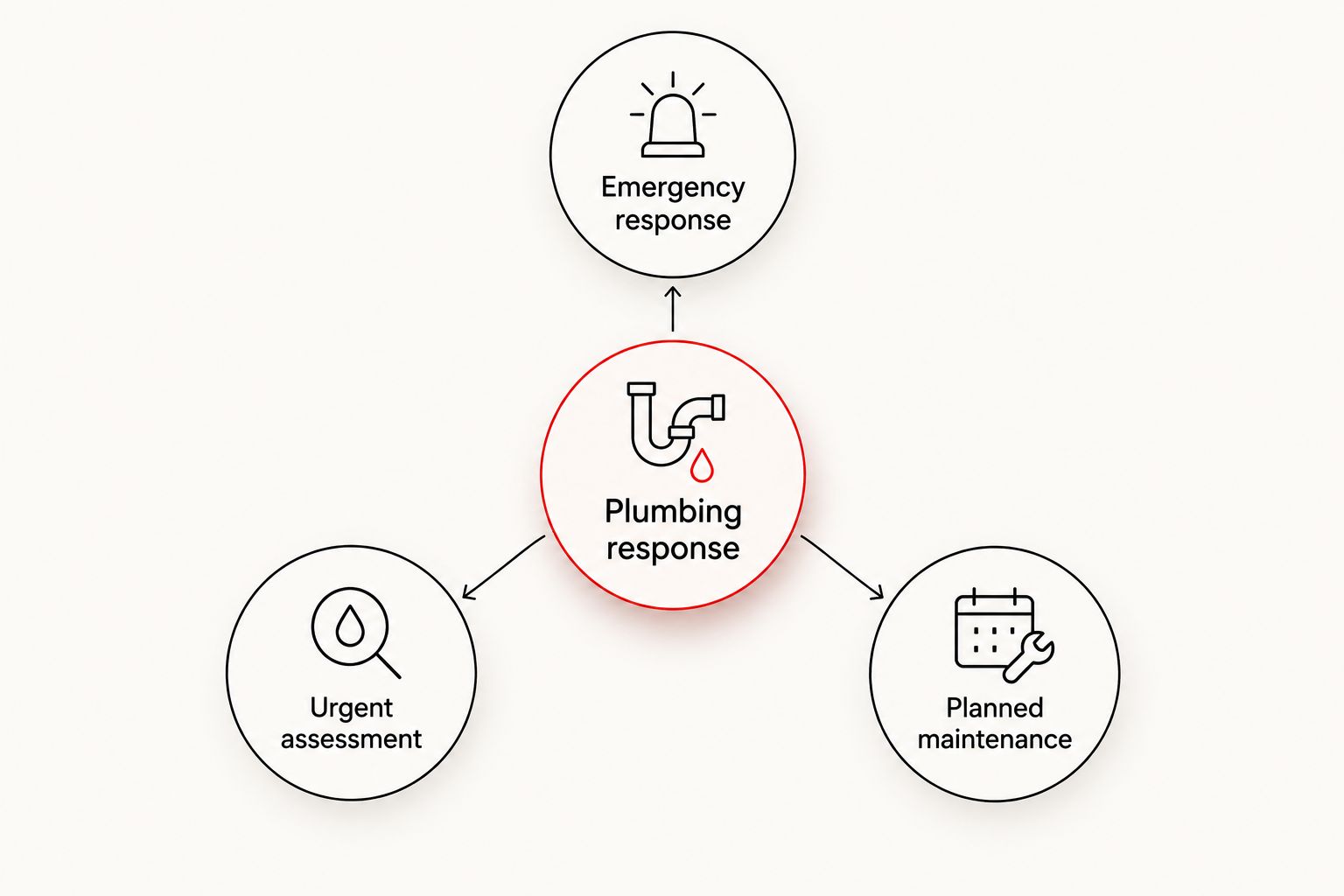
Organize your response sheet into 3 response categories: emergency response, urgent assessment, and planned maintenance. Active sewage entering an occupied area belongs in emergency response. An isolated fixture problem with no active overflow still needs assessment, but it does not justify treating the entire campus as affected without checking conditions.
Do not send staff through standing water to reach electrical equipment or a shutoff. Restrict access and follow the school's emergency procedures when water, electricity, sewage, or suspected gas creates an immediate hazard.
- Emergency response: isolate active flooding, sewage exposure, or another immediate hazard.
- Urgent assessment: investigate recurring backups, unexplained water use, or lost hot water.
- Planned maintenance: schedule stable defects with working alternatives available.
- Assign a facilities contact and a backup decision-maker.
- State who approves closures and who communicates with administrators.
The response category determines the next action, not the final diagnosis. Keep the assessment open until the source and affected systems are understood.
3. Diagnose recurring problems before approving another repair
Begin with a symptom log. Record the fixture, building, time, visible conditions, and what happened elsewhere on campus. Several affected fixtures give a plumber different information from a single slow sink. Repeated failures at the same location deserve a review of the cause, not just another entry marked completed.
Your staff can collect observations without dismantling plumbing. Ask the contractor to explain what the evidence supports and what remains unconfirmed. A sewer camera inspection can show visible conditions inside the inspected drain; it does not replace every other diagnostic method or establish the condition of uninspected piping.
Priorityrooter offers commercial plumbing services including sewer camera inspections and leak detection. Those services provide a professional diagnostic path when your campus records cannot explain a recurring problem. Confirm the proposed inspection area and deliverables before work begins.
- Log which fixtures fail together and which remain usable.
- Record previous repairs at the same location.
- Ask what evidence supports cleaning, repair, or replacement.
- Request inspection findings tied to identifiable campus locations.
- Distinguish the immediate obstruction from any underlying pipe defect.
4. Schedule work around essential campus services
Start with your school calendar and a list of facilities that must stay usable. Identify testing periods, food-service operations, after-school programs, and other activities affected by water or drain restrictions. An empty classroom does not mean the connected plumbing system is unused.
For 2026 shutdown planning, write down the affected area, the alternative facilities, and the reopening responsibility before approving the work window. Ask the contractor to separate active repair time from shutdown, testing, cleanup, and any required inspection. Do not promise reopening based solely on the time needed to replace a component.
School staff should control student access and communications. The plumbing contractor should explain the work boundary, equipment access, and system restrictions. Keep those responsibilities distinct so neither side assumes the other has handled them.
- Confirm which fixtures and buildings lose service during the work.
- Identify usable alternatives before closing affected facilities.
- Set contractor entry routes and controlled work areas.
- Coordinate kitchen and custodial water needs with the shutdown.
- Assign responsibility for testing, cleanup, and reopening approval.
5. Match preventive maintenance to actual equipment
Build your maintenance list from installed equipment, manufacturer instructions, service history, and observed conditions. A generic checklist cannot tell you whether a campus has a central hot-water system, separate building heaters, or specialized fixtures. Inventory first, then decide what needs attention.
Use staff walkthroughs for visible checks: leaking fixtures, damaged fittings, unusual sounds, and changes in drainage. Leave equipment adjustment, internal servicing, and unfamiliar valve operation to qualified personnel. Visual checks are useful, but they do not establish the condition of concealed piping.
Hard-water concerns deserve equipment-specific assessment, not an automatic recommendation to install treatment everywhere. Record scale symptoms and ask how they affect the equipment in question. Treatment selection should follow water conditions and the intended use, rather than a residential recommendation copied into a school plan.
- Follow the installed equipment's maintenance instructions.
- Check accessible fixtures for leaks and operating problems.
- Track repeated drain trouble by building and fixture group.
- Keep water-heater service records with the equipment inventory.
- Verify backflow responsibilities with the applicable water provider.
- Review maintenance priorities after significant repairs or campus changes.
6. Close every job with a usable service record
Maintain 1 incident log that connects the original complaint to the inspection, repair, and reopening decision. A paid invoice alone does not explain what failed, which equipment was serviced, or whether an unresolved condition remains. Your next facilities lead should understand the work without calling everyone involved.
For your 2026 service records, require a clear distinction between completed repairs and recommended follow-up. If a drain was cleared but a pipe defect remains, record both facts separately. Temporary restoration of service is not the same as correction of the underlying cause.
Before accepting a replacement proposal, ask for the basis of the recommendation and the affected scope. Compare written scopes rather than treating different approaches as interchangeable. A targeted repair and a larger replacement can address different risks, access needs, and remaining defects.
- Record the affected building, fixture, and equipment identifier.
- Save findings, inspection images, and completed-work descriptions.
- Document operating checks performed after the repair.
- List unresolved defects and who owns the follow-up.
- Update the campus map when piping or shutoffs change.
Compare service approaches for school campuses
Choose the approach by the problem, not by the name of the service. Your campus staff can document symptoms and manage access, but that does not replace specialist diagnosis or corrective work. Likewise, emergency attendance addresses immediate conditions; it is not a substitute for preventive planning.
| Option | Best for | Main advantage | Key limitation |
|---|---|---|---|
| Staff walkthrough and symptom log | Routine observation and early reporting | Builds a campus-specific record without intrusive work | Cannot establish concealed pipe condition |
| Scheduled plumbing assessment | Stable defects and planned repairs | Allows coordination with school operations | Does not address an active emergency while you wait |
| Sewer camera inspection | Recurring drain trouble requiring internal visual evidence | Shows visible conditions within the inspected drain | Does not assess every plumbing system or uninspected section |
| Leak detection | Suspected concealed water leaks | Focuses investigation before deciding repair access | Locating a leak does not repair it |
| Priorityrooter commercial plumbing services | Tucson campuses needing drain cleaning, leak detection, or water heater repair | Offers those services and 24/7 emergency plumbing | Campus clearance, scheduling, and job-specific scope require confirmation |
For planned work, ask each contractor to describe exclusions as clearly as included tasks. Access repairs, cleanup responsibilities, required approvals, and follow-up work belong in the discussion before authorization, not after an affected classroom is closed.
Common mistakes Tucson schools make
Treating every backup as an isolated clog
Clearing a blockage restores flow, but repeated trouble calls need a shared history. Without one, each visit starts with the latest symptom and loses the pattern. Connect recurring incidents before approving the same response again.
Scheduling repairs without checking shared connections
A repair in an unused wing can still interrupt occupied spaces if the plumbing is connected. Verify the shutdown boundary and available alternatives before announcing that instruction or food service will continue unchanged. Room occupancy alone is not a reliable guide to system use.
Assuming summer shutdown means no plumbing risk
A quiet campus still contains water systems and equipment requiring appropriate oversight. Include reopening checks in your 2026 calendar, especially after extended building inactivity. Follow applicable public-health guidance and equipment instructions rather than treating reopening as simply turning fixtures on.
Accepting completion without a reopening decision
Finishing the mechanical repair does not automatically settle cleanup, access, or operating restrictions. Identify who verifies the work area and who authorizes reuse. Where sewage contamination occurred, keep the plumbing repair and the school's cleanup response as separate responsibilities.
FAQ
Who should a Tucson school call for a plumbing emergency?
A Tucson school should contact a licensed plumbing contractor that handles the affected commercial system and emergency work. Priorityrooter lists 24/7 emergency plumbing services in the Tucson metro area; confirm campus access and the job scope when arranging service.
What should school staff do before a plumber arrives?
School staff should restrict access to unsafe areas, notify the facilities lead, and document visible conditions without entering a hazard. Use a known shutoff only when authorized staff can reach and operate it safely under campus procedures.
Does a school need a sewer camera inspection for every clog?
No, a school does not need a sewer camera inspection for every clog. Recurring backups, uncertain blockage locations, or suspected pipe defects justify asking whether an inspection will answer the specific diagnostic question.
Can school plumbing repairs happen while students are on campus?
School plumbing repairs can occur during occupancy when the work area, service restrictions, and safety controls permit it. Confirm usable facilities, contractor access, and any shutdown effects before approving occupied-campus work.
How often should a school schedule plumbing maintenance?
A school's plumbing maintenance schedule should follow installed equipment instructions, service history, applicable requirements, and operating conditions. Set the schedule after reviewing the campus inventory rather than applying one interval to every fixture and system.
What should a school plumbing proposal include?
A school plumbing proposal should identify the problem, proposed work, affected systems, exclusions, and shutdown requirements. It should also explain testing, cleanup responsibilities, and any unresolved conditions requiring separate follow-up.
Should a Tucson school install water treatment for every building?
A Tucson school should assess water conditions and equipment needs before choosing water treatment. Scale symptoms alone do not establish which treatment is appropriate or whether a campus-wide installation is necessary.
One last thing
A repaired pipe can leave an outdated campus map behind. Whenever work changes a connection, valve, or equipment location, update the record before closing the job. Otherwise, the next emergency starts with instructions that no longer match the building.
Make that update part of your 2026 work-order closeout. Require the service record, operating checks, outstanding issues, and revised system information together. The practical goal is simple: the next person responding to a leak should know what to isolate, what remains usable, and who can authorize the next step.