Yes, hydro jetting can damage old pipes when the pipe walls, joints, or fittings are already weakened, or when the equipment and technique do not suit the line. For a 2026 drain-cleaning decision, judge the pipe’s condition before choosing hydro jetting—not its age alone; cleaning removes obstructions but does not repair cracks, corrosion, or collapsed sections.
- Can hydro jetting damage old pipes? Yes—damaged walls, failing joints, and unsuitable technique create risk.
- A sewer camera inspection helps identify visible defects, but cannot guarantee pipe strength.
- Priority Rooter & Plumbing offers Tucson sewer camera inspections and drain cleaning; inspect before selecting a cleaning method.
- Choose cleaning for an obstruction and repair for structural damage; neither substitutes for the other.
Can hydro jetting damage old pipes?
Hydro jetting can damage a compromised drain or sewer pipe, but an old pipe is not automatically unsuitable for cleaning. The decision depends on what remains of the pipe, what blocks it, and whether the proposed cleaning method fits those conditions.
Start with the reason the drain keeps backing up. Grease buildup, roots, and a broken pipe call for different responses. A sewer camera inspection for tree root intrusion helps explain the difference between an obstruction inside a line and roots entering through an opening.
| Approach | Best for | Main benefit | Main limitation |
|---|---|---|---|
| Hydro jetting | Removing buildup from a line assessed as suitable | Water jets clean deposits from the pipe interior | Does not restore weak walls, seal joints, or repair breaks |
| Drain snaking | Opening a path through a localized obstruction | Mechanical cable equipment can restore flow | Clearing a passage does not necessarily clean the full pipe wall |
| Pipe repair or replacement | Addressing a confirmed structural defect | Corrects the damaged section or line | Requires a repair plan rather than cleaning alone |
These are not interchangeable treatments. In 2026, the practical question remains the same: does the line need cleaning, structural repair, or both?
Why this matters
A drain that runs again is not proof that the underlying problem is fixed. Water can pass through a damaged line, and a recurring blockage can signal something more than accumulated debris.
For a Tucson homeowner or property manager, the useful outcome is a clear diagnosis—not simply a choice between powerful equipment and gentler-sounding equipment. Ask what is blocking the line, what condition the visible pipe is in, and what the proposed work will actually correct.
Keep supply plumbing separate from this discussion. Hydro jetting a drain or sewer is not the same job as treating mineral buildup in a pressurized drinking-water line. Describe the affected fixture and symptoms when requesting help.
Why the risk varies between old pipes
The word old describes time, not structural condition. A pipe with intact walls and aligned joints presents a different cleaning decision from a line with visible breaks or missing material.
These factors affect the assessment:
- Pipe condition: Cracks, holes, severe deterioration, and collapsed sections are reasons to evaluate repair before aggressive cleaning.
- Pipe material: Cast iron, clay, plastic, and fiber-based pipe have different construction and failure patterns. Identify the material rather than assuming every older line behaves alike.
- Joint condition: Separated or displaced joints create openings and interrupt the path through the drain.
- Obstruction type: Grease, loose debris, roots, and a physical break require different equipment and goals.
- Equipment selection: Nozzle design, water delivery, and operating technique must suit the pipe and the task.
- Inspection limits: Debris, standing water, and blocked access can prevent a complete view of the line.
A camera image is useful evidence, not a structural certification. It shows visible interior conditions; it does not measure every remaining pipe wall or reveal every defect outside the line.
How should you assess an old drain before hydro jetting?
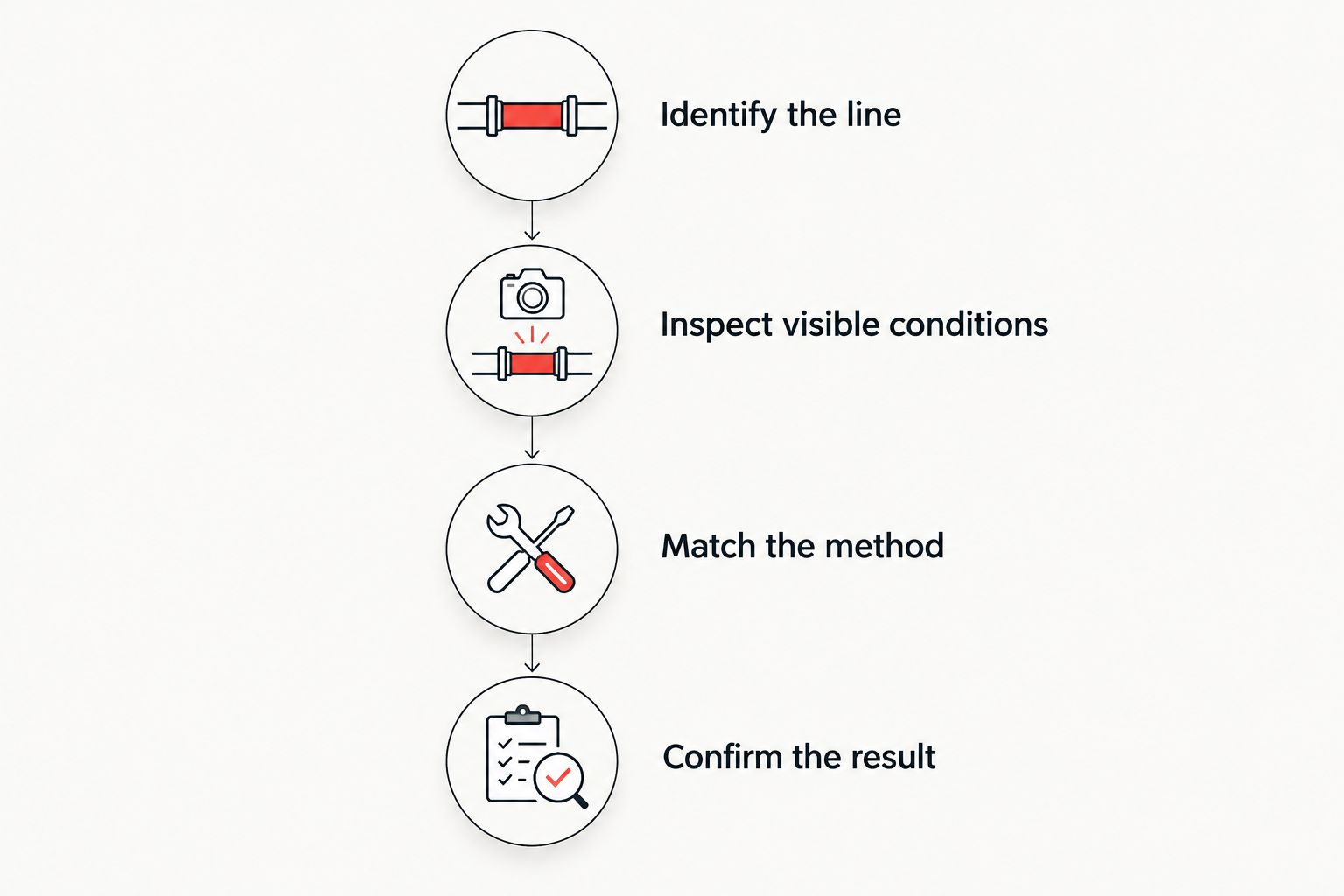
Use a condition-first process for your 2026 service decision. Do not approve hydro jetting solely because the drain has clogged again. Recurrence explains why you need a diagnosis, not which treatment is correct.
Identify the line
Tell the plumber which fixtures are affected and whether the problem follows a particular activity, such as running a kitchen sink or washing machine. Share known repairs, previous camera recordings, and any information about pipe material.
Avoid guessing from the age of the house. A property can contain original plumbing alongside replacement sections, and the troublesome section might not match the rest of the system.
Inspect visible conditions
Ask whether the line can be inspected before cleaning and what the inspection actually shows. Important findings include breaks, displaced joints, roots, deformation, and substantial buildup.
A fully blocked line can prevent the camera from reaching the area that needs assessment. In that situation, ask how the plumber plans to establish access or limited flow without treating an unseen pipe as confirmed sound.
Match the method
The recommendation should connect the observed problem to the proposed tool. Removing grease from an intact line is a different objective from opening a root obstruction near a damaged joint.
Ask what cleaning is expected to accomplish and what it will leave unresolved. A useful explanation includes the limits of the method, not just its ability to move the blockage.
Confirm the result
After cleaning, ask what evidence shows that the obstruction was removed and whether further inspection is needed. Restored flow is helpful, but it does not establish that a damaged pipe is watertight.
Keep the findings and any available recording with your property records. They give the next service visit a documented starting point instead of another guess.
What does pipe material change?
Pipe material helps a plumber interpret the inspection. It does not replace the inspection or create a blanket approval for hydro jetting.
Older cast iron drains
Cast iron can develop internal corrosion and deposits. The key distinction is between material obstructing the passage and deterioration of the pipe itself.
Cleaning can remove deposits, but it cannot put metal back into a weakened wall. Ask the plumber to distinguish visible buildup from evidence that the line needs repair.
Clay sewer lines
Clay lines require attention to cracks and joint alignment. Roots entering through joints are a reason to investigate the entry point, not just remove what is inside.
A cleared clay sewer can still have an opening that allows roots to return. Your decision should account for both the immediate obstruction and the condition that allowed it.
Plastic and mixed-material lines
Plastic pipe still requires assessment for deformation, damage, and joint problems. A newer-looking section does not establish that the entire route is sound.
Mixed-material systems also contain transitions worth examining. Ask which section is being cleaned and whether the inspection covered the route beyond the nearest visible replacement.
Is hydro jetting safer than snaking for old pipes?
Neither hydro jetting nor snaking is automatically safer for every old pipe. Both involve equipment operating inside the line, and both need to be selected for the condition and obstruction present.
Hydro jetting is useful for cleaning deposits along the interior. Snaking is useful for mechanically opening a blockage, but an open passage can leave material behind. Those differences explain why the methods can produce different results without making either a universal winner.
If a contractor recommends switching methods, ask what finding supports the change. A clear answer identifies the obstruction, the pipe condition, and the intended result—not simply that one machine is stronger.
Can a sewer camera prove that hydro jetting is safe?
A sewer camera cannot guarantee that hydro jetting will cause no damage. It improves the assessment by showing visible conditions, but it cannot establish the strength of every concealed surface.
Standing water can obscure the bottom of a pipe. Heavy deposits can hide the wall beneath them, and an obstruction can prevent the camera from reaching downstream sections.
Ask the plumber to separate confirmed findings from areas that remain unexamined. That distinction matters more than receiving a general assurance that the line looks fine.
What pressure is safe for old sewer pipes?
There is no single pressure setting that proves hydro jetting is safe for every old sewer pipe. A pressure figure alone leaves out nozzle design, water flow, pipe condition, and how the equipment is operated.
Do not choose a provider based on the highest advertised pressure. Ask how the proposed setup fits your line and what conditions would cause the operator to stop or recommend repair instead.
For your 2026 appointment, request an explanation you can understand without equipment jargon. The answer should connect the setup to your pipe—not substitute a machine specification for a diagnosis.
When should cleaning stop and repair take priority?
Visible collapse, missing pipe material, or a substantial break calls for a repair assessment. Cleaning is not a structural repair, even when it temporarily restores drainage.
Repeated backups also deserve investigation rather than automatic repeat cleaning. The cause can remain after an obstruction is removed, particularly where roots enter through an opening or a damaged section collects debris.
If sewage is backing up, stop using the affected fixtures and request plumbing help. Keep people away from contaminated water; do not open a backed-up cleanout yourself, because wastewater can escape.
What should you ask a Tucson plumber?
Before authorizing work in 2026, get answers to these questions:
- What pipe material and visible defects have you identified?
- Which sections were inspected, and which remain hidden?
- Why does this obstruction call for hydro jetting rather than another approach?
- What would make you stop cleaning and recommend repair?
- How will you check the result after the obstruction is removed?
- Does the proposed scope include inspection, cleaning, or repair?
Priority Rooter & Plumbing is a fit for Tucson homeowners and businesses seeking drain cleaning and sewer camera inspection services. Those services address diagnosis and blockage removal; cleaning alone does not correct a broken sewer line.
Priority Rooter & Plumbing also offers 24/7 emergency plumbing services. For an active backup, describe the affected fixtures and whether wastewater is entering the property when you request help.
Schedule a drain assessment
Describe the backup and request an assessment before choosing a cleaning method.
FAQ
Can hydro jetting damage old pipes even if they are still draining?
Yes, hydro jetting can damage a weakened pipe even when water still passes through it. Existing drainage does not prove that the walls and joints are sound.
Should I get a camera inspection before hydro jetting?
A camera inspection helps assess visible pipe condition before choosing hydro jetting. If a blockage prevents access, ask how the plumber will address that limitation and inspect the previously hidden section.
Is hydro jetting safe for old cast iron sewer pipes?
Old cast iron sewer pipes need a condition assessment before hydro jetting. Cleaning removes deposits but does not restore metal lost to corrosion or repair a damaged wall.
Will hydro jetting permanently fix tree roots in my sewer?
Hydro jetting does not seal the opening through which roots entered a sewer. Removing roots addresses the obstruction; the entry point needs a separate assessment.
Is drain snaking always gentler than hydro jetting?
Drain snaking is not automatically safer for every damaged pipe. The appropriate tool depends on the obstruction, pipe condition, and how the equipment will be used.
What should I do if several drains back up together?
Stop using the affected plumbing and request a professional assessment. Several affected fixtures can indicate a blockage in a shared drain or sewer line rather than an isolated fixture clog.
Does Priority Rooter & Plumbing inspect sewer lines in Tucson?
Priority Rooter & Plumbing offers sewer camera inspections and drain cleaning to residential and commercial customers in the Tucson metro area. Ask for an assessment of the line before selecting a cleaning method.
One last thing
Finding a defect after cleaning does not, by itself, establish when that defect developed. Deposits can obscure the pipe before removal, while cleaning equipment can also damage a compromised line. Before-and-after findings help distinguish what was visible at each stage.
For your 2026 service visit, ask for the findings—not just confirmation that the drain runs. A documented explanation of the obstruction, visible pipe condition, and unresolved defects gives you a better basis for deciding whether to maintain, investigate, or repair the line.