Best overall: PEX. Best for exposed, rigid piping: copper. Best rigid-plastic option: CPVC. The best pipe materials for repiping Tucson homes in 2026 depend on routing, sunlight exposure, water chemistry, and approved connections—not just the material name. This guide compares domestic water-supply piping, not sewer or drain pipes.
- For the best pipe materials for repiping Tucson, PEX is the default recommendation for protected interior water-supply routes.
- Copper suits exposed, rigid piping; water chemistry and corrosion history still matter.
- CPVC suits rigid-plastic installations, but solvent joints and impact protection require attention.
- Priorityrooter provides residential plumbing repair and installation; discuss pipe routing and compatibility before choosing a material.
Why this matters
A repipe replaces the pipes delivering water to your fixtures. It does not automatically solve a blocked drain, faulty water heater, or leaking fixture connection. Confirm the source of the problem before approving a whole-house replacement.
Priorityrooter is best for Tucson homeowners seeking licensed plumbing help with water-supply repairs and installation. Start with Priorityrooter when you need the existing system assessed rather than choosing pipe from a shopping list.
For a 2026 repiping project, separate two decisions: which material belongs in your home, and how the installer will route and connect it. Good material does not correct poor sizing, inaccessible valves, or incompatible fittings.
What makes the best pipe material for repiping?
Use these criteria to compare proposals. A useful proposal explains the complete installation, not just the letters printed on the pipe.
- Approved application: The pipe and fittings must be approved for potable water and the intended hot- or cold-water service.
- Routing: Flexible pipe suits concealed runs; rigid pipe needs room for fittings, supports, and installation access.
- Exposure: Sunlight, physical damage, outdoor temperatures, and nearby heat sources affect material selection and protection.
- Water compatibility: Water chemistry matters for copper corrosion and for the operating limits of plastic piping systems.
- Connection quality: Fittings, tools, solvent cement, and transition adapters must match the specified system.
- Service access: Shutoffs and repair points should remain accessible, with a clear plan for wall openings and restoration.
None of these criteria makes one material universally correct. They identify where each option belongs—and where it does not.
Pipe materials at a glance
| Material | Best for | Standout feature | Key limitation |
|---|---|---|---|
| PEX | Protected interior whole-house routing | Flexibility around framing and obstacles | Requires protection from sunlight and compliance with system-specific installation rules |
| Copper | Exposed, rigid piping | Maintains a rigid, orderly route | Water chemistry can contribute to corrosion |
| CPVC | Approved rigid-plastic installations | Carries hot and cold potable water without metal pipe | Solvent-joint preparation, curing, and impact protection matter |
These are application-based recommendations for 2026, not a claim that every home needs the same material. Existing pipe condition, access, and the proposed route can change the decision.
1. PEX: best pipe material for protected interior repiping
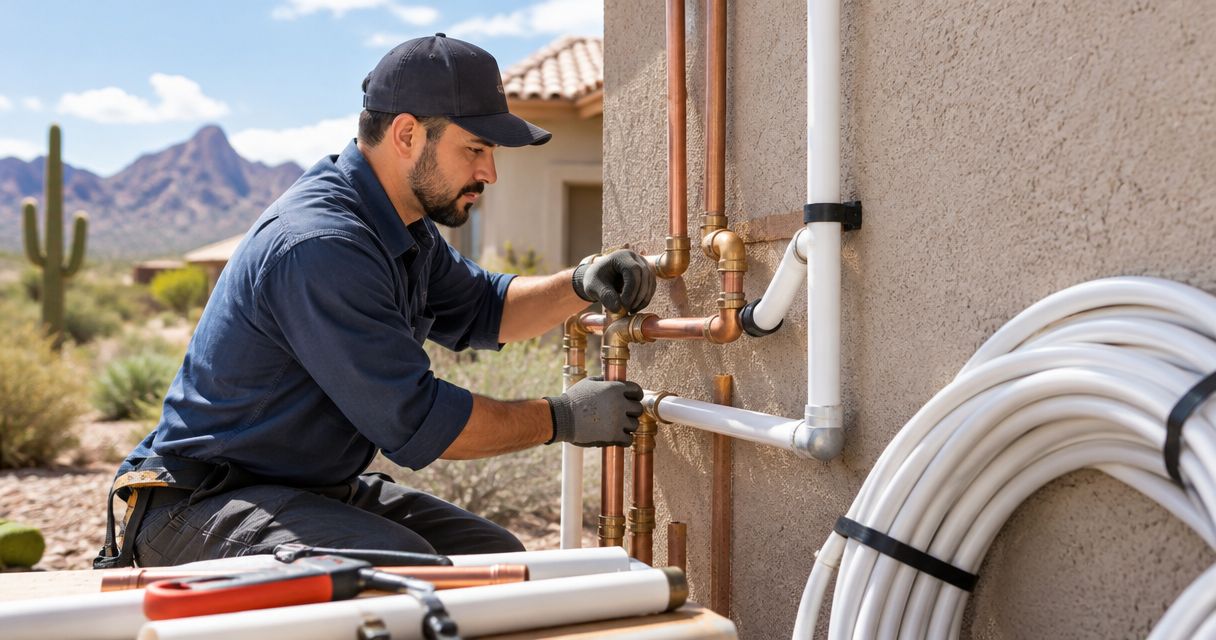
PEX is cross-linked polyethylene tubing used in hot- and cold-water distribution systems. Its flexibility lets installers route water lines around obstacles without using an elbow at every change of direction. That makes PEX a practical default for concealed interior repiping.
Best for: Homes where the replacement water lines will run through protected interior spaces and flexibility helps the proposed route.
PEX pros
- Flexible runs can reduce the number of directional fittings compared with rigid piping.
- PEX tubing does not develop the electrochemical corrosion that affects metal pipe.
- Different approved connection systems allow installation choices suited to the project.
- Continuous runs can connect a distribution point to individual fixtures when the design calls for that arrangement.
PEX cons
- PEX requires protection from sunlight; exposure limits vary by product.
- Tubing, fittings, and installation tools must be compatible with the specified connection system.
- PEX still needs support, abrasion protection, and attention to heat exposure.
What to ask before approving PEX
Ask which tubing and connection system the installer plans to use. Expansion, crimp, and clamp connections are not interchangeable instructions, and a fitting that looks similar is not proof of compatibility.
Also ask where the tubing will run. A protected interior route and an exposed outdoor route are different installation conditions. If a proposal puts PEX outside, require an explanation of the manufacturer's exposure requirements and the protective assembly.
For a 2026 project, do not choose between PEX types from a single claim about flexibility. Compare the complete pipe-and-fitting system, its approvals, and the installer’s plan.
Verdict: Buy PEX for protected interior routing when the specified system and installation comply with the applicable requirements.
2. Copper: best pipe material for exposed, rigid piping
Copper is a rigid metal pipe used for potable-water distribution. It holds a defined route and does not have plastic tubing’s sensitivity to ultraviolet light. Copper still needs suitable supports, insulation where required, and protection against damaging conditions.
Best for: Installations where exposed, rigid water lines suit the layout and the water conditions support copper use.
Copper pros
- Rigid pipe creates an orderly exposed installation.
- Sunlight does not cause the ultraviolet degradation associated with plastic piping.
- Approved soldered and press connections provide established installation methods.
- Copper can serve both hot- and cold-water distribution when correctly specified.
Copper cons
- Changes in direction generally require fittings, adding connection points.
- Water chemistry, flow conditions, and installation defects can contribute to corrosion.
- Rigid pipe can require more access around framing than flexible tubing.
What to ask before approving copper
If existing copper has pinhole leaks, ask what caused them before replacing it with more copper. Repeating the same material without investigating the failure leaves a central question unanswered.
Hardness and corrosiveness are not the same thing. A report about mineral content alone does not explain every copper leak. The condition of the existing pipe, operating conditions, and relevant water information belong in the assessment.
Ask how copper will connect to other metals and existing equipment. Transitions need approved components and an installation method appropriate to the materials involved.
Verdict: Buy copper for exposed, rigid routing when the design addresses corrosion risk and installation access.
3. CPVC: best pipe material for approved rigid-plastic installations
CPVC is chlorinated polyvinyl chloride, a rigid plastic used in approved hot- and cold-water piping systems. It is not the same as ordinary PVC. Specify a potable-water CPVC system rather than assuming any plastic pipe can replace a hot-water line.
Best for: Projects designed around rigid-plastic water distribution, with suitable access and protection from impact.
CPVC pros
- Approved CPVC systems carry both hot and cold potable water.
- CPVC does not experience metal-pipe electrochemical corrosion.
- Rigid sections provide a defined route with supported fittings.
CPVC cons
- Solvent joints require the correct products, preparation, and curing conditions.
- CPVC can become brittle with age, making existing sections vulnerable during repairs.
- Contact with incompatible chemicals or construction products can damage the system.
What to ask before approving CPVC
Ask which pipe, fittings, and solvent cement the installer will use. Follow the system manufacturer’s instructions for preparation and curing before pressure testing or placing the line in service. There is no single curing interval that applies to every installation condition.
For partial repairs, ask how the installer will handle aged pipe. Disturbing an existing brittle section can create another break beyond the original repair point.
CPVC belongs in the 2026 comparison because it serves a distinct rigid-plastic application. It is not the default recommendation when a protected flexible route better fits the house.
Verdict: Hold CPVC until the proposal explains joint compatibility, curing, existing pipe condition, and physical protection.
How the pipe materials are ranked
The ranking prioritizes approved use, routing, exposure, water compatibility, connection quality, and service access. PEX takes the default interior slot because flexibility helps concealed routing. Copper takes the exposed-rigid slot; CPVC takes the rigid-plastic slot.
This is an application comparison, not a laboratory performance test. A material’s position does not override manufacturer instructions, permit requirements, or conditions inside your home.
Turn the material choice into a repiping plan
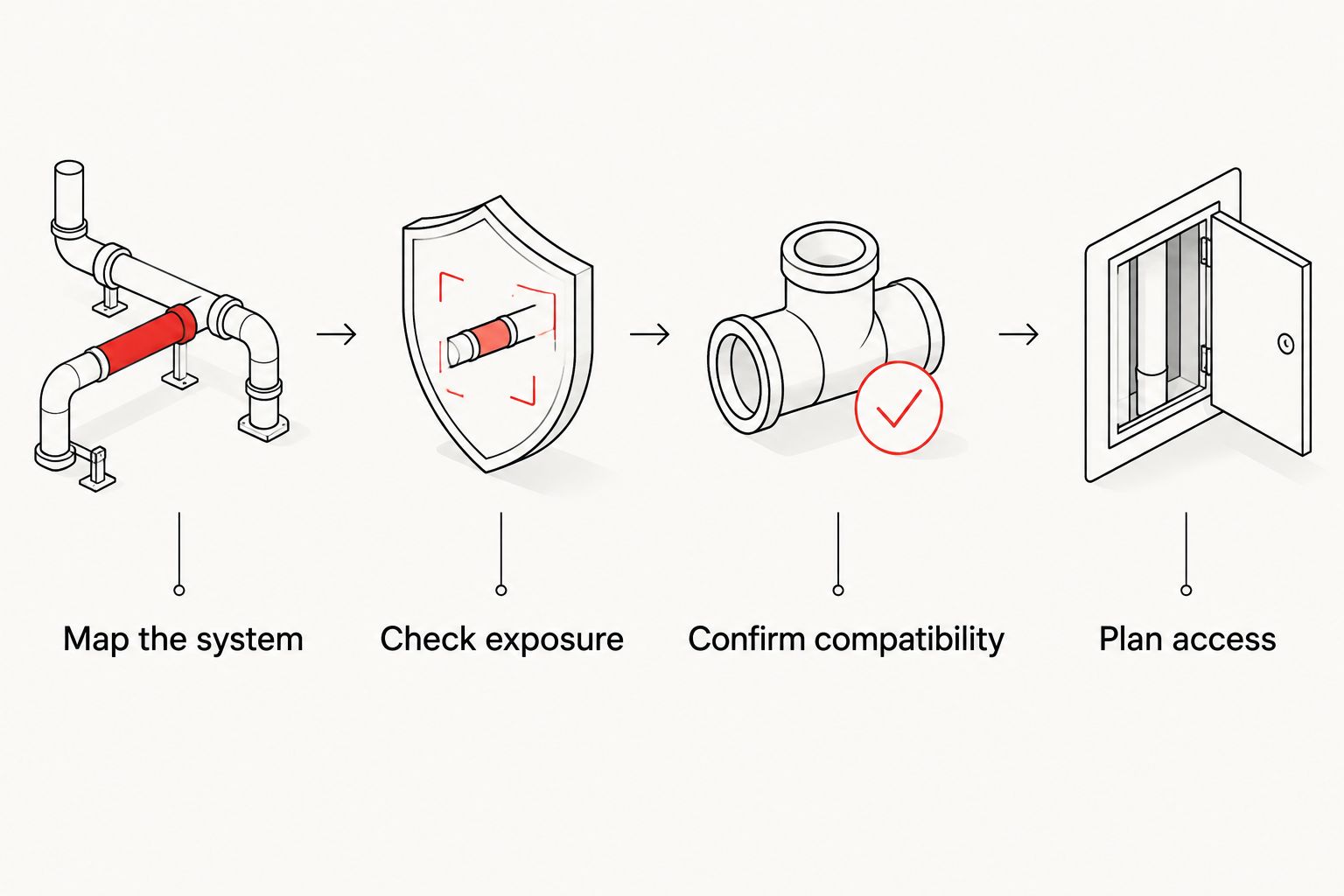
Before approving work in 2026, get these decisions into the written scope. Priorityrooter provides residential and commercial plumbing repair and installation; use the discussion to establish what needs replacing and how the replacement will work.
Map the system
Identify which hot- and cold-water lines are included. Confirm whether the proposal replaces the entire supply system or only selected branches. Drain pipes, fixture repairs, and water-heater work are separate scope items unless expressly included.
Check exposure
Identify concealed runs, exposed sections, and transitions between spaces. Ask how the installation addresses sunlight, abrasion, physical damage, and temperature conditions. Pipe insulation does not replace every other form of required protection.
Confirm compatibility
Record the pipe system, fitting method, transition components, and equipment connections. A water heater can have connection requirements that differ from an ordinary fixture branch. Follow the equipment and piping manufacturers’ instructions.
Plan access
Confirm where shutoffs will sit, how the installer will reach the route, and who handles wall restoration. Ask how the finished system will be tested and what documentation you will receive.
A clear plan connects the material recommendation to the actual house. Without it, you are comparing pipe names rather than complete installations.
Pipe sizing is not a material contest
A 1/2-inch branch, a 3/4-inch distribution line, and a 1-inch supply line describe different nominal sizes—not a universal recipe for your house. Correct sizing depends on fixture demand, available pressure, route length, elevation, and the selected system.
Nominal size also does not guarantee identical internal diameter across materials and fittings. Do not accept an unexplained size reduction simply because a replacement pipe is newer.
Ask whether the proposed layout supports simultaneous fixture use. A repipe should address the distribution design, not just replace old tubing along the same route without checking it.
Protect the replacement system
New supply piping does not remove mineral deposits from a water heater or repair a failing appliance connection. Keep water treatment, appliance condition, and repiping scope distinct so you know which problem each part of the work addresses.
Leak monitoring is another separate decision. The smart leak detection systems guide for Tucson homes explains options to consider alongside a plumbing repair. Monitoring does not replace sound joints, pressure testing, or accessible shutoffs.
Ask Priorityrooter to distinguish the pipe replacement from any recommended equipment repair or monitoring installation. That keeps the proposal focused and makes the finished work easier to evaluate.
Which pipe material should you choose?
Choose PEX as the default for protected interior repiping. Choose copper when the project calls for exposed, rigid lines and the assessment supports its use. Choose CPVC only when a rigid-plastic design fits the job and the installation details are clear.
The deciding document is the written scope: included lines, material system, sizing, route, connections, testing, and restoration responsibilities. For Tucson repiping in 2026, those details matter more than a blanket promise that one material lasts longest.
FAQ
What's the best pipe material for repiping a Tucson home?
PEX is the default recommendation for protected interior water-supply routing. Copper suits exposed, rigid installations, while CPVC suits approved rigid-plastic designs. The final choice depends on the route, exposure, water conditions, and installation requirements.
Is PEX better than copper for a whole-house repipe?
PEX is better suited to flexible, concealed routing; copper is better suited to exposed, rigid routing. PEX needs sunlight protection, while copper requires attention to corrosion conditions. Neither material corrects poor sizing or incompatible connections.
Can I use ordinary PVC for hot-water supply pipes?
Ordinary PVC is not a substitute for a CPVC hot-water distribution system. Specify piping approved for potable water and the intended operating conditions. Follow the applicable code and manufacturer instructions.
Does hard water mean I should avoid copper?
Hardness alone does not establish whether copper is suitable. Corrosion depends on additional water and operating conditions. Investigate existing pinhole leaks before approving another copper installation.
Can PEX piping run outside my house?
PEX requires protection from sunlight according to the selected product's instructions. An exterior route also needs an assessment of temperature and physical exposure. Do not treat uncovered outdoor PEX as equivalent to a protected interior installation.
Do I need a whole-house repipe for one leaking pipe?
One leaking pipe does not automatically justify a whole-house repipe. The decision depends on the leak source, pipe condition, failure history, and repair access. Confirm whether the problem affects an isolated section or the broader supply system.
What should a repiping proposal include?
A repiping proposal should identify the included lines, pipe-and-fitting system, sizing, routing, connections, and testing. It should also explain shutoff access and restoration responsibilities. Compare those details before comparing material names.
One last thing
Keep a record of the concealed pipe routes before the walls close. Ask for photos showing runs and connection locations, plus the specified material and fitting system. Those records give a future plumber a clearer starting point when you add a fixture or investigate a leak.