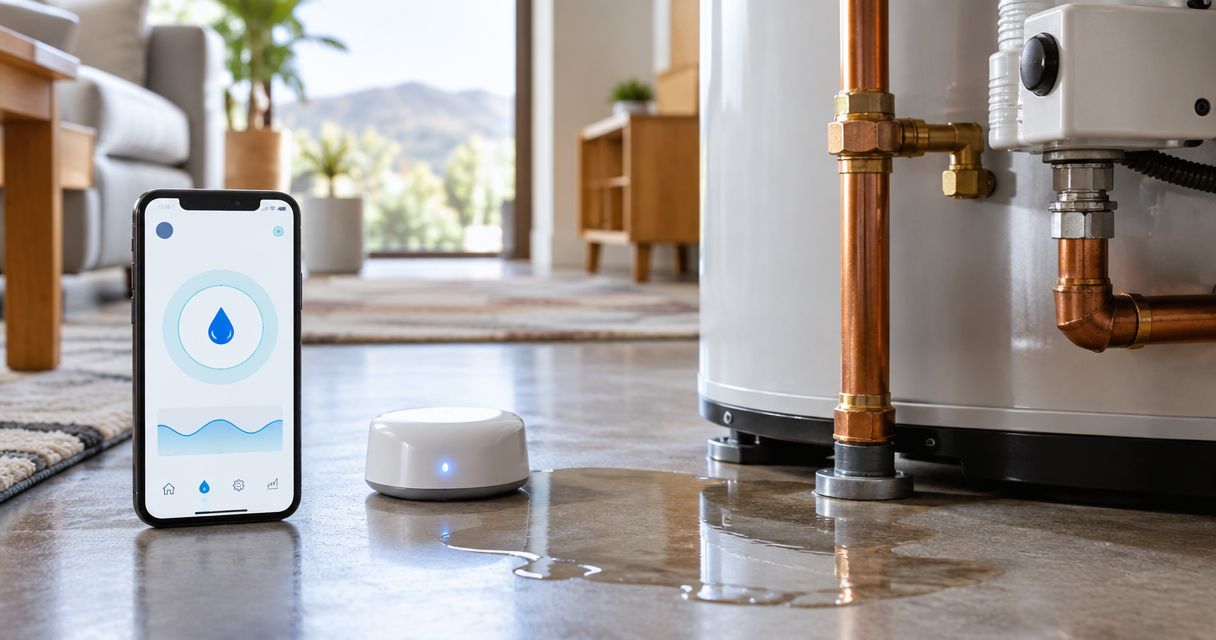
Best overall: a whole-home flow monitor with automatic shutoff. Best for targeted alerts: smart spot sensors. Best for wider floor coverage: water-sensing cables. Best for managed response: professionally monitored water sensors. For Tucson homes in 2026, choose the protection method first, then compare equipment that fits your plumbing and response needs.
- The best smart leak detection systems Tucson homeowners choose match the leak location, plumbing layout, and response plan.
- Whole-home flow monitoring with automatic shutoff is the default choice when stopping incoming water is the priority.
- Smart spot sensors suit accessible leak locations; sensing cables cover a longer floor-level path.
- Priority Rooter & Plumbing provides leak detection for Tucson homeowners who need a plumbing problem located.
Why this matters
A leak alert and a water shutoff do different jobs. An alert tells you something needs attention; a shutoff valve interrupts the incoming water supply. Neither repairs the failed pipe, fitting, or appliance.
Priority Rooter & Plumbing is a licensed leak detection provider for Tucson homeowners who need the source located. Use Priority Rooter & Plumbing for the plumbing side of the decision, rather than treating a monitoring device as a repair.
For your 2026 shortlist, separate prevention from diagnosis. A system can help you notice a problem or limit continued water flow, but an existing wet floor, unexplained meter movement, or suspected concealed leak needs investigation. Buying another sensor does not resolve the cause.
This guide ranks system types, not individual product brands. That distinction keeps the choice practical: decide what must happen during a leak before comparing apps, accessories, and installation requirements.
What makes the best smart leak detection system?
Judge each option against these criteria before choosing equipment:
- Detection method: Does it sense water at a specific location, measure incoming flow, or combine both?
- Response: Does it send an alert, close a compatible valve, notify a monitoring service, or require your action?
- Plumbing fit: Confirm pipe size, connection type, installation location, and access to the main supply.
- Failure behavior: Check what works when internet service, electrical power, or the app connection fails.
- Maintenance: Review battery checks, sensor testing, valve exercise, and access for future service.
- Household fit: Account for irrigation, water treatment equipment, visitors, and other legitimate changes in water use.
Choose the response you need before choosing the app you like. A clear notification is useful only when someone can act on it.
Smart leak detection systems at a glance
| Rank and system type | Best for | Standout function | Key limitation |
|---|---|---|---|
| 1. Whole-home flow monitor with automatic shutoff | Owners prioritizing control while away | Measures incoming water use and can close a valve | Needs compatible plumbing and correctly configured settings |
| 2. Smart spot sensors | Targeted alerts at accessible fixtures | Detect water where the sensor makes contact | Cannot detect water that never reaches the sensor |
| 3. Water-sensing cables | Longer floor-level detection paths | Detect water along a sensing cable | Coverage depends on cable placement and access |
| 4. Professionally monitored water sensors | Households needing an assigned alert recipient | Routes alerts through a monitoring arrangement | Notification does not necessarily include water shutoff or repair |
1. Whole-home flow monitors: best for automatic shutoff
A whole-home flow monitor measures water moving through the supply line where it is installed. A configuration with an automatic shutoff valve can interrupt that supply when its detection rules trigger. Confirm that the exact equipment includes valve control; monitoring alone does not mean shutoff.
Best for: Tucson homeowners who want a response that does not depend entirely on seeing a phone notification.
This is the default 2026 choice when controlling continued water flow matters most. Installation position determines what the system monitors and what the valve can isolate. A branch upstream of the device remains outside that coverage.
Whole-home flow monitor pros:
- Monitors incoming water use without placing a sensor beside every fixture.
- Automatic shutoff can limit continued supply through the controlled line.
- Provides water-use information that can support a plumbing investigation.
- Offers a central control point when the installation layout supports it.
Whole-home flow monitor cons:
- Installation involves the water supply and requires a suitable location.
- Detection settings need to accommodate legitimate household use.
- Closing the main supply does not remove water already on the floor or inside equipment.
Before installation, ask how irrigation and water treatment equipment connect to the main. Also confirm how you reopen the valve locally if the app is unavailable. Do not assume every model handles those situations the same way.
Verdict: Buy this system type when automatic shutoff is your main requirement, after confirming plumbing compatibility.
2. Smart spot sensors: best for targeted fixture alerts
Smart spot sensors detect water at their installed location and send an alert through their supported connection. Place them where escaping water is likely to reach the sensing contacts. A sensor tucked somewhere convenient but outside the water path offers little protection.
Best for: Homeowners who want alerts beneath accessible sinks, near a washing machine, or beside a water heater.
Spot sensors are the simplest starting point when you do not want to modify the main supply. Start with 1 sensor at each selected leak location, then follow the manufacturer's placement instructions. That is a placement plan, not a claim that one device covers an entire room.
Smart spot sensor pros:
- Targets known fixture and appliance locations.
- Does not require cutting into the water supply.
- Allows you to expand coverage location by location.
- Makes it straightforward to identify which monitored area triggered an alert.
Smart spot sensor cons:
- Only detects water that reaches its sensing area.
- Battery-powered equipment needs battery checks.
- Alerts alone leave the water running until someone intervenes.
Check whether the sensor needs a hub and whether the planned location has a reliable connection. Keep the device accessible so you can test it without dismantling a cabinet or moving an appliance unsafely.
For a 2026 installation, write down who receives alerts and who can reach the property. A second recipient helps only when that person has permission and a practical way to respond.
Verdict: Buy smart spot sensors for targeted alerts; skip them as your only answer to a suspected concealed leak.
3. Water-sensing cables: best for wider floor-level coverage
Water-sensing cables detect moisture along their sensing length rather than at one small contact area. They suit locations where water can emerge at different points across an accessible floor or equipment area. Confirm which parts of the supplied cable actually sense water; connection leads and sensing sections are not interchangeable.
Best for: Homeowners covering a longer path around accessible plumbing equipment or an appliance area.
Cable placement should follow the likely water path without creating a trip hazard or blocking maintenance. Do not route equipment through doors, tight gaps, or appliance moving parts unless the manufacturer's instructions specifically permit it.
Water-sensing cable pros:
- Covers a longer detection path than a single spot contact.
- Fits irregular layouts where one sensor position leaves gaps.
- Helps monitor accessible areas around multiple potential leak points.
Water-sensing cable cons:
- Water must reach the sensing cable to trigger detection.
- Cleaning, storage, or equipment movement can disturb placement.
- Shutoff requires a supported valve connection; the cable itself does not close plumbing.
Think about what happens during routine housekeeping. A cable hidden under stored belongings can become difficult to inspect. A cable beside an appliance must remain accessible without encouraging you to reach near electrical components during a leak.
Use cable coverage to solve a layout problem, not to avoid finding an active leak. Water appearing outside the monitored path still needs attention.
Verdict: Buy water-sensing cables when a longer detection path solves a specific coverage gap; skip unnecessary cable runs.
4. Professionally monitored sensors: best for assigned alert handling
Professionally monitored water sensors send events through a monitoring arrangement rather than relying only on your personal notifications. The actual response depends on the service agreement. Confirm whether the service contacts you, contacts another authorized person, or supports additional actions.
Best for: Households that need a defined alert recipient when the owner is unavailable.
For your 2026 comparison, separate monitoring from dispatch and repair. A notification service is not automatically a plumbing service, and an alert is not proof that somebody has entered the property or stopped the leak.
Professionally monitored sensor pros:
- Establishes an alert-handling arrangement outside your own phone settings.
- Can support a documented contact sequence.
- Fits households that already use compatible monitored equipment.
Professionally monitored sensor cons:
- Service responsibilities vary and need confirmation.
- Monitoring does not necessarily include an automatic shutoff valve.
- Property access and plumbing repair still require a separate plan.
Ask what happens when nobody answers. Then check who is authorized to enter, where the main valve is, and how that person will contact a plumber. The agreement should distinguish a received alert from a completed response.
Verdict: Buy monitored sensors when assigned alert handling fills a real gap; skip them if they merely duplicate notifications without improving response.
How we ranked these systems
The ranking prioritizes control of continued water flow, useful detection coverage, installation fit, and a clear response path. Whole-home automatic shutoff leads because it can act on the controlled supply; spot sensors and cables follow because they offer location-specific detection without that same standalone control.
Professionally monitored sensors occupy a different slot: alert handling. Their value depends on the response agreement, not on a universal equipment advantage. No brand earns a recommendation here on an unverified performance claim.
Plan the installation before buying
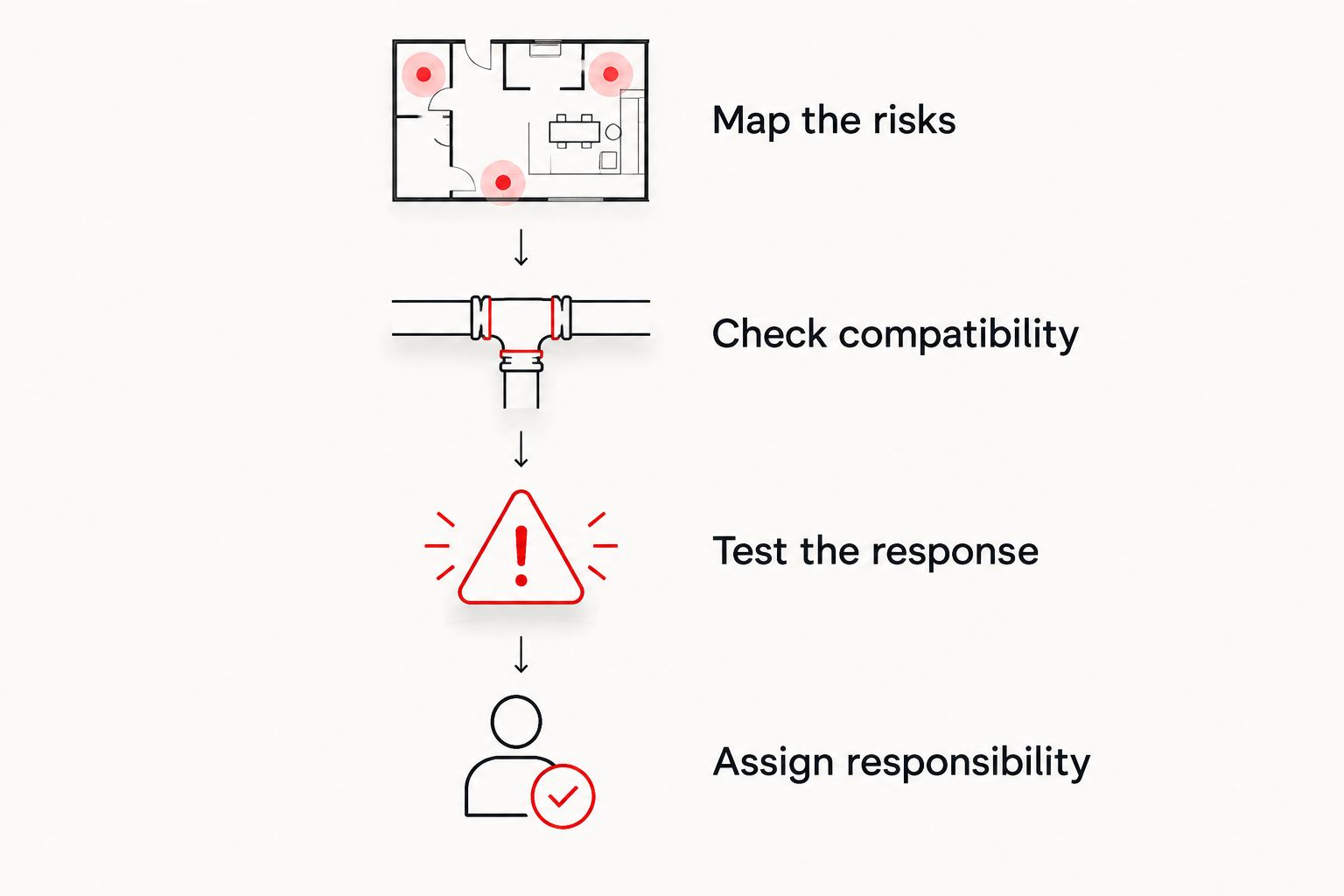
Map the risks
Start with 3 locations: the water heater, washing machine, and under-sink plumbing. These are inspection priorities, not a complete coverage plan. Add other accessible water connections that matter in your home, and identify which leaks would stay hidden from floor sensors.
Check compatibility
For a main-line device, have the installation location assessed before ordering. Confirm pipe connections, valve access, power requirements, and which water branches sit upstream. For wireless sensors, verify the connection at the actual mounting location rather than elsewhere in the house.
Test the response
Perform 2 separate checks: trigger detection using the manufacturer's procedure, then confirm the intended notification or valve response. Do not improvise a test by flooding an area. If shutoff is included, make sure you understand the approved reopening procedure.
Assign responsibility
Name the person who receives alerts and the person who can act locally. They need the valve location, property access instructions, and a way to arrange plumbing help. Review the plan when occupants or access arrangements change.
Already seeing water? Diagnose before upgrading
An active leak needs a plumbing response, not a shopping comparison. Stop using the affected fixture if doing so reduces the problem. If you can safely reach a known water shutoff, use it; stay away from wet electrical equipment and unsafe areas.
Priority Rooter & Plumbing offers leak detection and 24/7 emergency plumbing services to residential and commercial customers in the Tucson metro area. Explain where you see water, whether it returns after drying, and whether the problem changes when you stop using a fixture.
Do not treat a dry spot sensor as evidence that your plumbing is sound. Concealed water can remain inside a wall or beneath a slab without reaching that sensor.
Get help locating the leak
Priority Rooter & Plumbing provides leak detection and 24/7 emergency plumbing services in the Tucson metro area.
Which smart leak detection system should you choose?
Choose a whole-home flow monitor with automatic shutoff if your priority is stopping continued incoming water while you are away. Add spot sensors where local water detection would close a coverage gap. Use sensing cables only where their longer contact path fits the physical layout.
For 2026, the deciding question is simple: what happens after detection? If the answer is only a notification, assign someone to respond. If the answer includes shutoff, confirm what the valve controls and how you restore service safely.
FAQ
What's the best smart leak detection system for a Tucson home?
A whole-home flow monitor with automatic shutoff is the default choice when stopping continued incoming water is the priority. Confirm plumbing compatibility and consider spot sensors for locations that need direct moisture detection.
Are smart leak sensors better than automatic shutoff systems?
Smart leak sensors are better for targeted moisture detection, while automatic shutoff systems address control of the water supply. A compatible combination can serve both purposes, but confirm the exact equipment's supported functions.
Can a smart leak detector find a slab leak?
A smart detector does not necessarily locate a slab leak. Flow monitoring can flag unusual water use, but identifying the source requires a plumbing investigation; Priority Rooter & Plumbing offers leak detection in the Tucson metro area.
Where should I put water leak sensors?
Put water leak sensors where escaping water is likely to reach their sensing contacts, following the manufacturer's instructions. Accessible areas near water heaters, washing machines, and under-sink connections are practical starting points.
Will a smart leak detection system work without Wi-Fi?
Operation without Wi-Fi depends on the equipment and its connection method. Confirm local alarms, valve behavior, and remote notification requirements before buying rather than assuming every feature continues during an outage.
Does automatic shutoff stop every kind of leak?
Automatic shutoff only interrupts the supply controlled by its valve. It does not remove escaped water, empty stored water immediately, or control branches outside its installed coverage.
Do I need a plumber to install a smart leak detector?
A main-line monitor or shutoff valve involves plumbing work, while many spot sensors require only placement and setup. Have a licensed plumber assess equipment that modifies the supply line and follow the device's installation requirements.
What should I do when a leak alert arrives?
Check the affected area only if it is safe, then stop the relevant water supply when you can safely reach a known valve. Avoid wet electrical equipment and arrange plumbing help for an active or unexplained leak.
One last thing
The main valve's location matters as much as the alert recipient's phone number. Before relying on any system, have the responsible person identify the shutoff and understand its operation. Do not force a stuck valve; address that problem before an emergency makes it urgent.