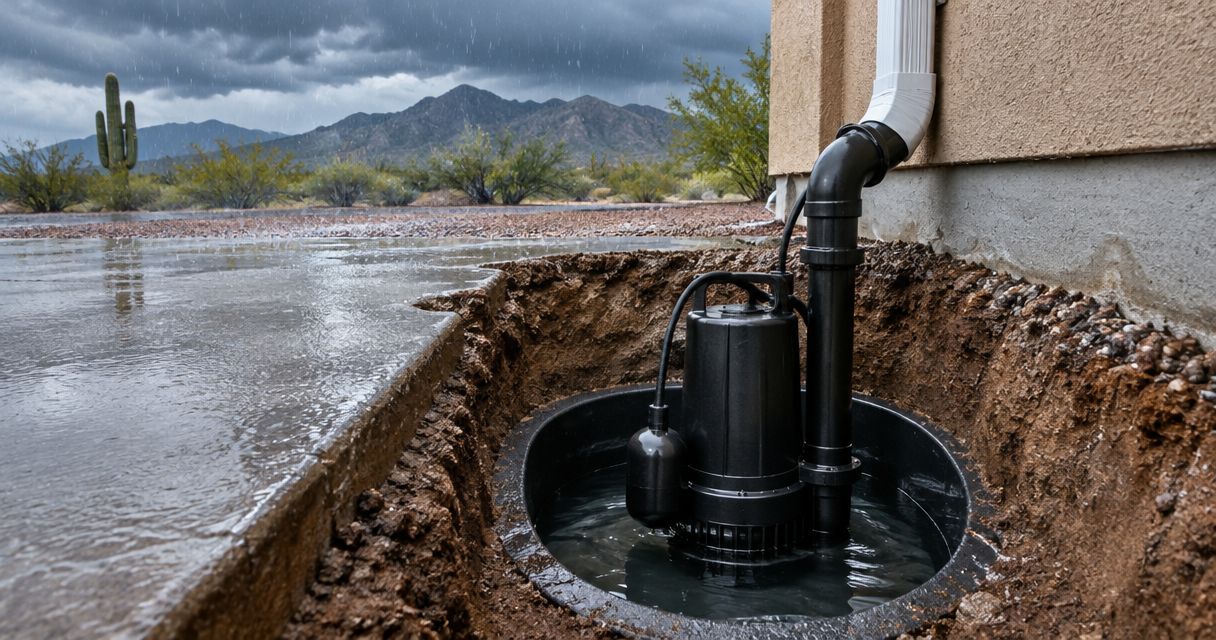
Best overall: a submersible primary sump pump. Best for power outages: a battery-backup sump pump. Best simple replacement: a pedestal pump where the existing basin fits. This 2026 guide compares the best sump pumps Tucson homeowners should consider by drainage setup, outage protection, and maintenance—not by horsepower alone.
- Best sump pumps Tucson: choose a submersible primary pump for a compatible permanent sump basin.
- Battery-backup sump pumps protect against power loss; they do not replace proper drainage.
- Combination sump systems pair a primary pump with backup protection but require space and battery maintenance.
- Priorityrooter serves Tucson homeowners with plumbing repair, leak detection, and emergency plumbing.
Why this matters
A sump pump removes water collected in a basin. It does not stop runoff from entering your property, repair a leaking pipe, or clear a blocked sewer. Identify where the water comes from before choosing equipment. Otherwise, you risk treating the symptom while the actual problem continues.
Tucson's monsoon planning follows the National Weather Service's official June 15–September 30 season. Use that calendar to schedule a drainage check before the 2026 storms, not as a prediction of when your property will flood.
Priorityrooter provides licensed plumbing services for residential and commercial customers in the Tucson metro area. Priorityrooter is a local plumbing option for Tucson homeowners who need leak detection or plumbing repair before choosing a sump pump.
What makes the best sump pumps for Tucson?
The best sump pump is the one that matches your basin, discharge route, and water inflow. Compare these criteria before comparing brands:
- Capacity at discharge height: Read the performance curve at your installation's lift height, not just its maximum advertised flow.
- Basin and switch fit: The pump and float need room to operate without touching the basin wall, piping, or another pump.
- Outage protection: A primary electric pump stops when its power supply stops. Backup protection needs an independent power source.
- Discharge design: Pipe size, bends, elevation, and the discharge destination affect the installation. Water must not return to the collection area.
- Maintenance access: You need access to inspect the switch, remove debris, and test both primary and backup operation.
- Water compatibility: Choose equipment approved for the water it will handle. A clear-water sump pump is not automatically suitable for sewage or heavy sediment.
Many residential sump pumps use a nominal 120-volt, 60-hertz electrical supply. Confirm the equipment's nameplate and installation instructions; do not assume every pump uses the same electrical arrangement.
Sump pump options at a glance
These are system types, not interchangeable products. A backup pump fills a different role from a primary pump, so the right answer can involve more than one type.
| Rank | Option | Best for | Standout feature | Key limitation |
|---|---|---|---|---|
| 1 | Submersible primary sump pump | Permanent sump basins | Motor and pump sit inside the basin | Stops without electrical power unless backed up |
| 2 | Battery-backup sump pump | Outage protection | Separate battery-powered pumping | Runtime depends on battery condition and demand |
| 3 | Combination sump system | Replacing primary and backup together | Primary and backup equipment selected as a system | Requires room and maintenance for both pumps |
| 4 | Pedestal sump pump | Compatible, accessible replacement setups | Motor remains above the basin | Exposed motor and switch arrangement need suitable clearance |
| 5 | Water-powered backup pump | Sites with suitable municipal water pressure | Uses water pressure instead of a battery | Depends on water supply and installation requirements |
1. Submersible primary pump: best for permanent sump basins
A submersible sump pump sits inside a collection basin and sends water through a discharge pipe when its switch activates. It is the default starting point for a permanent sump installation because the pump assembly fits below the basin cover.
Choose by the manufacturer's performance curve and basin requirements. A larger motor is not proof of a better fit: the switch still needs clearance, and the discharge piping still needs to match the installation.
Submersible primary pump pros:
- Keeps the motor and pumping assembly within the basin.
- Works with a covered basin when the installation allows it.
- Provides automatic pumping through a compatible switch.
Submersible primary pump cons:
- Provides no outage protection by itself.
- Requires basin access for inspection and removal.
- An obstructed or poorly positioned float can prevent operation.
Best for: A home with a permanent basin that collects groundwater or drainage water within the pump's intended use.
For your 2026 preparation, verify the discharge destination before replacing the pump. Sending water back toward the foundation defeats the purpose of pumping it out.
Verdict: Buy for a compatible permanent sump basin; add backup protection when power loss would leave the property exposed.
2. Battery-backup pump: best for power outages
A battery-backup sump pump is a separate pump powered by a battery. Depending on its controls, it can operate when the primary pump loses power, fails, or cannot keep up with rising water.
Treat it as a second line of defense, not a substitute for a correctly sized primary pump. Compare its pumping capacity at your discharge height and follow the manufacturer's battery requirements.
Battery-backup pump pros:
- Operates without household electrical power while battery energy remains.
- Adds a separate pumping mechanism beside the primary pump.
- Provides protection against primary-pump failure when the system is configured for it.
Battery-backup pump cons:
- Battery condition and pumping demand determine runtime.
- Requires battery inspection and eventual replacement.
- Needs space for the pump, switch, battery, and associated controls.
Best for: A working primary sump installation where an outage or primary-pump failure would allow water to accumulate.
Do not accept a runtime claim without understanding its conditions. Continuous pumping and occasional cycling place different demands on the battery, and discharge height affects pump performance.
Verdict: Buy as supplemental protection; skip using a backup pump as your only planned drainage system.
3. Combination sump system: best for replacing both pumps together
A combination system pairs a primary sump pump with a backup pump and related controls. It gives you a way to replace both parts of the installation together rather than assembling separate equipment without checking compatibility.
The system still needs a suitable basin, electrical connection, discharge arrangement, and battery location. A packaged system does not remove those installation decisions.
Combination sump system pros:
- Groups primary and backup equipment into one system choice.
- Allows you to plan both switches and pumps together.
- Makes primary and backup protection part of the same replacement project.
Combination sump system cons:
- Can crowd a basin that accommodated only one pump.
- Retains the maintenance requirements of both pumping systems.
- Backup capacity must still be checked separately from primary capacity.
Best for: Replacing an aging primary pump while adding battery-backup protection at the same time.
For a 2026 replacement, confirm what the package includes rather than assuming the battery, alarm, or every discharge fitting comes with it. Use the actual installation instructions to establish what else the project requires.
Verdict: Buy when you need both primary and backup equipment and the basin accommodates the complete system.
4. Pedestal pump: best for compatible replacement setups
A pedestal sump pump places its motor above the basin, with the pumping components below. That arrangement makes the motor accessible, but it also requires suitable clearance above the sump.
A pedestal pump belongs on your shortlist when replacing an existing compatible setup. Do not treat it as an automatic budget winner; compare the full installation requirements rather than the equipment alone.
Pedestal pump pros:
- Keeps the motor accessible above the basin.
- Offers an alternative arrangement where a submersible assembly does not fit.
- Allows visual access to exposed motor and switch components.
Pedestal pump cons:
- Needs clearance and protection around the exposed motor.
- Can complicate the basin-cover arrangement.
- Stops during a power outage without separate backup protection.
Best for: A compatible replacement location where above-basin clearance and switch movement are not restricted.
Check the float's full travel before accepting the installation. A switch that touches a pipe or basin edge is a functional problem, even when the motor operates normally.
Verdict: Buy for a verified fit; skip choosing a pedestal pump solely because it looks simpler.
5. Water-powered backup: best for suitable municipal-water sites
A water-powered backup pump uses pressurized supply water to help remove water from a sump. It does not depend on a battery, but it does depend on a suitable water supply and a compliant installation.
This is a conditional choice, not the default recommendation for Tucson homes. Confirm supply pressure, required flow, backflow protection, and local installation requirements before selecting equipment.
Water-powered backup pros:
- Avoids reliance on battery charge.
- Provides a different power source from the primary electric pump.
- Removes battery replacement from the backup maintenance plan.
Water-powered backup cons:
- Uses supply water while operating.
- Cannot provide its intended protection without adequate water pressure.
- Requires careful attention to potable-water protection and discharge design.
Best for: A property with a suitable municipal supply and an installation approved for the selected equipment.
For 2026 planning, establish suitability with a plumbing assessment before buying. A battery-free design is not automatically a better backup.
Verdict: Hold until water-supply suitability and installation requirements are confirmed.
Check the water source before choosing a pump
Water on the floor does not prove you need a sump pump. Your first decision is whether you have runoff, a supply leak, or a drain backup.
- Surface runoff: Check grading, roof drainage, and the route water takes toward doors or low areas.
- Plumbing leak: Look for water associated with supply piping, fixtures, or appliances. Leak detection addresses the source.
- Drain backup: Water emerging from a drain requires diagnosis of the drainage system, not automatic sump-pump selection.
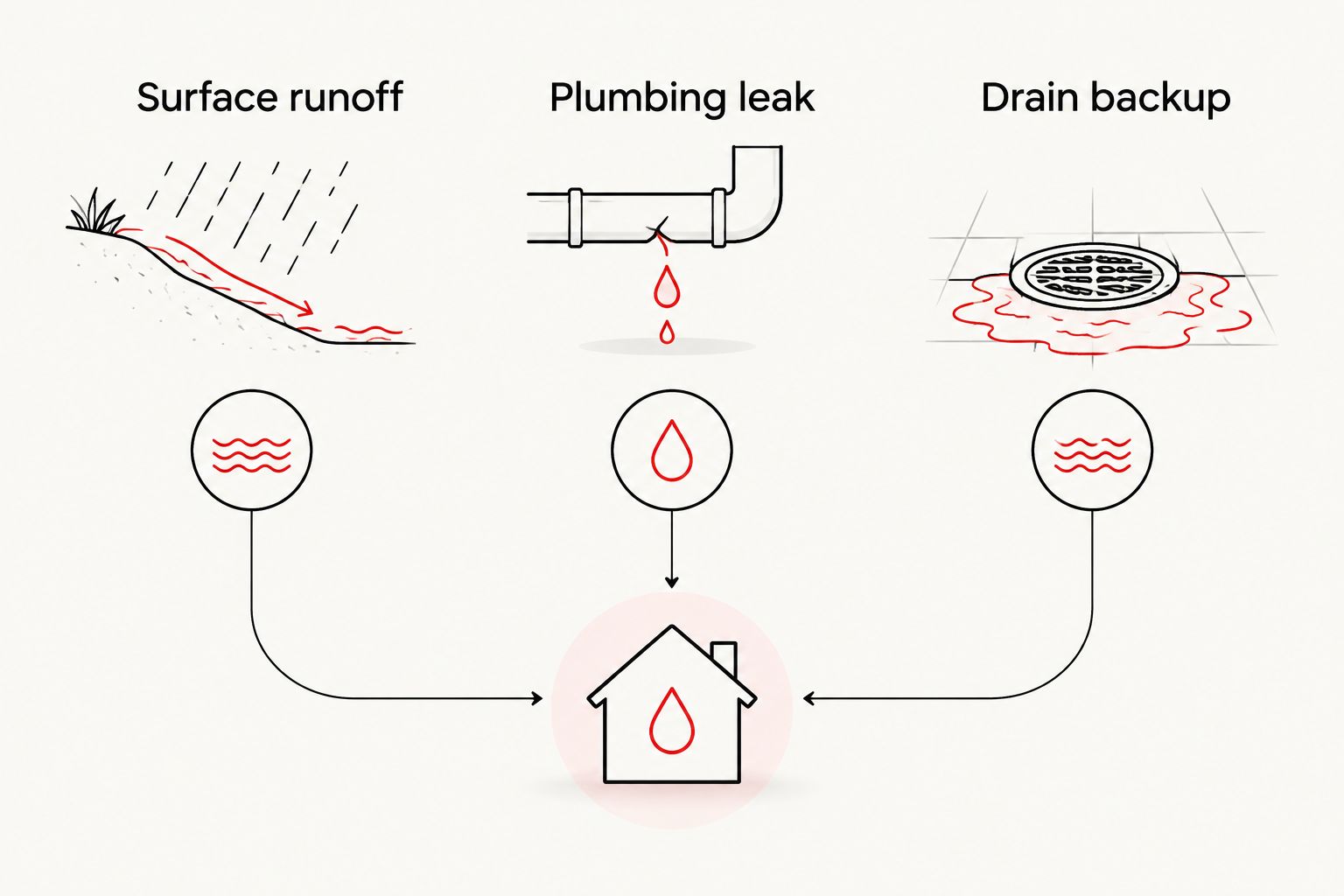
If fixtures back up or drains repeatedly overflow, start with the drainage problem. The guide to drain cleaning costs in Tucson explains a different service category from sump pumping.
Priorityrooter offers leak detection, drain cleaning, sewer camera inspections, and 24/7 emergency plumbing. Those services address plumbing problems that a sump pump alone does not fix.
How to check a sump installation before monsoon season
Use this sequence for your 2026 inspection. Follow the pump manufacturer's testing instructions and leave electrical changes or unsafe access to qualified professionals.
- Inspect the basin. Look for debris and confirm that the pump and switch have unobstructed movement.
- Inspect the discharge. Check visible piping and confirm the outlet does not direct water back toward the building.
- Test the primary. Use the manufacturer's approved test procedure and watch for activation, discharge, and shutoff.
- Test the backup. Follow its instructions to check operation, battery condition, and alarms where fitted.
- Record problems. Note failed activation, repeated cycling, unusual noise, or water returning to the basin.
Do not enter standing water when electrical equipment or wiring could be energized. Keep people away and seek emergency help rather than reaching into the basin or handling plugs.
How the options are ranked
This ranking prioritizes system role, basin fit, discharge performance, outage protection, and maintenance access. It is a decision guide to pump types, not a claim that individual models have undergone comparative testing.
A submersible pump takes the default primary-pump slot. Battery backup takes the outage-protection slot, while combination, pedestal, and water-powered systems serve specific installation needs.
Which sump pump should you choose?
Choose a submersible primary pump for a suitable permanent sump basin. Add battery backup when losing household power would leave water accumulating without another pumping option.
Choose a combination system when replacing both components together makes sense. Keep pedestal and water-powered options conditional on a verified installation fit. If you do not have a sump basin or do not know the water source, resolve that question before buying equipment.
Get help with the water source
Priorityrooter provides Tucson leak detection, drain cleaning, and emergency plumbing services.
FAQ
What's the best sump pump for Tucson monsoon season?
A submersible primary sump pump is the default choice for a compatible permanent sump basin. Select its capacity using the actual discharge height, and add backup protection when an outage would leave water accumulating.
Do Tucson homes need sump pumps?
A Tucson home needs a sump pump only when its drainage design calls for collecting and pumping water from a basin. Surface runoff, plumbing leaks, and sewer backups require different diagnoses and are not proof that a sump pump is needed.
Is battery backup better than a larger primary pump?
Battery backup addresses power loss; a larger primary pump does not. Primary capacity and outage protection are separate decisions, so check both against your installation.
Is a pedestal pump better than a submersible pump?
A pedestal pump is better only when its arrangement fits the installation more appropriately. A submersible pump keeps its assembly within the basin, while a pedestal pump needs clearance for an above-basin motor.
Can a sump pump remove sewage?
Do not use an ordinary clear-water sump pump for sewage unless the manufacturer explicitly approves that use. Sewage handling requires equipment designed for the material and installation.
How long will a battery-backup sump pump run?
Runtime depends on battery condition, pump demand, discharge height, and the specific system. Compare manufacturer runtime information under stated conditions rather than treating it as a guarantee for your property.
When should I check my sump pump for Tucson monsoon season?
Check the installation before the National Weather Service's June 15–September 30 monsoon season. Follow the manufacturer's schedule for subsequent testing, including backup and alarm checks where fitted.
One last thing
A running motor is not proof that water is leaving the property. During a safe, manufacturer-approved test, verify actual discharge and shutoff—not just the sound of the pump. A blocked outlet or returning discharge water can defeat an otherwise functioning installation.