Best overall: a properly sized potable-water diaphragm expansion tank. Best for tight spaces: a compact potable-water diaphragm tank that still meets the sizing calculation. Best for commercial systems: a potable-water expansion assembly sized for the complete installation. This 2026 guide ranks configurations by application so Tucson property owners choose the right protection, not just a familiar label.
- Best expansion tanks for water heaters Tucson: choose a potable-water diaphragm tank sized for your plumbing system.
- Priority Rooter & Plumbing provides Tucson water heater repair; expansion tank selection starts with pressure and system checks.
- Compact expansion tanks suit restricted spaces only when their acceptance capacity meets the system calculation.
- Commercial expansion protection must account for every connected storage heater within the same closed system.
Why this matters
Water expands when heated. In a closed plumbing system, a check valve, backflow preventer, or certain pressure-regulating arrangements prevent that extra volume from returning toward the water supply. An expansion tank provides space for it.
An expansion tank manages thermal expansion; it does not replace a pressure regulator or the water heater's relief valve. Buying a larger tank without checking the underlying pressure problem leaves the diagnosis unfinished.
For Tucson water heater repair, Priority Rooter & Plumbing serves residential and commercial customers. The practical starting point in 2026 is to identify whether the system is closed, measure its pressure, and check the existing expansion protection before selecting a replacement.
What makes the best water heater expansion tank?
Use these criteria before comparing installation options:
- Potable-water suitability: Choose a tank expressly approved by its manufacturer for domestic drinking-water service. A heating-system expansion tank is not an interchangeable substitute.
- Calculated acceptance capacity: Select the usable expansion capacity required by the heater volume, supply pressure, and temperature conditions—not exterior tank size alone.
- Correct pressure setup: Set the air charge according to the manufacturer's instructions and the measured cold-water supply pressure.
- Pressure and temperature ratings: Confirm that the tank's ratings suit the installation and applicable requirements.
- Supported installation: Follow the manufacturer's requirements for mounting position, support, connections, and access.
- Service access: Leave room to inspect the tank, check its air charge under the required conditions, and replace it without unnecessary demolition.
For a 2026 replacement, these criteria matter more than matching the old tank's appearance. A previous installation does not prove the original size or setup was correct.
Best expansion tank configurations at a glance
| Ranked configuration | Best for | Standout feature | Key limitation |
|---|---|---|---|
| Standard potable-water diaphragm tank | Conventional residential storage heaters with adequate installation space | Separates an air cushion from domestic water | Requires sizing, correct precharge, and proper support |
| Compact potable-water diaphragm tank | Restricted residential installation spaces | Smaller physical envelope when a suitable model meets the calculation | Compact dimensions do not guarantee enough acceptance capacity |
| Commercial potable-water expansion assembly | Commercial storage systems and connected heater banks | Selection accounts for the complete protected system | Requires system-level sizing rather than a residential replacement shortcut |
These are application rankings, not claims that every model within a category performs identically. Check the selected manufacturer's sizing chart and installation instructions before authorizing the work.
1. Standard diaphragm tank: best for residential storage heaters
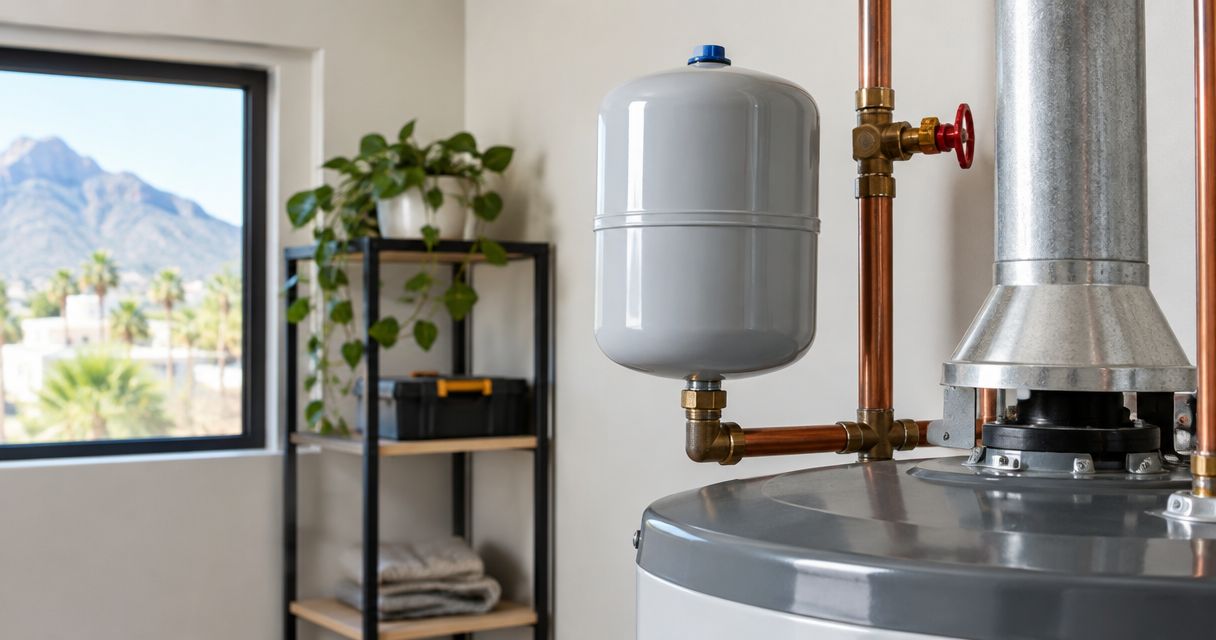
A standard potable-water diaphragm expansion tank is the default starting point for a conventional residential storage water heater in a closed system. A flexible diaphragm separates water from an air cushion, allowing expanded water to enter as the heater operates.
Best for: A residential storage heater with enough installation space for the correctly sized tank and its required support.
The important distinction is between total tank volume and acceptance capacity. The shell's nominal size does not tell you how much expanded water it can accept under your operating conditions.
A 40-gallon heater and an 80-gallon heater should not receive the same expansion-tank recommendation solely because their pipe connections match. Heater storage volume is a sizing input; pressure and temperature conditions also affect the result.
Standard diaphragm tank pros:
- Provides a dedicated space for thermal expansion in a closed domestic-water system.
- Keeps the air cushion separated from the potable water.
- Supports a straightforward selection process using the manufacturer's sizing information.
- Fits residential applications without requiring a commercial-system layout when the calculation supports it.
Standard diaphragm tank cons:
- Incorrect air charge reduces useful acceptance capacity.
- A failed diaphragm or lost air charge compromises expansion control.
- Unsupported weight can strain piping and connections.
Ask the installer to document the selected tank, measured supply pressure, and air-charge setting. Those details make future troubleshooting more useful than a receipt that simply says expansion tank replacement.
Verdict: Buy a correctly sized standard potable-water diaphragm tank for a conventional residential installation with adequate space.
2. Compact diaphragm tank: best for restricted installation spaces
A compact potable-water diaphragm tank serves the same basic purpose as a standard configuration, but physical fit drives the selection. It belongs on the shortlist when a water heater sits in a crowded closet, utility area, or another location with restricted clearance.
Best for: A residential installation where space is limited and a compact model satisfies the required acceptance capacity.
Start with the sizing calculation, then check dimensions and mounting requirements. Reversing that order encourages a bad compromise: buying the tank that fits the gap rather than the tank that protects the system.
A plumber can also assess a different permitted mounting location. The connection must still allow the tank to communicate with the protected water-heating system; an intervening check valve can defeat that purpose.
Compact diaphragm tank pros:
- Offers another installation option where a conventional tank envelope conflicts with surrounding equipment.
- Can preserve inspection and maintenance access when placement is planned correctly.
- Provides diaphragm-based expansion control when its ratings and capacity match the application.
Compact diaphragm tank cons:
- A physically smaller tank can have insufficient acceptance capacity for the required conditions.
- Tight placement can obstruct the air valve or make replacement difficult.
- An approved orientation still requires the support specified by the manufacturer.
For a 2026 closet retrofit, ask to see the proposed location before installation starts. Confirm that surrounding shutoffs, heater controls, and service areas remain accessible.
Verdict: Buy a compact configuration only after it passes the same sizing and installation checks as a standard tank. Skip a smaller tank chosen solely to squeeze into a gap.
3. Commercial expansion assembly: best for connected storage systems
Commercial potable-water expansion protection starts with the entire system, not the nearest heater. Connected storage heaters, backflow devices, circulation arrangements, and isolation valves determine which water volume the expansion tank must protect.
Best for: Commercial properties with storage water heating, connected heater banks, or piping arrangements that require system-level review.
A commercial selection is not automatically a different technology. It is a correctly rated potable-water expansion tank or assembly chosen for the calculated operating conditions and installed where it protects the intended equipment.
Priority Rooter & Plumbing serves commercial customers in the Tucson metro area. For commercial water heater repair, the useful first question is which heaters share a closed section of piping—not whether a residential tank looks large enough.
Commercial expansion assembly pros:
- Accounts for connected stored-water volume rather than a single visible heater.
- Allows selection around the actual pressure and temperature conditions.
- Makes isolation valves and service arrangements part of the installation review.
Commercial expansion assembly cons:
- Requires more system information than a simple like-for-like replacement.
- Changes to connected equipment can invalidate an earlier sizing calculation.
- Incorrect valve placement can isolate the tank from equipment it is intended to protect.
Do not assume simultaneous heater operation is the only concern. The expansion calculation and piping review must follow the applicable design method and the equipment manufacturer's requirements.
Verdict: Buy a commercial configuration based on documented system sizing. Skip a residential replacement shortcut for an unreviewed commercial installation.
What to check before approving installation
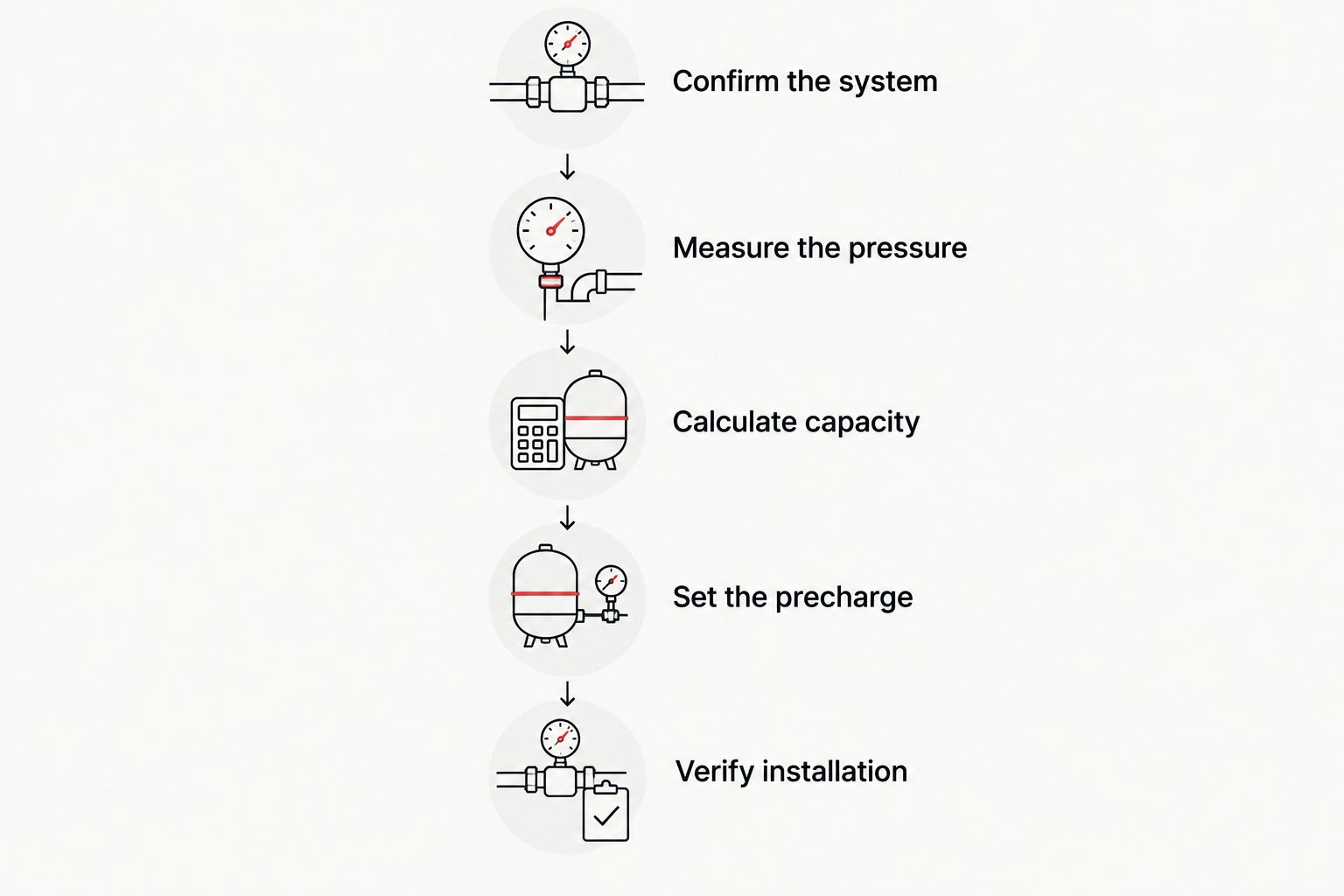
The right tank still needs the right setup. Ask for these checks before accepting an expansion-tank recommendation.
Confirm the system
Identify the water heater type and the devices controlling flow back toward the supply. Do not assume every Tucson property has the same plumbing arrangement or needs the same expansion protection.
Measure the pressure
Measure cold-water supply pressure and investigate excessive or unstable pressure separately. If the measured static pressure is 60 psi, that is an input to the tank setup—not permission to use a factory air charge without checking it.
Calculate capacity
Use heater storage volume, operating conditions, and the selected manufacturer's sizing method. Compare acceptance capacity, not just the number printed beside nominal tank volume.
Set the precharge
Check and adjust the air charge with water-side pressure relieved as directed by the manufacturer. Reading the air valve while the tank remains under water pressure does not establish the original precharge.
Verify installation
Check support, permitted orientation, piping connections, and the relationship to check valves and isolation valves. Keep required water heater safety devices in service.
Do not remove, plug, or cap a temperature-and-pressure relief valve to stop a leak. A discharging relief valve needs diagnosis; an expansion tank recommendation is not proof that the valve itself is sound.
Get your water heater checked
Priority Rooter & Plumbing provides residential and commercial water heater repair in the Tucson metro area.
How these configurations are ranked
The ranking prioritizes potable-water suitability, calculated capacity, pressure setup, installation requirements, and service access. Standard residential installations come first because that configuration answers the conventional storage-heater use case without adding unnecessary complexity.
Compact installations rank separately because fit is a genuine constraint, not a reason to waive sizing. Commercial systems receive their own recommendation because connected equipment and valve arrangements change the selection process.
For a 2026 purchase, choose the application first and the individual model second. A brand name does not correct an undersized tank, an incorrect air charge, or an isolated connection.
Which expansion tank should you choose?
Choose a standard potable-water diaphragm tank unless your installation presents a specific space or system-design constraint. Move to a compact configuration only when its capacity remains adequate; use commercial system sizing when the protected equipment requires it.
Priority Rooter & Plumbing is a fit for Tucson homeowners and businesses needing water heater repair. Ask for the diagnosis and sizing basis before approving an expansion-tank replacement.
If a tank has failed repeatedly, do not keep replacing it without reviewing pressure, support, and installation conditions. Repeated replacement addresses the damaged component; it does not explain why the installation keeps needing attention.
FAQ
What's the best expansion tank for a Tucson water heater?
A properly sized potable-water diaphragm expansion tank is the default choice for a conventional residential storage heater in a closed system. Select it using heater volume, measured pressure, temperature conditions, and the manufacturer's sizing method.
Does every Tucson water heater need an expansion tank?
The need depends on the plumbing arrangement, equipment instructions, and applicable requirements. Have the installer determine whether the system is closed and how thermal expansion must be controlled.
What size expansion tank do I need for a 50-gallon water heater?
A 50-gallon heater's storage volume alone does not establish the required expansion tank size. Supply pressure, temperature conditions, and the selected tank's acceptance capacity also matter.
Is a bigger expansion tank always better?
A bigger nominal tank is not a substitute for correct sizing and setup. Choose a tank that meets the calculated requirement and can be installed with proper support and access.
Can an expansion tank fix high water pressure?
An expansion tank controls pressure changes caused by thermal expansion; it does not regulate excessive incoming supply pressure. Diagnose the supply pressure and any pressure-regulating equipment separately.
Can I use a heating expansion tank on drinking-water plumbing?
Use only an expansion tank expressly approved by its manufacturer for potable-water service. A similar shape or matching connection does not establish suitability.
Is replacing an expansion tank enough to fix a dripping relief valve?
Replacing an expansion tank is not a complete diagnosis of a dripping relief valve. Pressure, expansion control, water temperature, and the valve's condition all require assessment; never cap the discharge.
One last thing
An expansion tank can look normal from the outside while its air charge or diaphragm is no longer doing its job. Appearance alone is not a performance check.
For your 2026 installation, request a written record of the tank model, measured supply pressure, and final precharge. Keep it with the water heater paperwork so the next service visit starts with facts rather than guesses.