Slab leak detection takes as long as the plumber needs to isolate the affected plumbing and locate the suspected leak; the appointment length depends on access, pipe layout, and the testing required. Ask for an on-site testing estimate separately from arrival time and repair time, because finding the leak does not include fixing the pipe or restoring the floor.
- How long does slab leak detection take? Access, pipe isolation, and confirmation determine the appointment length.
- Priority Rooter & Plumbing offers leak detection for Tucson residential and commercial properties.
- Ask whether the appointment covers locating the leak, documenting findings, and discussing repair access.
- Treat detection, pipe repair, and floor restoration as separate scheduling questions.
Why this matters
A detection appointment answers where water is escaping and what evidence supports that location. It does not automatically answer when your kitchen, bathroom, or business will return to normal.
For your 2026 appointment, ask for a testing window and a separate repair plan. That distinction helps you arrange property access, discuss water interruptions, and avoid treating a scheduled visit as a promise of completed repairs.
Priority Rooter & Plumbing provides licensed leak detection services for residential and commercial customers in the Tucson metro area. The useful scheduling question is not just when someone can arrive, but what that visit is intended to accomplish.
How long does slab leak detection take?
Slab leak detection has no single completion time that applies to every property. An accessible plumbing system with a clearly isolated leak presents a different diagnostic job from a building with shared supply lines, concealed valves, or several possible water sources.
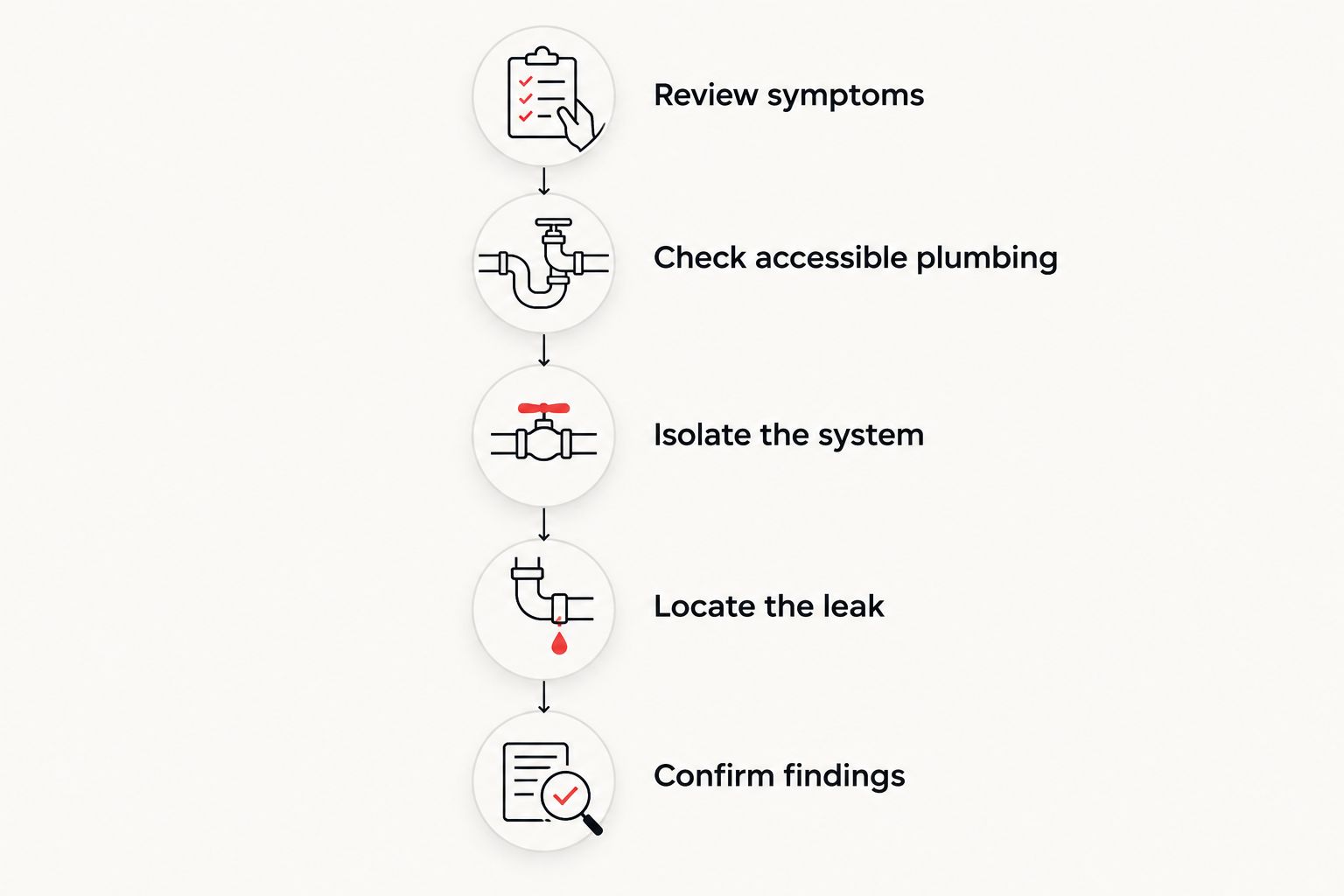
Ask the plumber to explain the following sequence before testing starts. Each step addresses a different uncertainty, and the findings determine what happens next.
- Review symptoms. Show the plumber where you noticed warmth, moisture, unusual water use, or running-water sounds. Describe when the symptoms appear and whether they change when fixtures are off. These observations guide the investigation; they do not establish the leak location by themselves.
- Check accessible plumbing. The plumber checks visible fixtures, connections, and other possible sources before attributing the problem to a buried pipe. A wet floor alone does not prove that a supply pipe beneath the slab is leaking.
- Isolate the system. Testing separates the suspected plumbing from other water use where the layout and valves permit it. Clear isolation helps distinguish a concealed supply leak from water passing through a fixture or appliance.
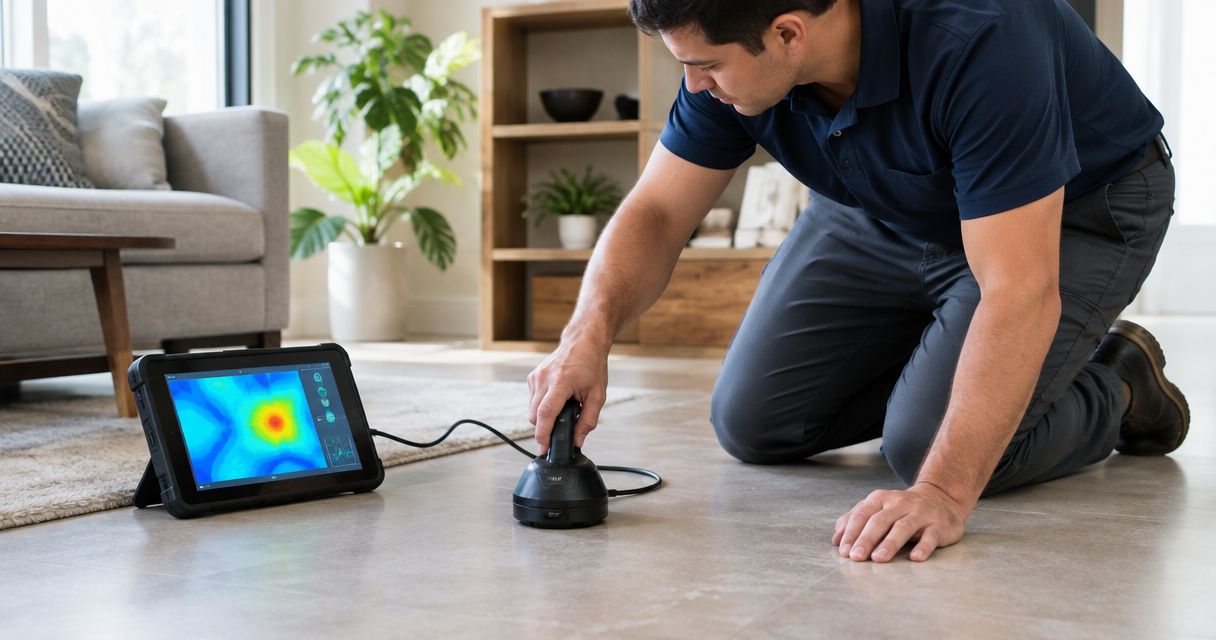
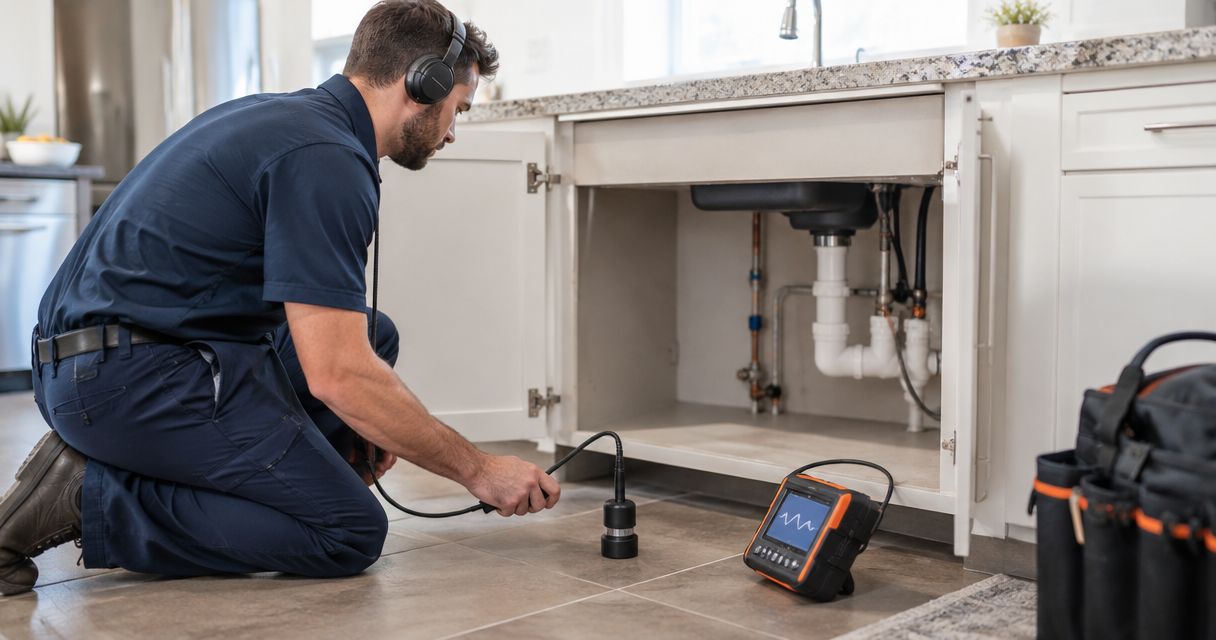
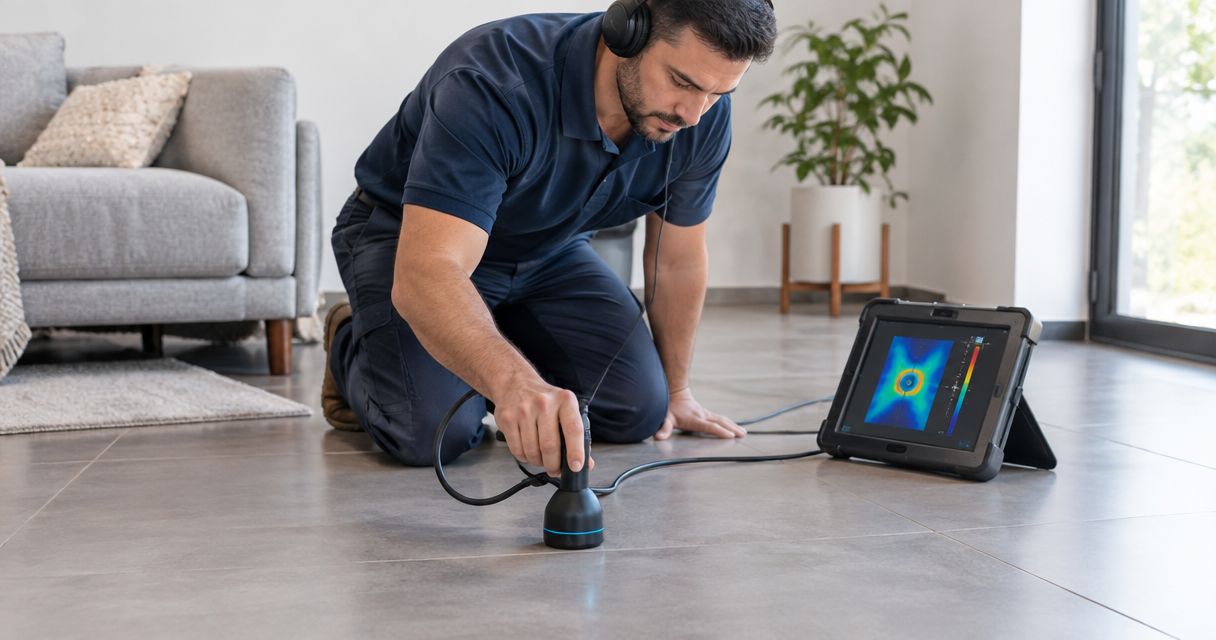
- Locate the leak. The plumber selects suitable locating methods based on the pipe, access, and symptoms. Acoustic listening and temperature checks serve different purposes; neither should be treated as a universal answer for every leak.
- Confirm findings. The plumber evaluates whether the test results support the suspected location and explains any remaining uncertainty. Before approving invasive work, ask what evidence connects the proposed access point to the leak.
A scheduling estimate becomes more useful once the plumber understands your property and symptoms. Ask what would require additional testing or a return visit, rather than treating the initial estimate as a completion guarantee.
Separate arrival, detection, and repair
When booking in 2026, specify which part of the job you are asking about. An arrival window describes when the technician is expected; a detection estimate describes the investigation after access is available.
| Stage | What it covers | What it does not establish |
|---|---|---|
| Arrival window | Expected technician arrival | How long testing will take |
| Leak detection | Investigation and location of the suspected leak | Completion of pipe repair |
| Pipe repair | Work on the damaged plumbing | Completion of flooring or finish work |
| Restoration | Repair of affected surfaces and finishes | Whether another concealed leak exists |
These are work stages, not competing services. Their advantage is clear scope: you can ask who handles each stage and how it is scheduled. Their limitation is that the full repair scope depends on what the investigation finds.
Why slab leak detection time varies
The practical drivers are access and diagnostic uncertainty. A visible symptom gives the plumber a starting point, but it does not replace testing.
- Access to shutoffs and fixtures. Obstructed valves, locked rooms, and inaccessible plumbing connections complicate preparation. Clear the route to the areas the plumber asks to inspect without disturbing damaged materials.
- Ability to isolate plumbing. Separate, usable shutoffs help narrow the investigation. Shared lines or valves that do not isolate the intended section require a different testing approach.
- Pipe layout. Additions, rerouted plumbing, and incomplete records make it harder to establish where buried lines run. Provide plans or previous repair records if you have them.
- Strength of the leak signal. Background noise affects acoustic listening, while floor construction affects how surface temperature patterns appear. The plumber must interpret those signals alongside other findings.
- Competing water sources. A fixture leak, appliance connection, drain problem, or moisture entering elsewhere changes the investigation. Reporting every symptom is more useful than insisting on a slab leak diagnosis before testing.
- Confirmation requirements. A suspected location is not the same as a confirmed repair target. Conflicting findings require clarification before concrete or flooring is opened.
Prepare for access, not excavation. Moving furniture away from a suspected area helps the inspection; removing flooring yourself can destroy useful evidence and create unnecessary damage.
How to prepare for a slab leak detection appointment
Your preparation should make the plumbing accessible and the symptom history clear. It should not involve dismantling fixtures, opening concrete, or experimenting with pressure controls.
Write down what changed
Record the affected rooms, the first symptoms you noticed, and whether the problem is continuous or intermittent. A dated photo of a damp patch is more useful than a general description that the floor sometimes looks different.
For a 2026 visit, gather any earlier plumbing records you already have. Previous reroutes, pipe repairs, and water-damage work give the plumber context without requiring you to diagnose the system.
Make access straightforward
Clear access to the water meter, main shutoff, water heater, and affected rooms where it is safe to do so. Keep pets away from the work area and arrange entry to any locked utility spaces.
If your property has tenant spaces, shared equipment, or restricted rooms, identify who can authorize access. A technician cannot inspect a locked area simply because the appointment has started.
Describe all water-using equipment
Tell the plumber about irrigation, pool equipment, water treatment equipment, and appliances connected to the supply. This information helps the plumber distinguish expected water use from unexplained flow.
Ask which equipment should remain off during testing. Follow the technician's instructions rather than shutting down or disconnecting unfamiliar equipment yourself.
Identify your scheduling limits
Explain whether you must leave, whether a tenant needs notice, or whether a business activity depends on water service. Ask how the plumber will communicate findings if testing reaches that limit.
For occupied buildings, the leak detection guide for Tucson apartment complexes addresses the property type to consider when planning access. Shared plumbing requires coordination, not just an available appointment.
What should the detection visit establish?
A useful visit gives you more than a spot marked on the floor. Ask for a plain-language explanation of what was tested, what the findings indicate, and what remains unresolved.
Use these questions before agreeing to repair access:
- Is the evidence consistent with a supply-line leak, or is another water source still under investigation?
- Which part of the plumbing was isolated and tested?
- What supports the proposed leak location?
- What uncertainty remains about the pipe route or access point?
- Does the next appointment cover further diagnosis, repair, or both?
- Who handles flooring, concrete, and other restoration work?
Do not equate confidence with certainty. A clear explanation includes the limits of the findings, especially when the pipe remains concealed.
Keep photos, test documentation, and the proposed repair scope together. Those records make follow-up conversations more precise and help you distinguish the diagnosed problem from unrelated work.
Does slab leak detection include the repair?
Slab leak detection and slab leak repair are separate scopes unless your written agreement explicitly combines them. Locating a suspected leak does not, by itself, authorize opening the floor or replacing plumbing.
Ask for the repair approach after the findings are explained. Access through the slab and rerouting a line involve different work, and suitability depends on the actual plumbing and property conditions.
The benefit of separating diagnosis from repair is a clearer decision before invasive work begins. The trade-off is that another work stage or appointment remains after detection; confirm that scheduling rather than assuming it is included.
Can you stay home during slab leak detection?
Ask the plumber which rooms must remain accessible and whether testing requires a temporary water interruption. Detection and repair have different effects on household routines, so confirm the planned work rather than assuming the visit involves opening concrete.
If someone in the household depends on continuous water access or has difficulty moving around the work area, explain that when booking. Agree on how the technician will announce shutoffs and changes to the inspection area.
Will a sewer camera find a slab supply leak?
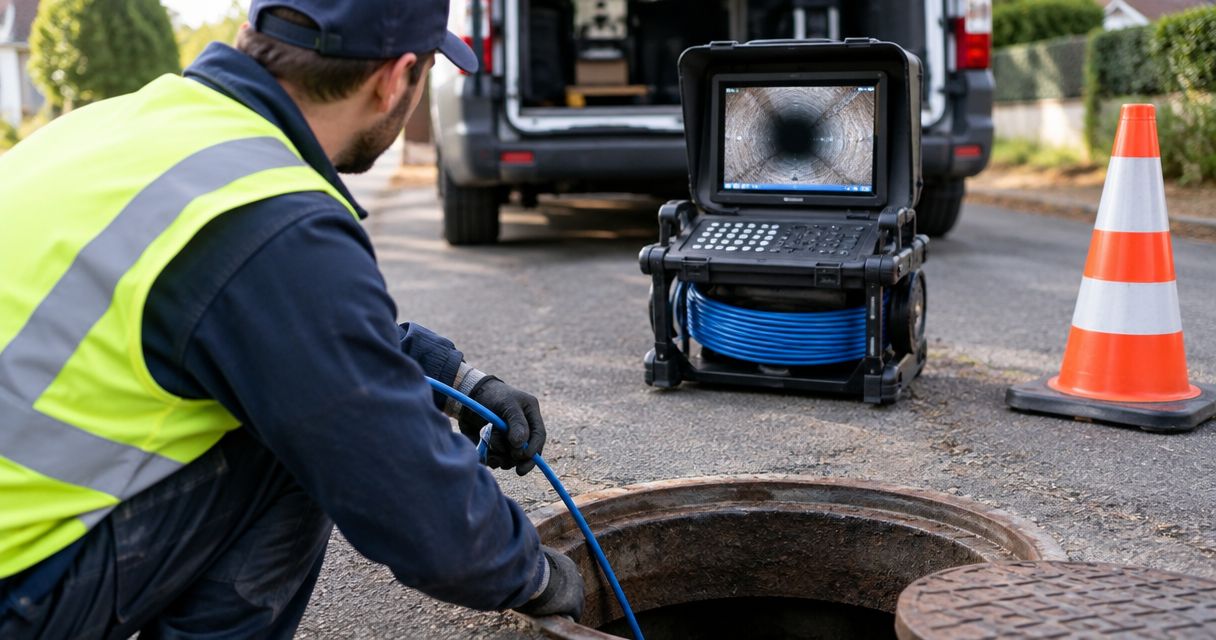
A sewer camera inspects the inside of an accessible drain or sewer line; it does not inspect the inside of a pressurized water-supply pipe beneath the slab. The right diagnostic service depends on which plumbing system is suspected.
A camera inspection is useful for investigating drain-line conditions, but that strength does not make it a substitute for supply-line leak detection. Describe the symptoms when booking instead of choosing equipment based only on the word leak.
When should you treat a suspected slab leak as urgent?
Active flooding, spreading water, or water near electrical equipment requires immediate safety decisions—not a routine scheduling discussion. Stay clear of affected electrical equipment and do not enter standing water to reach a switch, outlet, or panel.
If you can safely reach and operate your property's water shutoff, stopping the water supply limits continued escape from a supply leak. Do not force a stuck valve or manipulate an unfamiliar shared shutoff.
Priority Rooter & Plumbing offers 24/7 emergency plumbing in the Tucson metro area. Emergency service availability is not a guaranteed arrival time; describe the active conditions and confirm the response arrangements directly.
Arrange a leak detection visit
Describe the symptoms and ask about testing scope, property access, and water interruptions.
FAQ
How long does slab leak detection take in 2026?
Slab leak detection time depends on access, the ability to isolate the plumbing, and the testing needed to locate the suspected leak. Ask for an on-site testing estimate separately from the arrival window and repair schedule.
Can a plumber guarantee when slab leak detection will finish?
A completion guarantee is different from an appointment estimate. Ask what the estimate covers and what findings would require additional testing before agreeing to the schedule.
Do I need to turn off the water before the plumber arrives?
For active flooding, shut off the water only if you can reach and operate the valve safely. Otherwise, describe the situation when booking and follow the plumber's preparation instructions.
Does a warm floor prove there is a slab leak?
A warm floor does not prove a slab leak by itself. A concealed hot-water leak is one possible cause, but the plumber must assess the plumbing and other explanations before recommending repair access.
Will the plumber have to break concrete to detect the leak?
Do not assume concrete must be opened for the initial investigation. Ask which tests are planned, what they can establish without excavation, and what would justify invasive access.
What should I ask when booking leak detection in Tucson?
Ask about testing scope, access requirements, possible water interruptions, and how findings will be explained. Priority Rooter & Plumbing provides licensed leak detection for Tucson residential and commercial properties.
Is the detection appointment the same as the repair appointment?
Detection and repair are separate scopes unless your agreement explicitly combines them. Confirm whether the visit includes diagnosis only, repair work, or a decision about a later repair appointment.
One last thing
Water travels before it becomes visible. The wettest spot on your floor is not automatically the place to open the slab.
For your 2026 appointment, make the final question specific: what evidence supports this location, and what happens if opening it does not reveal the leak? A clear answer is more useful than a fast appointment with an unclear result.