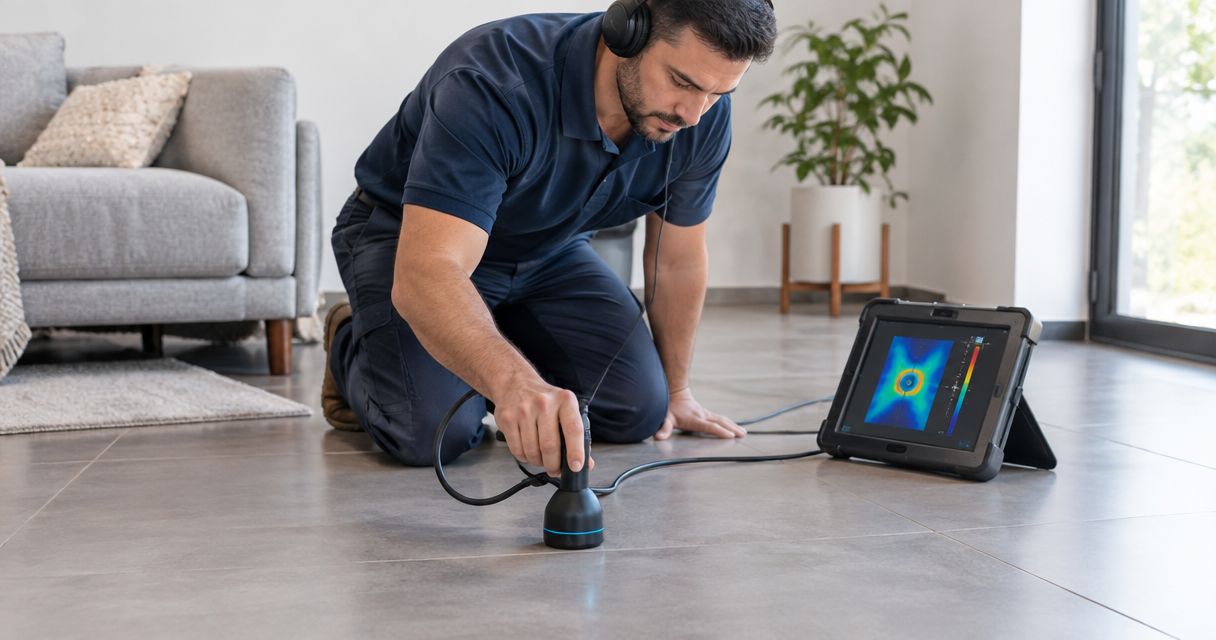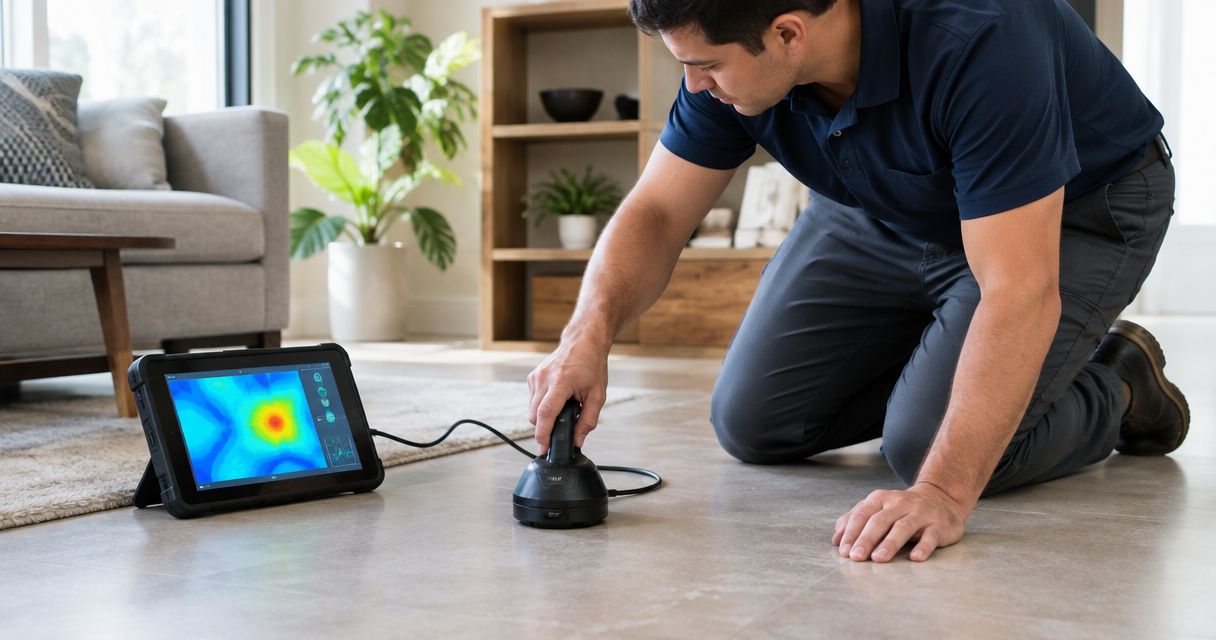
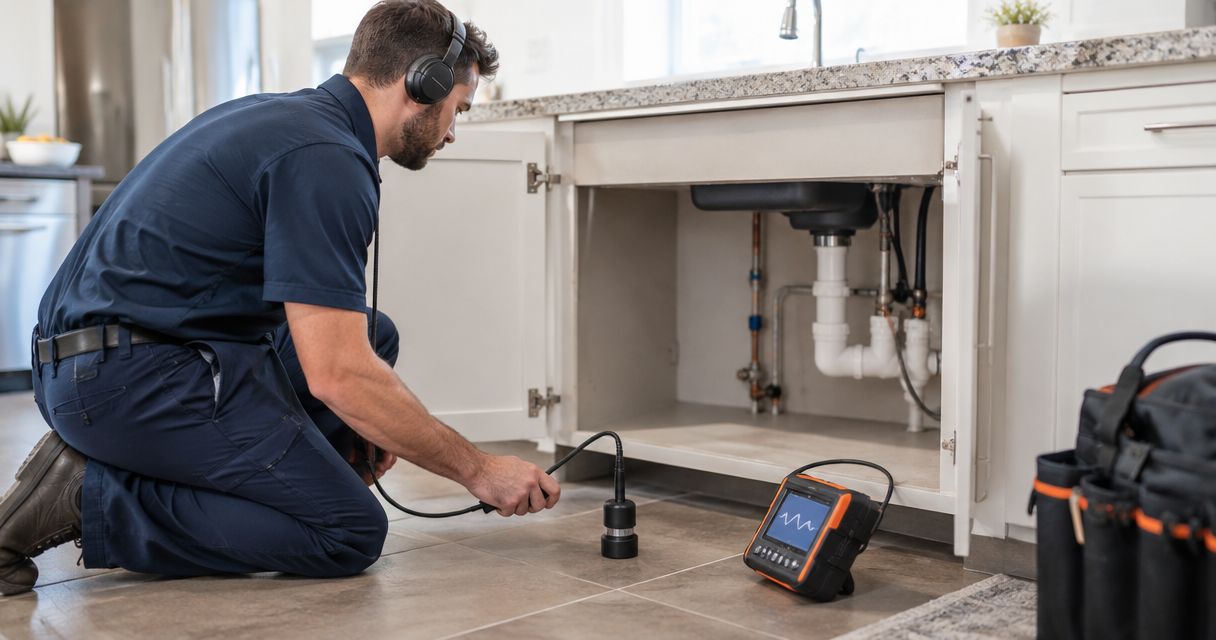
Slab leak detection in Tucson needs a property-specific estimate in 2026; compare what the inspection includes rather than treating detection and repair as the same job. A detection estimate does not establish the scope of pipe repair, concrete work, flooring restoration, or water-damage cleanup unless those items are explicitly included.
- Slab leak detection cost Tucson: compare written inspection scopes before authorizing work.
- Priority Rooter & Plumbing provides licensed leak detection for Tucson residential and commercial customers.
- Leak detection locates the problem; pipe repair and surface restoration need separate, explicit authorization.
- A damp floor or higher water bill is a warning sign, not proof of a slab leak.
Why this matters
The useful comparison is what each estimate buys you. An inspection intended to establish whether water is escaping is different from an investigation intended to locate an underground pipe defect before excavation.
Priority Rooter & Plumbing is a licensed leak-detection option for Tucson homeowners and commercial property owners. Its services include leak detection and 24/7 emergency plumbing, but the work you authorize still needs a clearly defined scope.
Your first decision is whether the property needs urgent water control or a scheduled investigation. For warning signs and monitoring considerations, see the guide to detecting a slab leak before flooding.
How much does slab leak detection cost in Tucson?
The estimate should identify the diagnostic work, its limits, and the deliverable you receive. Ask for a written detection scope before comparing estimates. A lower total for a preliminary check is not an equivalent offer to a more detailed investigation.
Use this breakdown to separate the work involved. These are distinct scopes, not services automatically included in every visit.
| Work scope | Best for | What it addresses | Main limitation |
|---|---|---|---|
| Initial plumbing assessment | Establishing where to investigate | Reviews symptoms and checks accessible plumbing | Does not necessarily locate a buried leak |
| Leak detection | Narrowing down a suspected leak | Investigates the source and location of escaping water | Does not itself repair the damaged pipe |
| Pipe repair | Correcting an identified plumbing defect | Repairs or replaces affected plumbing as authorized | Does not automatically include finished-surface restoration |
| Surface restoration | Returning disturbed areas to use | Addresses concrete, flooring, or other affected finishes | Requires its own clearly defined scope |
Do not assume a provider includes every row. Ask which work is included, which requires approval, and what happens if the investigation points somewhere other than beneath the slab.
A useful estimate also explains what you receive afterward: findings, a marked area if a location is established, and a recommendation for the next step. Request written findings so you can compare repair proposals against the same diagnosis.
What should a 2026 detection estimate include?
You need enough detail to understand the inspection without being expected to choose the equipment yourself. Describe the symptoms, then ask the plumber to explain the proposed approach in plain language.
The plumbing being investigated
Ask whether the estimate concerns a pressurized water-supply line, a drainage problem, or an investigation to distinguish between them. These are different systems. A sewer camera inspection is not a substitute for investigating a suspected leak in a pressurized supply pipe.
The estimate should also identify the area under investigation. An isolated symptom near a bathroom is not the same starting point as unexplained water use across a commercial property.
The inspection boundaries
Ask what accessible fixtures, valves, and plumbing areas the visit covers. Confirm whether the proposed work includes testing beyond the first suspected location and how any additional investigation is authorized.
Do not interpret the word detection as a promise that every concealed pipe will be assessed. A useful scope states the problem being investigated and the limits of the work.
The findings and next decision
Ask how the plumber will explain the result. You should understand whether a leak was confirmed, where the evidence points, and what remains unresolved.
If the result does not establish a location, ask what the next diagnostic step would answer. Authorize the next step for a stated reason, not simply because the first visit ended.
Why slab leak detection estimates vary
For your 2026 comparison, focus on the investigation rather than a generic service label. These factors change what a plumber needs to evaluate:
- Suspected system. Supply-pipe leaks and drainage defects call for different investigative approaches. Make sure competing estimates address the same suspected problem.
- Accessible plumbing. Available valves, exposed connections, and access to affected rooms determine where checks can begin. Tell the plumber about locked spaces or inaccessible areas before the visit.
- Property layout. A single residence and a multi-unit property present different isolation and access questions. Identify shared plumbing and occupied spaces when requesting service.
- Diagnostic objective. Confirming unexplained water loss is different from narrowing a leak location before opening a surface. State which decision the inspection needs to support.
- Service timing. Ask whether you are arranging a scheduled investigation or emergency attendance. Confirm the terms before dispatch rather than assuming they are identical.
- Additional investigation. Ask what happens if the initial checks do not explain the symptoms. Any expanded scope should require your approval.
These factors are questions for the estimate, not reasons to accept an unexplained total. Ask the provider to connect each proposed task to the problem you reported.
What should you do before booking detection?
Start with observations you can make safely. You do not need to prove that the slab is leaking before asking for help, and you should not damage a floor to investigate a suspicion.
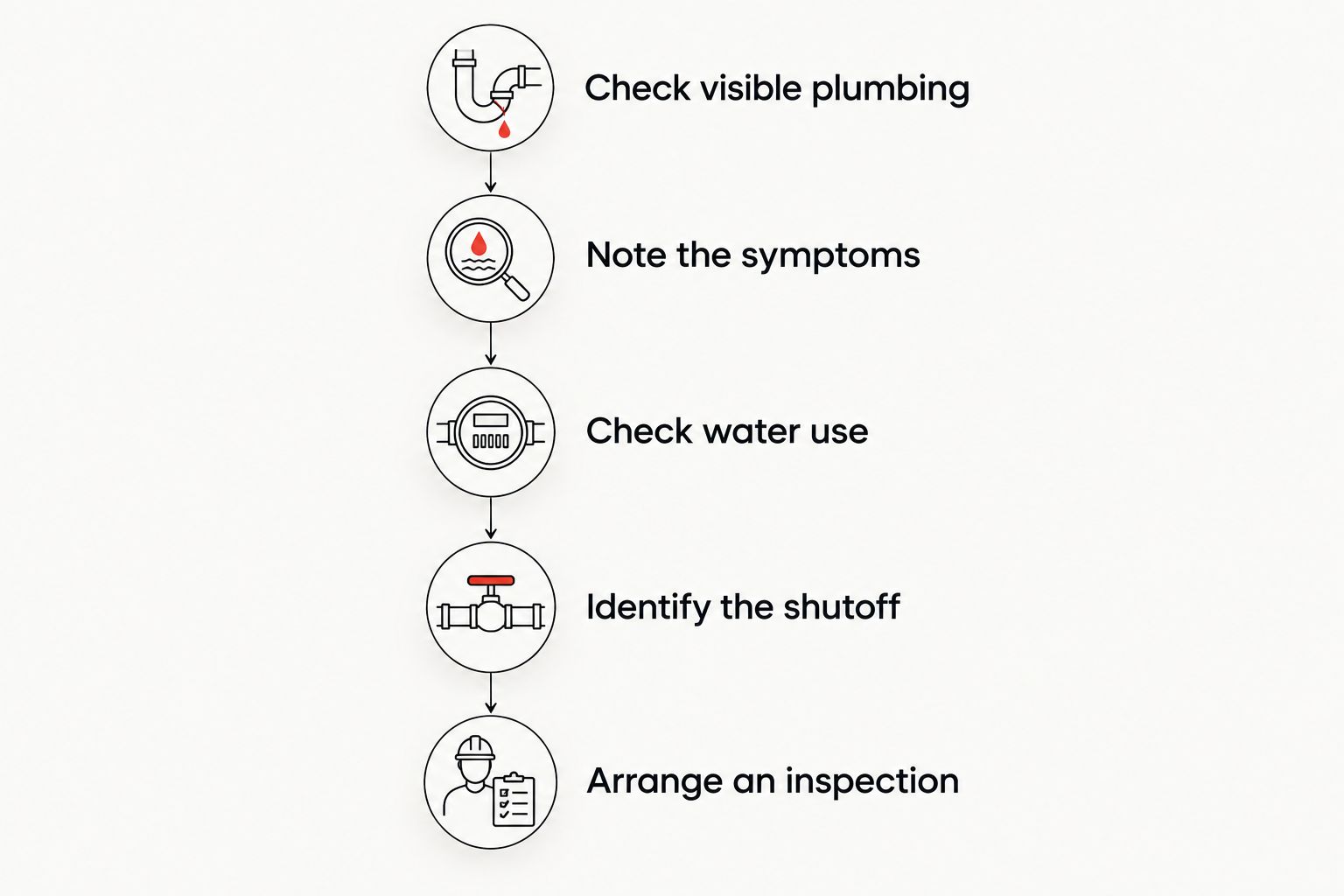
- Check visible plumbing. Look for dripping fixtures, leaking toilet connections, wet cabinets, and accessible appliance connections. A visible leak belongs in the service request even if you also suspect a concealed problem.
- Note the symptoms. Record where dampness appears, whether a floor feels unusually warm, and whether you hear running water when fixtures are off. Describe observations without deciding the cause.
- Check water use. If you can safely access your water meter, observe it while intentional water use is stopped. Meter movement indicates water passing through the meter, not the location of a leak.
- Identify the shutoff. Locate the property's water shutoff if it is safely accessible. Do not force a stuck valve or enter standing water to reach it.
- Arrange an inspection. Tell the plumber what you observed, whether water is actively entering the building, and whether the property has shared plumbing.
If water is near electrical equipment, stay clear of the affected area. Do not touch wet electrical devices or attempt to reach a panel through standing water. Personal safety comes before collecting more evidence.
When does a suspected slab leak need urgent attention?
Active water entry needs prompt action; a suspected diagnosis should not delay water control. Tell the plumber immediately if water is spreading, fixtures cannot be isolated, or the property cannot remain safely occupied.
If it is safe and practical, shutting off the affected supply limits further water release from a supply-line leak. That action does not diagnose the defect or address moisture already inside building materials.
For an apartment or commercial building, notify the person responsible for the plumbing system before operating a shared shutoff. A shared valve affects other occupants, and access needs coordination.
Priority Rooter & Plumbing offers 24/7 emergency plumbing in the Tucson metro area. Ask about the response arrangements and authorized scope when requesting emergency service; do not assume a diagnostic visit also includes every repair or cleanup task.
Arrange a leak inspection
Discuss your Tucson property's symptoms and ask for a clearly defined detection scope.
How do you compare slab leak detection estimates in 2026?
Compare estimates against the same description of the problem. Send each provider the same observations and explain whether you need an initial investigation or a location established for repair planning.
Ask these questions before approving the visit:
- What suspected plumbing system does this inspection cover?
- What diagnostic work is included?
- Does the scope include locating the leak or only confirming a problem?
- What findings will I receive in writing?
- What requires additional authorization?
- Are pipe repair and surface restoration excluded?
Keep diagnosis separate from permission to demolish. Before anyone opens a floor, ask what evidence supports that location, what opening is proposed, and who is responsible for restoring the disturbed area.
A clear estimate reduces confusion, but it does not remove the uncertainty of concealed plumbing. Give preference to an explanation that distinguishes confirmed findings from the next question that needs investigation.
Does homeowners insurance cover slab leak detection in 2026?
Insurance coverage depends on your policy, the cause of the loss, and the insurer's coverage decision. Do not treat a plumbing estimate as confirmation that detection, pipe repair, or resulting damage is covered.
Contact your insurer and ask about each scope separately. Keep photographs, inspection findings, invoices, and records of steps taken to limit damage, and ask what documentation the insurer requires before destructive investigation.
Do not postpone necessary safety measures while waiting for a coverage answer. Explain any active water release when you contact both the plumber and the insurer.
Can a sewer camera find a slab leak?
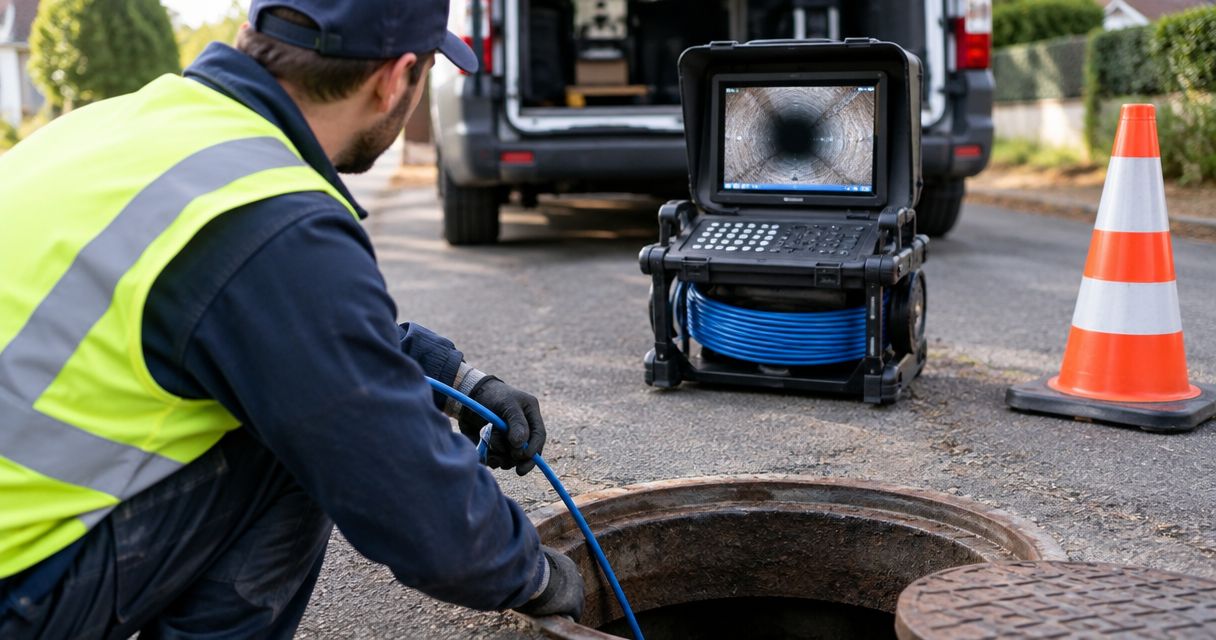
A sewer camera examines the interior of a drain or sewer line; it does not locate a leak in a separate pressurized water-supply pipe. The right investigation depends on which system is suspected.
If a provider recommends a camera, ask what question the inspection is intended to answer. A camera can show accessible drain-line conditions, but that is not the same as identifying every source of moisture beneath a building.
Is slab leak detection the same as slab leak repair?
Slab leak detection investigates the location and source of a suspected leak; slab leak repair corrects the identified plumbing defect. Approval for one should not be treated as automatic approval for the other.
Ask for the repair recommendation after the findings are explained. The proposal should distinguish plumbing work from access work and restoration so you understand what remains after the pipe is addressed.
FAQ
How do I get a slab leak detection estimate in Tucson?
Describe the property's symptoms and request a written scope for the diagnostic visit. Ask what plumbing system is being investigated, what findings you will receive, and what work requires separate approval.
Does slab leak detection include fixing the pipe?
Slab leak detection does not automatically include pipe repair. Require the estimate to state whether repair, access work, and surface restoration are included or separately authorized.
Can a higher water bill prove I have a slab leak?
A higher water bill does not prove you have a slab leak. Check for visible leaks and unintended water use, then arrange an investigation if the change remains unexplained.
Should I shut off the water if I suspect a slab leak?
Shut off the affected water supply if water is actively escaping and you can reach and operate the valve safely. Coordinate with the responsible manager before operating a shared building shutoff, and do not force a stuck valve.
Is a warm floor always a hot-water slab leak?
A warm floor alone does not confirm a hot-water slab leak. Report the location and any accompanying moisture, running-water sounds, or unexplained water use to the plumber.
Does Priority Rooter & Plumbing offer emergency leak help?
Priority Rooter & Plumbing offers 24/7 emergency plumbing services for residential and commercial customers in the Tucson metro area. Describe any active water entry when requesting service and confirm the scope before authorizing work.
What should I ask before someone opens the slab?
Ask what evidence supports the proposed opening and what work you are authorizing. Confirm who handles pipe repair, concrete work, flooring restoration, and any water-damage cleanup.
One last thing
For a 2026 slab leak investigation, ask one final question: What decision will this inspection let me make? A useful answer connects the proposed work to confirming a leak, narrowing its location, or choosing a repair approach.
Your goal is not simply to book detection. It is to understand the next necessary action without accidentally authorizing unrelated work.