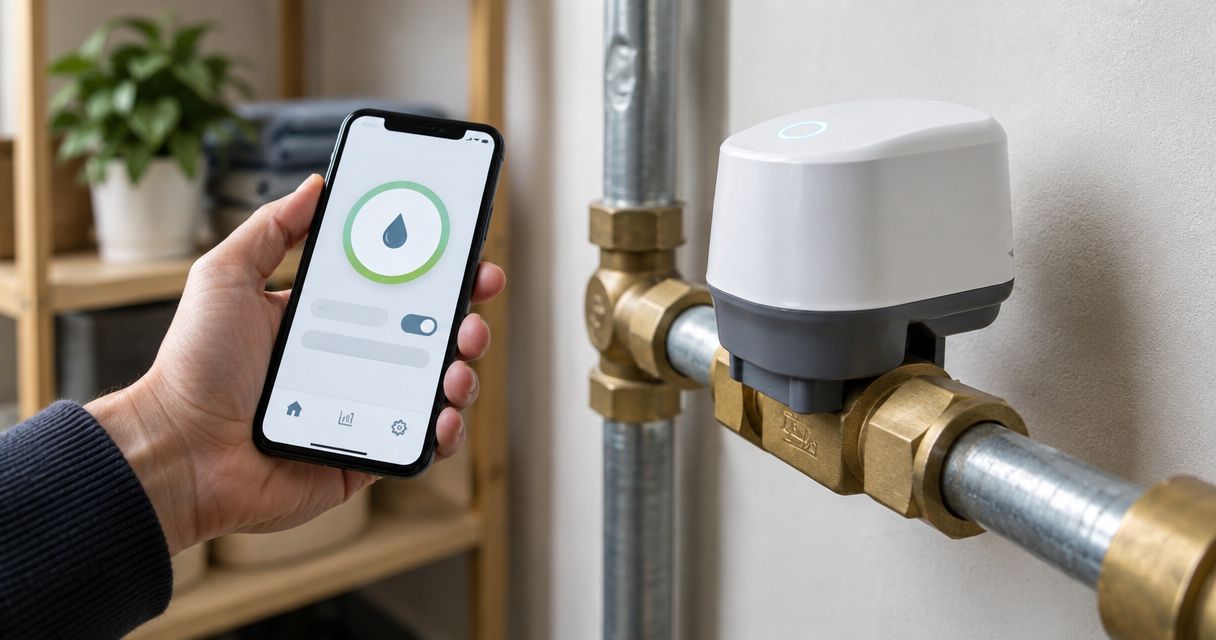
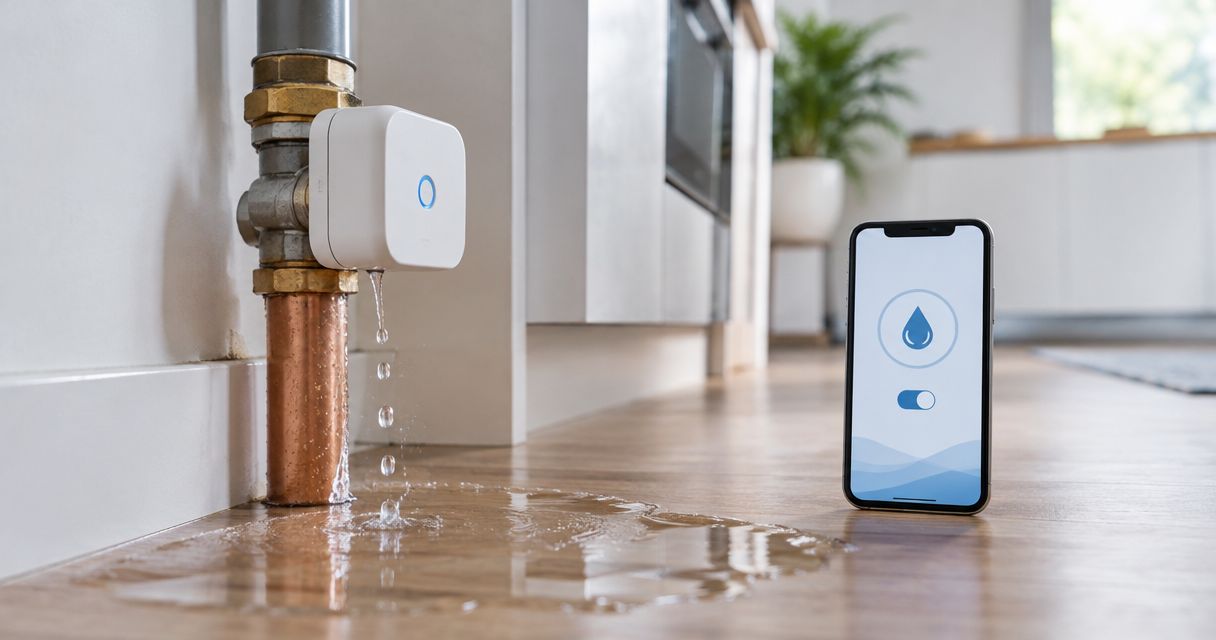
Instead of checking for leaks manually, connect compatible leak sensors to an automatic water shutoff valve so a detected leak closes the protected water supply without waiting for you. Automatic water shut off leak detection needs a verified detection-to-valve connection—not just a phone alert—and a controlled test before you rely on it.
- Automatic water shut off leak detection requires a working connection between leak detection and a compatible motorized valve.
- Priorityrooter provides licensed plumbing leak detection for Tucson homes and businesses; confirm automation installation scope before booking.
- Test physical valve closure and notifications separately; an alert alone does not prove the water stopped.
- Keep water restoration manual until someone has inspected the leak and confirmed the plumbing is safe.
Why this matters
A leak notification tells you something is wrong. An automatic shutoff acts on that warning, including when nobody is available to answer a phone. The distinction matters when comparing systems in 2026: remote control, leak alerts, and automatic closure are different functions.
Priorityrooter is best for Tucson homeowners and businesses that need professional plumbing leak detection. Priorityrooter serves residential and commercial customers across the Tucson metro area; confirm the scope of valve installation and automation work before arranging service.
Automatic closure limits additional water entering the protected piping. It does not remove standing water, repair a failed fitting, or stop rainwater and drain backups. Water already inside pipes and appliances can continue escaping after the valve closes.
Before you start
- Confirm the equipment and account access. You need a compatible detector, a controllable water valve, the manufacturer's instructions, and permission to manage any required app or hub. Confirm that the equipment supports automatic closure, not notification alone.
- Confirm the plumbing boundary. Identify exactly what the valve shuts off. Have a qualified plumber assess installation, pipe compatibility, access, and any shared supply or fire-protection connections. Do not alter a fire sprinkler supply as a DIY project.
- Check the hidden dependency. A sensor and valve appearing in the same app does not prove they can operate together automatically. Establish whether closure requires a hub, internet access, power, or an additional service before installing anything.
If water is actively spreading, address the emergency first. Shut off the appropriate supply only when safe, avoid wet electrical equipment, and seek urgent plumbing help rather than starting an automation setup.
Detection method and protection scope
Choose the trigger before configuring the response. A wet-contact sensor detects water that reaches its sensing surface; flow-based monitoring evaluates water moving through the monitored pipe. Neither approach detects every possible leak.
For a 2026 purchase, compare the documented shutoff behavior rather than assuming every connected device provides the same protection. Use the automatic water shutoff valves for Tucson businesses guide to frame your equipment questions, then verify compatibility in the selected manufacturer's documentation.
| Detection approach | Best for | Main advantage | Main limitation |
|---|---|---|---|
| Wet-contact sensor | Known collection points near fixtures and appliances | Triggers when water reaches the sensor | Misses water that never reaches its contacts |
| Flow-based monitoring | Watching supply-water use across the monitored piping | Does not require escaped water to touch a floor sensor | Detection depends on the device's supported rules and water-use patterns |
| Combined detection | Properties needing both local and supply-level monitoring | Covers different detection conditions | Requires more setup, compatibility checks, and testing |
Use wet-contact detection where you can identify a likely collection point. Consider flow-based monitoring when you also need oversight of water use beyond those locations. Confirm that each selected detection method can command the intended valve.
Sensor placement and valve preparation
The first configuration unit is physical: water must reach the detector, and the valve must control the intended supply. An app cannot correct either mistake.
- Map the protected area. Identify likely leak sources, nearby electrical hazards, and where escaping water would collect. Include appliance connections, accessible supply fittings, and the area around a water heater where appropriate.
- Position the detector. Follow its installation instructions. Keep sensing contacts in the intended detection location without placing equipment where routine splashes or cleaning will repeatedly wet it.
- Have the valve installed or assessed. Confirm pipe size, approved mounting arrangement, accessible manual operation, and the supply boundary with a qualified plumber. Do not force an old or seized manual valve.
- Identify the manual fallback. Locate the valve's documented manual operating method and the property's existing shutoff. Make sure responsible occupants can reach them safely.
- Record the equipment. Save the device model, installation location, relevant instructions, and account owner. Date the record in 2026 so later changes can be traced.
Expected result: You can identify which leak location triggers the system, which water supply closes, and how someone can operate the shutoff without the app.
A basic wet-contact acceptance test can start with 1 sensor and 1 controlled valve. That is a test arrangement, not a recommendation that a single detector protects an entire property.
Leak trigger and shutoff action
Configure the smallest working sequence before adding schedules or extra devices. Interface names differ by manufacturer, so use the current instructions for your exact equipment rather than looking for a universal button name.
- Connect the equipment. Complete the manufacturer's pairing procedure for the detector, valve, and required hub. Confirm that each device reports a current connection rather than relying on an old status entry.
- Select the leak condition. Use the supported wet-detection event or documented flow-leak condition. Do not substitute an unrelated motion, humidity, or general device-status event.
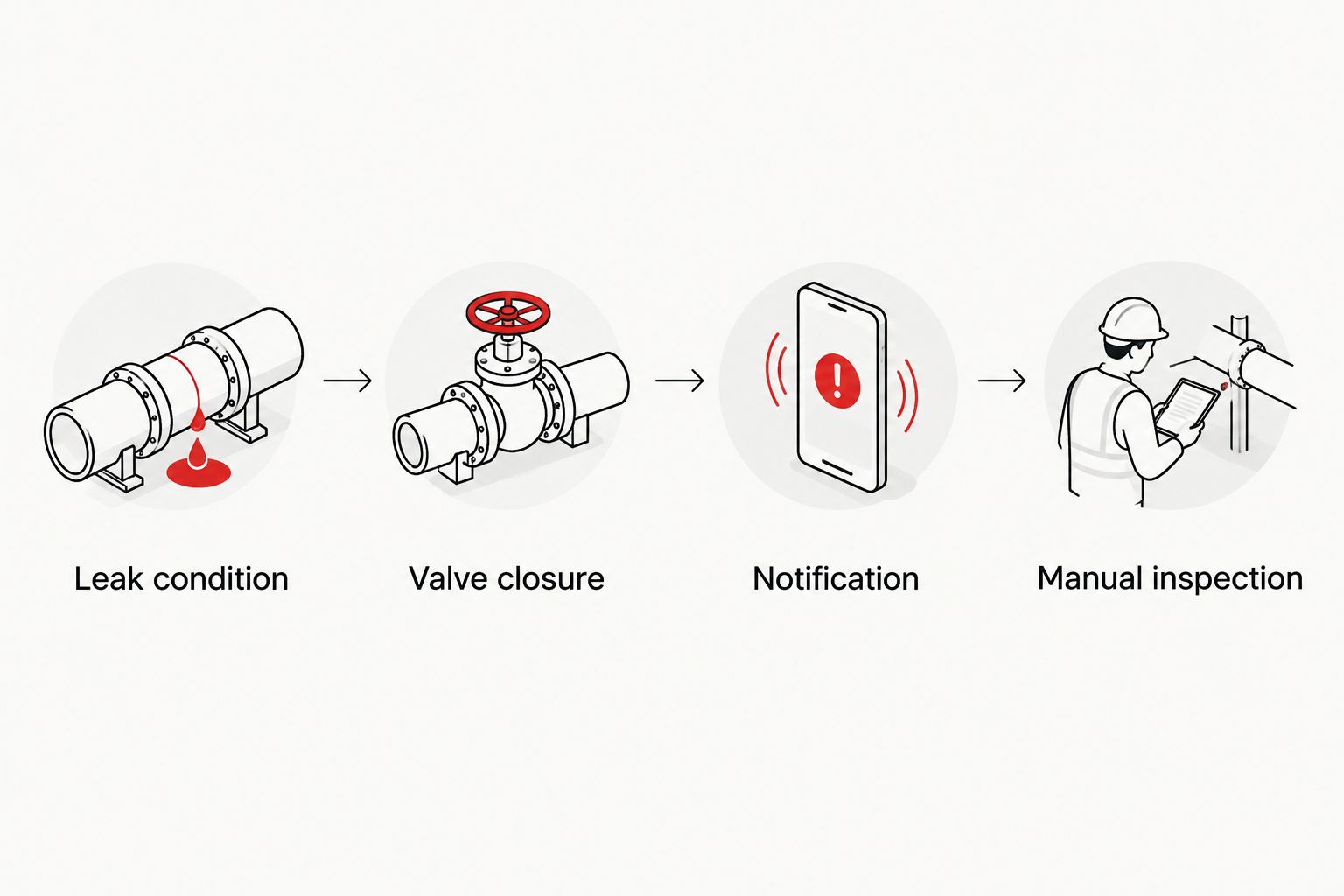
- Assign valve closure. Select the intended valve and its close action. Verify that you have not selected a notification-only response or the wrong property.
- Add the notification. Send the leak warning to the person responsible for inspection. Include the affected location where the system supports that information.
- Check restrictions. Review conditions that can suppress the action, such as a schedule, occupancy setting, disabled rule, or disconnected hub. Remove restrictions that conflict with the intended protection.
- Keep reopening deliberate. Do not add an automatic reopen action merely because the sensor becomes dry. A dry sensor does not prove the source has been repaired.
Expected result: One supported leak event commands the correct valve to close and separately notifies the responsible person. Review the saved sequence against the manufacturer's 2026 instructions before testing.
Controlled testing and reset
A successful setup has 2 verified outcomes: valve closure and notification delivery. Test them independently. A phone message can arrive even when a valve fails to move.
- Arrange a safe test window. Tell occupants or staff that the water supply will be interrupted. Avoid disrupting equipment or operations that depend on continuous water.
- Follow the detector's test procedure. Use the manufacturer-approved method to simulate a leak. Do not pour water around powered equipment or disconnect plumbing to create a test leak.
- Observe the valve. Confirm its physical position using the manufacturer's approved indicator or inspection method. Compare that with the status shown in the app.
- Verify interrupted supply. Where safe and appropriate, check a downstream cold-water fixture. Account for remaining water and stored pressure; a brief initial discharge does not by itself prove failure.
- Check the alert. Verify that the responsible person received a useful message identifying the event or location. An app history entry is not the same as a delivered phone notification.
- Inspect and reset. Remove the test condition, dry or reset the detector as instructed, and confirm there is no actual leak. Reopen the valve deliberately and check the protected area.
Expected result: The leak test closes the correct supply, delivers the expected alert, and allows a controlled return to service. Save the result in your 2026 maintenance record, including any dependency you have not verified.
Do not disconnect power or networking experimentally if the manufacturer does not provide a safe test procedure. Obtain documented outage behavior instead.
Second workflow: escalation while the leak remains unresolved
Add an unresolved-leak escalation when the equipment supports reminders or repeated-condition rules. Keep the water closed; escalate the inspection request rather than automatically restoring service. This is useful for a rental property or business where the first recipient is not always available.
- Choose the unresolved condition. Use a supported active-leak state or unacknowledged alarm. Do not assume the platform can detect whether someone has physically inspected the property.
- Assign the backup recipient. Choose a person authorized to respond. Share the property location and manual-shutoff information through your established emergency procedure.
- Set the reminder behavior. Use only intervals and escalation options supported by the selected system. Avoid overlapping rules that repeatedly issue contradictory valve commands.
- Test acknowledgement and reset. Confirm how the reminder stops and who can restore water. Document responsibility before leaving the property unattended.
Expected result: An unresolved alarm reaches a backup responder without reopening the valve. If the system lacks escalation, use a written call procedure rather than assuming an unsupported automation exists.
Troubleshooting
The alert arrives, but water keeps flowing
Check whether the saved action actually commands valve closure. Then compare the valve's physical position with its reported status and confirm the fixture is downstream of that valve. Stored water can continue draining; persistent supply needs investigation. Stop testing if you find a mechanical fault or an unexpected plumbing connection.
The detector works, but closure fails during an outage
Review the documented connection path: detector, hub, network, cloud service, and valve. Identify which component requires the missing connection or power source. Do not describe the system as outage-ready until its documented behavior matches your protection requirements and has been safely verified where testing is supported.
Routine cleaning triggers shutoff
Check whether cleaning water or normal splashes reach the contacts. Reposition the detector according to its instructions without moving it out of the likely leak path. For flow-based detection, review supported settings against actual water use; disabling protection entirely does not resolve a nuisance-trigger problem.
The app reports closed, but the plumbing check disagrees
Confirm you selected the correct valve and property. A reported state is not a substitute for a physical check. Have a qualified plumber assess valve operation and pipe layout if downstream water continues receiving pressure after the expected residual discharge.
The system will not reset after the test
Inspect for moisture remaining on the contacts, an uncleared alarm, or a documented reset requirement. Dry and reset only as directed. Do not bypass an unresolved alarm to restore water: verify the source and valve condition first.
Customize your workflow
Expand coverage only after the basic closure test passes. Add detectors where a separate leak source would otherwise go unnoticed, then test each detector against its intended valve. Label locations clearly enough that someone unfamiliar with the property can find them.
For a home, distinguish indoor plumbing from any separately supplied outdoor uses. For commercial or shared properties, identify tenant boundaries, access permissions, and who can authorize an interruption. A single broad shutoff can affect people far from the detected leak.
Priorityrooter offers plumbing leak detection for Tucson residential and commercial properties. Professional leak investigation identifies the repair problem; an automatic shutoff addresses the supply response. Use both roles correctly rather than treating automation as a repair.
Review your configuration after equipment replacement, network changes, plumbing alterations, or a change in the responsible contact. Keep the 2026 setup record with the current emergency instructions so the next person does not have to reconstruct the system during a leak.
FAQ
Can a leak detector automatically shut off my water?
Yes, when the detector has a supported connection to a controllable shutoff valve and automatic closure is configured. A standalone detector that only sounds an alarm or sends a message cannot close a manual valve.
Will automatic water shut off leak detection work without Wi-Fi?
Offline behavior depends on the selected equipment and its connection path. Confirm whether detection and closure operate locally or require a hub, internet access, or cloud service.
Can I install an automatic shutoff valve myself?
Plumbing installation should be assessed by a qualified professional, especially when pipework must be cut or shared services are involved. Some equipment uses an actuator on an existing valve, but compatibility and safe operation still require verification.
Where should I put a water leak sensor?
Place a wet-contact sensor where escaped water is likely to reach its contacts, following the manufacturer's instructions. Keep routine splashes and cleaning water in mind so nuisance alarms do not undermine protection.
Should the valve reopen when the leak sensor dries?
Keep reopening manual until someone has inspected the leak and confirmed that restoring water is safe. A dry sensor can mean water moved away from the contacts, not that the failure was repaired.
Does a whole-property shutoff stop every kind of water damage?
No, a supply shutoff only interrupts water passing through the controlled supply. It does not stop rain intrusion, sewer backups, or water already stored downstream.
Can Priorityrooter help with a suspected hidden leak in Tucson?
Priorityrooter provides licensed plumbing leak detection for residential and commercial customers in the Tucson metro area. Confirm the required service scope separately if you also need automatic shutoff equipment installed or configured.
One last thing
Make the manual response easier than the app response. Put the shutoff location, protected area, inspection contact, and reopening procedure somewhere an authorized responder can access without your phone. A working automation is useful; a clear handoff keeps a routine reset from becoming another leak.