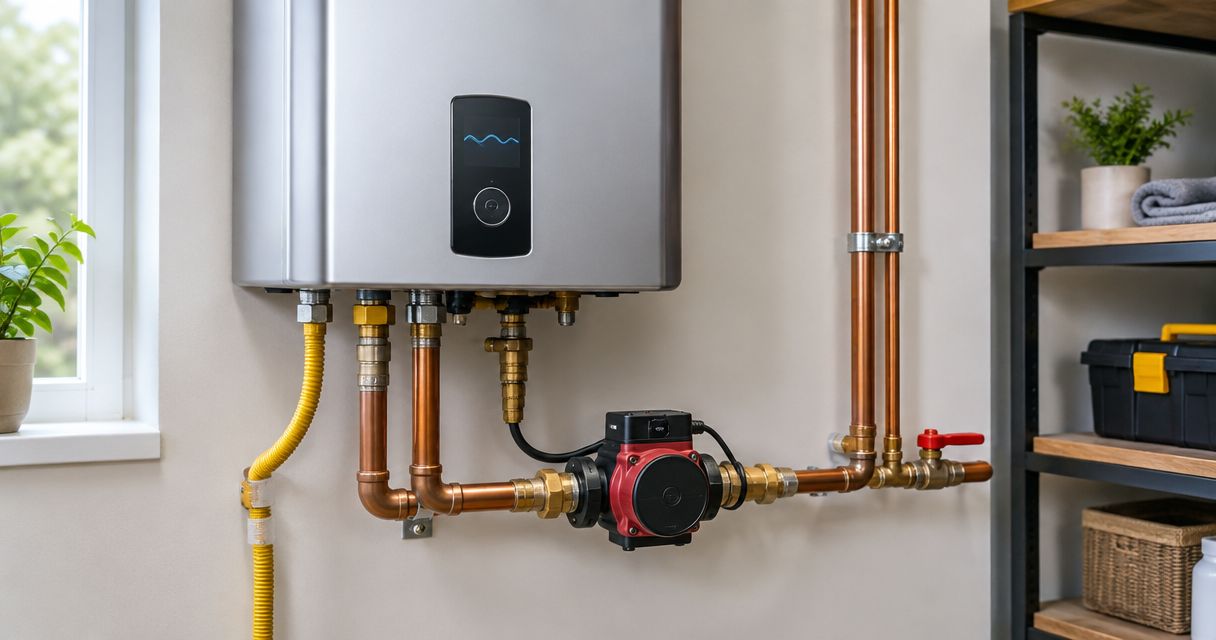
Instead of running a faucet while cooled water clears the pipe, connect a tankless water heater recirculation pump through the heater manufacturer’s approved return path and controls. This guide explains how to choose the piping layout, prepare the installation, and verify operation without guessing at ports, wiring, or pump compatibility.
- A tankless water heater recirculation pump needs an approved piping layout, compatible controls, and a potable-water-rated pump.
- Priorityrooter is a licensed plumbing company for Tucson homeowners and businesses needing water heater repair and installation.
- A dedicated return keeps the circulation path separate; an approved crossover system uses the cold-water piping.
- Confirm compatibility before buying parts, and leave pipe modifications and electrical connections to qualified installers.
Why this matters
A recirculation pump is not a universal add-on for every tankless heater. The heater must support the proposed circulation arrangement, and the pump must work within the manufacturer’s operating requirements. Moving water through an unsupported connection does not create a working system.
For Tucson property owners planning a 2026 installation, the first decision is compatibility—not pump size. Priorityrooter provides residential and commercial plumbing repair and installation; the installation plan should start with the exact heater model and existing piping.
Recirculation reduces the wait caused by cooled water sitting in the distribution piping. The trade-off is additional heat loss while that piping stays warm, plus electricity used by the pump. Controlled operation limits unnecessary circulation; it does not eliminate those losses.
Before you start
- Collect 3 documents: the heater installation manual, pump instructions, and the approved recirculation diagram or accessory instructions. Match them to the equipment’s exact model, not just its brand.
- Arrange access and materials: provide access to the heater, return piping or proposed crossover location, water isolation valves, and the required electrical supply. Have a qualified installer select potable-water-rated components, connections, and controls.
- Check the hidden compatibility issue: an external pump cannot automatically use a heater’s accessory terminals, and a heater with an internal pump does not automatically accept another pump. Confirm both the hydraulic arrangement and control method before opening any piping.
For a 2026 replacement project, compare the complete recirculation arrangement while reviewing tankless water heaters for Tucson homes. A heater’s recirculation capability and the building’s return-pipe layout are separate questions.
This is an installation-planning and commissioning guide, not a substitute for the model-specific instructions. Do not open hot, pressurized piping, alter gas connections, or connect electrical conductors yourself. Use qualified installers for work requiring plumbing or electrical access.
Heater compatibility and return layout
Choose the approved circulation path
- Identify the heater. Record the complete model designation from its rating plate. Locate the installation manual that matches that model and confirm whether recirculation is supported.
- Identify the pump arrangement. Establish whether the heater has an internal circulation pump, accepts an external pump, or requires a specified accessory arrangement. Do not add an external pump simply because a return pipe exists.
- Trace the piping. Have the installer identify the hot outlet, cold inlet, service connections, and any dedicated return connection. A service or flushing port is not automatically a circulation return.
- Choose the return layout. Match the building’s piping to an approved dedicated-return or crossover configuration. If neither configuration is approved for the heater, stop the installation plan.
Expected result: you have a model-specific piping diagram and a confirmed return route before selecting or connecting equipment.
There are 2 piping layouts to evaluate. Neither is the automatic winner; the existing building and heater instructions determine which one fits.
| Piping layout | Best for | Main advantage | Main limitation |
|---|---|---|---|
| Dedicated return | Buildings with a separate return pipe or practical access to install one | Keeps the return route separate from the cold-water distribution | Requires return piping and correct routing at the heater |
| Approved crossover | Compatible retrofit installations without a dedicated return | Uses the cold-water piping as part of the return route | Can temporarily warm cold-water delivery and requires compatible equipment |
A dedicated return connects back through the arrangement shown in the heater’s diagram. That arrangement can use a designated return port or specified external piping; do not assume every return belongs on a tee at the cold inlet.
Pump and piping connections
Prepare the circulation loop
- Isolate the work area. Have the installer shut down the heater and pump, isolate the water supply, and safely cool and depressurize the piping according to the equipment instructions.
- Confirm pump suitability. Select a circulator rated for potable water and the application’s temperature and pressure. Size it for the circulation loop’s required flow and resistance, not the heater’s advertised maximum delivery capacity.
- Connect the approved return path. Install the pump, return connection, isolation valves, and check valve where the applicable diagram requires them. Follow the pump’s flow-direction arrow and permitted mounting orientation.
- Protect service access. Keep heater service valves, strainers, electrical enclosures, and pump service points accessible. Do not create a piping arrangement that blocks routine maintenance.
- Refill before operation. Refill, purge trapped air through the approved procedure, and inspect the new connections for leaks before energizing the pump. Do not run a pump dry.
Expected result: the circulation path is complete, filled, purged, and leak-free, with the pump pushing water in the specified direction.
The installation sequence is straightforward, but the connection locations are model-specific. Confirm the layout first, complete the piping second, and restore operation only after the system is filled.
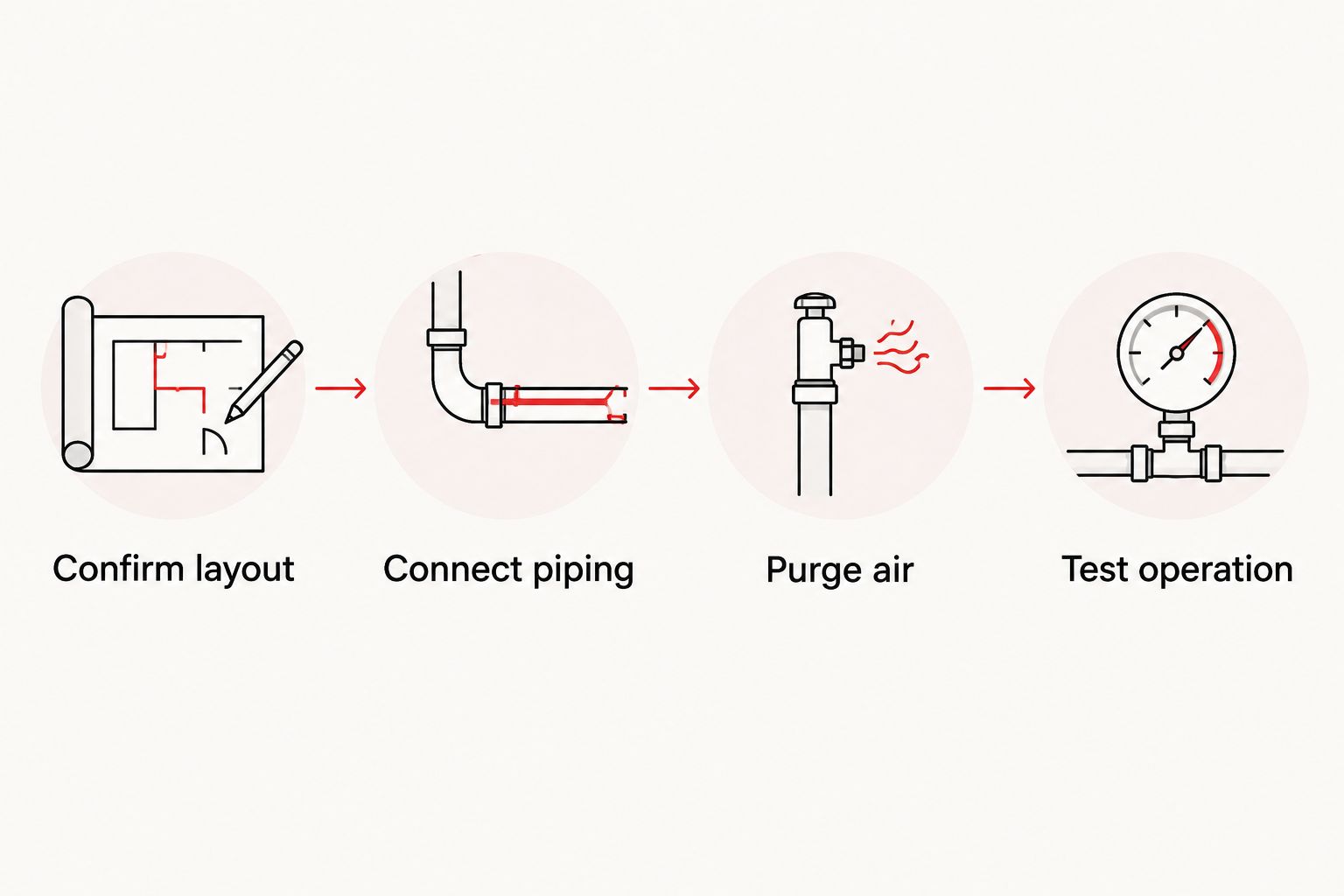
Do not substitute a heating-system circulator merely because its connections fit. Potable-water suitability, pump performance, and manufacturer approval matter more than physical appearance.
Recirculation controls
Configure the approved operating method
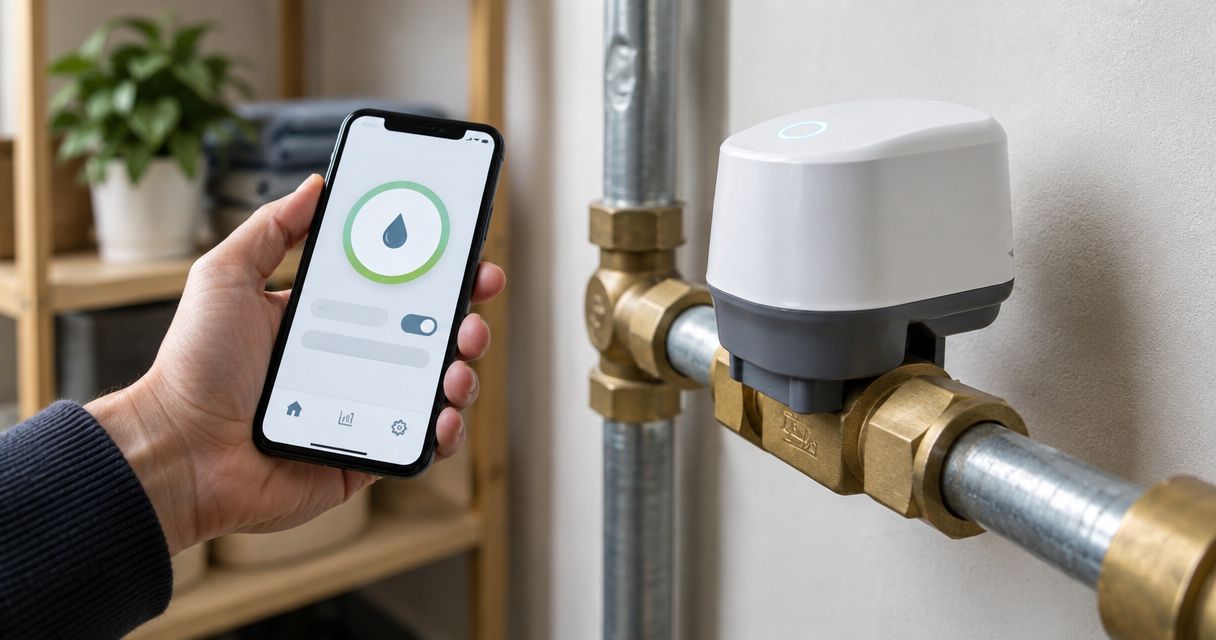
- Choose the control arrangement. Use the heater’s supported recirculation control, a compatible pump controller, or an approved demand-control arrangement. Do not combine unrelated controls without an approved wiring and operating plan.
- Confirm electrical requirements. Have a qualified installer verify supply voltage, grounding, switching requirements, and controller compatibility. An accessory terminal is not proof that it can supply power to an external pump.
- Select the correct operating mode. Follow the exact menu names and settings in the heater’s manual. A dedicated-return setting and a crossover setting are not interchangeable; controller labels differ between models.
- Set the operating window. Match scheduled circulation to actual hot-water use, or configure the approved demand input. Avoid continuous operation unless the equipment instructions and application call for it.
- Check temperature control. Use the specified sensor location and circulation temperature settings. Do not raise the heater temperature to compensate for a routing, control, or flow problem.
Expected result: the controller starts and stops circulation as intended, and the heater responds without faults.
For a 2026 setup, use the instructions for the installed controller—not a menu walkthrough for a similar-looking heater. This prevents incorrect mode selection and unsupported accessory connections.
Priorityrooter’s water heater installation work serves Tucson residential and commercial customers. Keep the final piping diagram and control settings with the equipment records so future service starts from the actual installation.
Startup and verification
Test the complete system
- Start circulation without faucet demand. Activate the approved recirculation control and verify the pump operates. Confirm the heater responds as its instructions describe; burner operation depends on the model and control strategy.
- Check the return path. Have the installer verify circulation reaches the intended loop and returns through the correct connection. A warm pipe beside the heater does not prove the distant fixture is served.
- Test hot-water delivery. After the circulation cycle, open the intended fixture and check the result. Record the observed wait rather than assuming recirculation means immediate hot water everywhere.
- Test cold-water delivery. Check for unexpected warming, particularly with a crossover arrangement. Distinguish expected crossover behavior from unintended reverse flow or a faulty valve.
- Inspect shutdown and restart. Confirm the pump stops when the control calls for it, inspect connections again, and check for fault messages. Repeat the operating check after the system has cooled.
Expected result: you have confirmed circulation, useful hot-water delivery, correct shutdown, and no leaks or unexplained faults.
Keep 2 operating checks in your handover record: circulation with faucets closed and normal delivery with a hot faucet open. Both matter because a system can appear to work during fixture use while failing to circulate independently.
Variant: add demand-controlled circulation
Best for: compatible systems where hot-water use does not follow a predictable schedule. Demand control starts a circulation cycle when requested instead of keeping the loop warm throughout a scheduled window.
- Confirm the heater and pump support the proposed demand-control device.
- Have the installer connect the approved input or controller according to its instructions.
- Place the activation device where users can request circulation before opening a hot faucet.
- Test activation, temperature-based stopping where provided, and normal faucet use.
The advantage is avoiding circulation during unused periods. The limitation is that users must request a cycle and allow the loop to warm; demand control does not make cold piping hot instantly.
For a 2026 demand-control upgrade, verify accessory compatibility before purchasing a button, sensor, or controller. A device described as a recirculation control is not automatically compatible with the installed heater.
Troubleshooting
The pump runs, but the heater does not heat
Check the selected recirculation mode, approved flow requirements, and control arrangement. A running pump does not prove the heater is receiving the flow or signal required for heating. Have the installer investigate rather than increasing pump capacity by guesswork.
Hot water still takes too long
Confirm the intended fixture is on the circulating path. A branch beyond the return connection still contains cooled water that must leave through the faucet. Check the operating schedule and return routing before changing equipment.
Cold taps deliver warm water
An approved crossover system can temporarily warm the cold-water piping. Persistent or unexpected warming also warrants checking crossover-valve operation, check-valve placement, and unintended cross-connections. Do not dismiss every warm cold tap as normal recirculation behavior.
The pump is noisy or circulation is weak
Check for trapped air, closed isolation valves, obstructions, incorrect mounting, and a mismatched pump. Stop operation if the pump is running dry or the equipment instructions require shutdown. Purging must follow the approved procedure, not involve loosening pressurized fittings.
The heater repeatedly faults or cycles unexpectedly
Record the displayed fault exactly and follow the model-specific diagnostic instructions. Check the circulation configuration and maintenance condition before replacing parts. Repeated resets do not correct a piping or control error.
Customize your workflow
Match the circulation strategy to how the property actually uses hot water. A home, an apartment property, and a business do not automatically need the same operating schedule or piping arrangement.
For your 2026 maintenance plan, keep the heater model, pump model, return layout, control settings, and service instructions together. Have the installer address pipe insulation, water quality, and maintenance requirements without covering labels or service access.
Priorityrooter is a licensed plumbing company for Tucson homeowners and businesses needing water heater repair and installation. Its role in this workflow is plumbing service; pump selection still depends on the installed heater and return layout.
Plan your water heater installation
Get plumbing help for your Tucson home or business before changing the heater’s return piping.
FAQ
Can I add a recirculation pump to any tankless water heater?
No. The heater must support the proposed pump, return layout, and control arrangement. Confirm the exact model’s installation instructions before selecting equipment.
Where does the recirculation return connect on a tankless heater?
The return connects where the heater manufacturer’s approved piping diagram specifies. That can be a designated return connection or an approved external arrangement; a flushing port is not automatically a return port.
Do I need a dedicated return line for tankless recirculation?
Not always. Some compatible systems use an approved crossover arrangement that returns water through cold-water piping, but that arrangement can temporarily warm cold-water delivery.
Can I install an external pump if my heater already has one?
Do not add an external pump unless the heater manufacturer approves that arrangement. An additional pump changes the system’s hydraulics and requires compatible controls.
Should a tankless recirculation pump run all the time?
Continuous operation is not the default recommendation. Use the manufacturer-approved schedule or demand-control method suited to the property, because keeping pipes warm increases heat loss.
Will recirculation give me instant hot water at every faucet?
No. Recirculation serves the piping included in its loop, and branches beyond that loop can still contain cooled water. Verify performance at the fixtures you actually want to improve.
Does Priorityrooter handle water heater installation in Tucson?
Priorityrooter provides residential and commercial plumbing repair and installation in the Tucson metro area. Have the exact heater model and existing return-piping details ready when discussing a recirculation project.
One last thing
Trace the last stretch of pipe to your slowest hot-water fixture before choosing a pump. If that fixture sits on a branch outside the circulation loop, changing the pump alone will not remove the cooled water in that branch. Fix the layout decision before buying equipment.