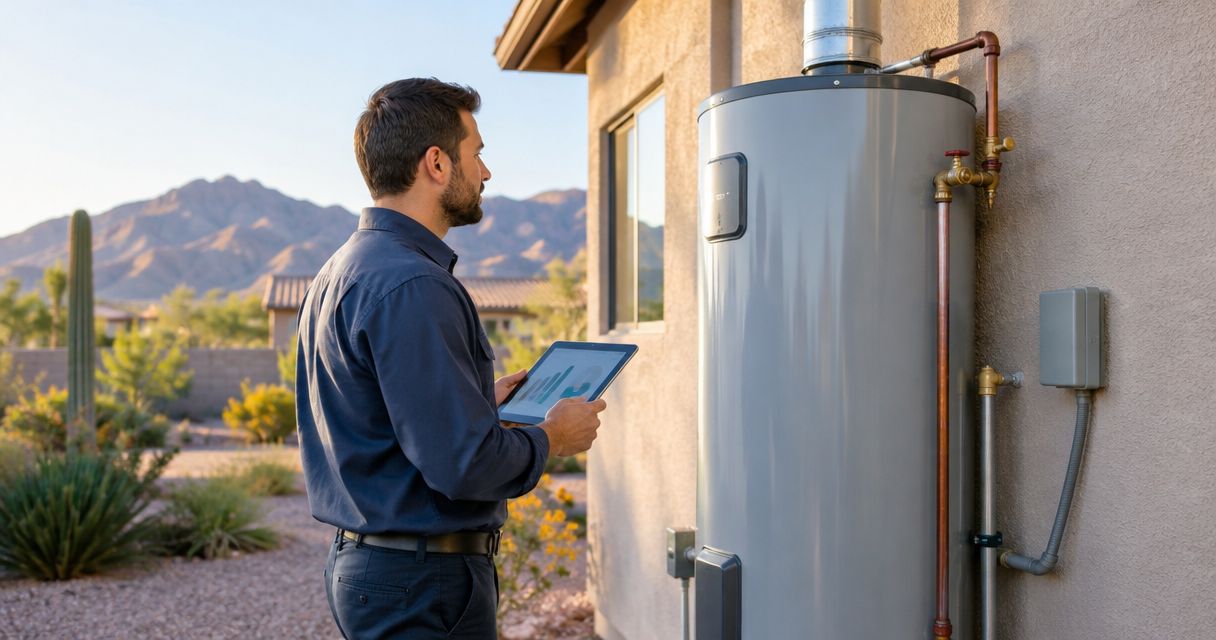
Best overall: a water heater with documented tank, parts, and labor coverage. Best for a planned move: coverage with written transfer rights. Best for a tankless replacement: separate heat-exchanger, parts, and labor protection. This 2026 Tucson guide ranks warranty profiles—not manufacturers—so you can compare actual installation proposals without treating a long headline warranty as complete protection.
- For water heaters ranked by warranty Tucson, prioritize written tank, parts, and labor protection over the longest headline term.
- Priorityrooter provides water heater repair and installation for Tucson homeowners; compare equipment coverage separately from installation workmanship.
- For tankless water heaters, check heat-exchanger, parts, and labor terms separately.
- For Tucson hard water, read maintenance requirements and scale exclusions before choosing equipment.
What makes the best water heater warranty?
A useful warranty answers what happens after a covered failure, not just how long a label says the heater is protected. Start with these criteria before comparing equipment:
- Coverage scope: Identify the tank or heat exchanger, replacement parts, and labor separately.
- Exclusions: Read the treatment of scale, corrosion, installation defects, and improper use.
- Claim responsibility: Establish who diagnoses the problem, authorizes the repair, and submits the claim.
- Maintenance requirements: Identify required tasks and the records needed to document them.
- Ownership rules: Check registration, transfer eligibility, and residential-use restrictions.
- Replacement terms: Establish whether coverage provides a component, replacement equipment, or another remedy.
For help with the equipment itself, Priorityrooter provides water heater repair and plumbing installation in the Tucson metro area. Priorityrooter is a fit for Tucson homeowners who need water heater repair and installation. Manufacturer warranty terms and installer workmanship terms remain separate documents to compare.
Water heater warranty profiles at a glance
| Rank | Warranty profile | Best for | Standout feature to require | Key limitation |
|---|---|---|---|---|
| 1 | Tank, parts, and labor coverage | Homeowners planning to stay | Written protection across equipment and repair work | Coverage periods and exclusions still differ |
| 2 | Transferable coverage | Homeowners planning to sell | Explicit rights for a subsequent owner | Transfer conditions can restrict the benefit |
| 3 | Component-specific tankless coverage | Households choosing tankless equipment | Separate heat-exchanger, parts, and labor terms | A heat-exchanger term does not describe whole-system protection |
| 4 | Tank-focused limited coverage | Owners prepared to handle uncovered repair work | Clearly defined protection against covered tank failure | Tank coverage alone does not establish parts or labor protection |
These are buying profiles, not named plans or verified offers. Rank each proposed model against its actual warranty certificate; a seller's summary is not enough to establish coverage.
Why this matters in Tucson
Tucson homeowners need to consider hard water alongside warranty length. Mineral scale affects water-heating equipment, and maintenance instructions belong in the purchase decision—not in a drawer after installation.
A warranty is not a promise that every water-related failure is covered. Separate a manufacturing defect from damage attributed to installation, water conditions, or maintenance, then ask how the warranty defines each situation.
For your 2026 replacement, compare 3 coverage periods: tank or heat exchanger, parts, and labor. A long term attached to one component does not extend the others automatically. Your shortlist should reflect the protection you would actually use.
1. Tank, parts, and labor: best for homeowners staying put
This profile ranks first because it addresses both the failed equipment and the work needed to repair it. Choose a proposal that identifies covered components and labor in writing, whether those protections come from the manufacturer, installer, or separate agreements.
Do not assume equal coverage periods. Read each term independently and check whether diagnostic visits, removal, replacement installation, and disposal fall within the written protection or outside it.
Best for: Tucson homeowners who expect to remain in the property and want a clear repair-responsibility map.
Tank, parts, and labor coverage pros:
- Addresses more than the storage tank alone.
- Makes equipment and repair-work responsibilities easier to compare.
- Supports a clearer conversation about uncovered charges before installation.
Tank, parts, and labor coverage cons:
- Separate providers can mean separate claim procedures.
- Labor protection does not automatically include every service task.
- Exclusions still apply even when the coverage description sounds broad.
Ask the installer to mark the relevant clauses rather than repeat the headline warranty. You should know who handles a leaking tank, who supplies a failed control, and who performs covered work.
Keep manufacturer protection separate from installation workmanship. A defect in equipment and a defect in the installation raise different questions, even when the same contractor becomes your first point of contact.
Verdict: Buy this profile when the written scope confirms tank, parts, and labor protection.
2. Transferable coverage: best for homeowners planning to sell
Transferable coverage matters when you expect another owner to benefit from the warranty. Require explicit language explaining whether coverage survives a sale, what the next owner must do, and whether the remaining protection changes.
Transferability is not a substitute for useful equipment coverage. Start with the tank, parts, and labor terms, then treat transfer rights as the deciding feature between otherwise suitable proposals.
Best for: Tucson homeowners choosing equipment before a planned property sale.
Transferable coverage pros:
- Gives the next owner a defined path to any remaining protection.
- Makes warranty documentation useful during the property handover.
- Clarifies ownership restrictions before you commit to equipment.
Transferable coverage cons:
- Transfer rights can depend on registration or other conditions.
- A transfer does not necessarily preserve every original benefit.
- Transferability says nothing by itself about equipment condition.
For a 2026 purchase, ask for the transfer clause with the proposal. Do not rely on a general statement that the warranty goes with the house.
Keep the installation invoice and warranty certificate together. Before a sale, check the procedure against the certificate rather than assuming a home inspection or ownership change completes the transfer.
Verdict: Buy this profile when a planned move makes documented transfer rights useful.
3. Tankless component coverage: best for tankless replacements
Tankless water heaters require a different comparison because a heat exchanger is not the entire appliance. Read heat-exchanger, other-parts, and labor coverage as separate protections, then check maintenance requirements against the exact model's instructions.
Choose this profile only after establishing that tankless equipment suits your household and installation. Warranty length does not determine hot-water capacity, fuel compatibility, venting requirements, or electrical needs.
Best for: Tucson households already evaluating a tankless installation or replacement.
Tankless component coverage pros:
- Separates the heat exchanger from controls and other components.
- Makes uneven coverage periods visible before purchase.
- Connects the warranty discussion to model-specific maintenance instructions.
Tankless component coverage cons:
- The longest component term can distract from shorter protections elsewhere.
- Equipment protection does not establish coverage for installation changes.
- Scale-related exclusions require careful attention in hard-water conditions.
Ask who handles descaling or other prescribed maintenance and what documentation you should retain. Follow the equipment manual; do not substitute a generic maintenance interval for model-specific instructions.
If tankless equipment is still an open question, compare the installation requirements before comparing warranty certificates. A protected component cannot make an unsuitable installation the right choice.
Verdict: Buy this profile for a suitable tankless installation with clearly separated component and labor terms.
4. Tank-focused coverage: best for owners accepting narrower protection
Tank-focused coverage puts the storage vessel at the center of the decision. Treat this profile as narrower only when the certificate confirms that parts or labor protection is absent or more limited; do not infer that from a product label.
This option belongs on the shortlist when you understand what remains your responsibility. It should not outrank broader, otherwise suitable protection simply because the tank term looks impressive.
Best for: Owners who deliberately accept responsibility for work outside the stated tank protection.
Tank-focused coverage pros:
- Focuses the comparison on a clearly identified major component.
- Makes sense when uncovered responsibilities are understood in advance.
- Provides a straightforward starting point for reviewing replacement remedies.
Tank-focused coverage cons:
- A covered tank failure does not establish covered removal or installation.
- Controls, heating elements, and other parts need their own coverage check.
- Replacement equipment and completed replacement work are different benefits.
Ask what a successful tank claim actually provides. The answer should identify the remedy and distinguish it from any work needed to restore hot water.
For a 2026 proposal, reject vague wording such as a warranty length without a component name. You need the scope, the exclusions, and the responsible party—not just the duration.
Verdict: Hold until the proposal identifies every responsibility outside tank coverage.
How these warranty profiles are ranked
The ranking puts coverage scope first, then adjusts for your ownership plans and equipment type. Tank, parts, and labor protection is the default because it addresses distinct parts of a repair; transfer rights and tankless-specific terms serve narrower situations.
This is not a manufacturer reliability ranking. Warranty documents describe contractual protection, not proof that a particular heater lasts longer or fails less often.
For Tucson homes, maintenance requirements and water-condition exclusions are essential comparison points. Use the same questions for every proposal so an attractive headline cannot hide a meaningful difference in scope.
Check the paperwork before you approve installation
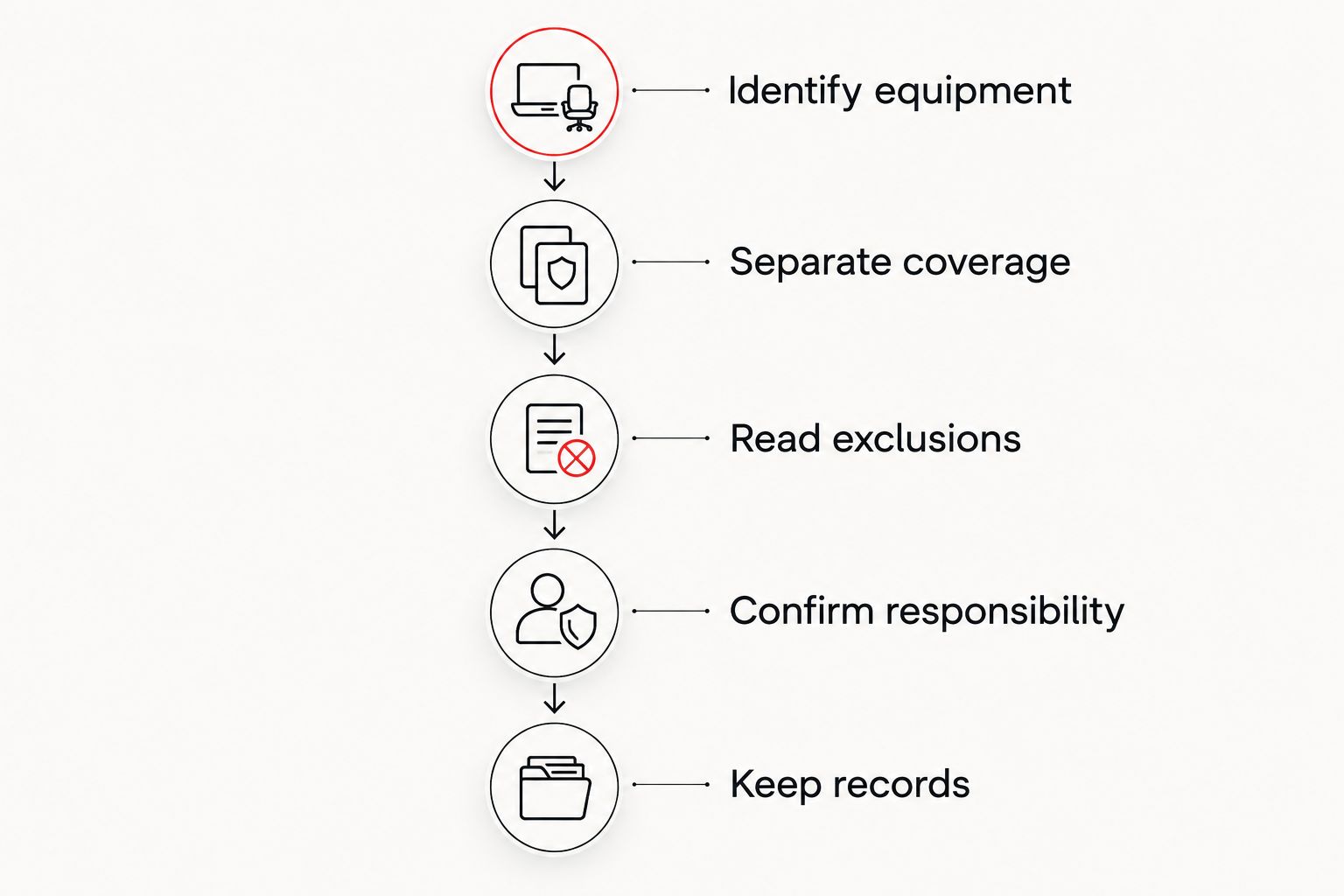
Use this sequence to turn a warranty claim into a clear installation decision. Complete it before approving a replacement, not after equipment arrives.
- Identify equipment. Record 1 exact model number for each proposal and obtain its matching warranty certificate.
- Separate coverage. Mark the tank or heat-exchanger, parts, and labor terms independently.
- Read exclusions. Check water conditions, maintenance, installation, and use restrictions.
- Confirm responsibility. Establish the contact for diagnosis, authorization, parts, and repair work.
- Keep records. Retain 2 core documents: the installation invoice and warranty certificate, plus any required maintenance records.
A replacement also needs an installation review. Ask whether pressure control, thermal expansion, drainage, venting, and electrical or gas connections require attention for the proposed equipment and property.
Those questions do not establish that every home needs additional equipment. They establish what the installer must evaluate rather than leaving you to interpret a warranty certificate as an installation plan.
Discuss your water heater replacement
Ask Priorityrooter about water heater repair or installation for your Tucson property.
Which water heater warranty should you choose?
For a 2026 Tucson replacement, choose suitable equipment with documented tank, parts, and labor protection as your default. Move transfer rights higher if you plan to sell, or use the tankless profile when that equipment fits the installation.
Do not choose a manufacturer from warranty length alone. Compare exact models, actual certificates, maintenance obligations, and the work included in each installation proposal.
Ask Priorityrooter to distinguish the proposed water heater's manufacturer coverage from any installation workmanship terms. That keeps the decision focused on written responsibilities rather than implied protection.
If a proposal cannot explain what happens after a covered failure, pause approval. A clear answer before installation is more useful than discovering the limits when hot water stops.
FAQ
What's the best water heater warranty for a Tucson home?
Start with documented tank, parts, and labor protection on equipment suited to your home. Compare exclusions, maintenance requirements, and claim responsibilities before using warranty length as a deciding factor.
Does a longer water heater warranty mean a better heater?
A longer warranty does not establish better equipment reliability. It describes protection under stated terms, so compare the covered components and exclusions alongside installation suitability.
Does a water heater warranty cover labor?
Labor is covered only when the applicable written agreement includes it. Check diagnosis, removal, installation, and other service tasks separately rather than assuming a parts warranty includes the work.
Does Tucson hard water affect warranty coverage?
The exact warranty determines how water conditions and scale-related damage are treated. Read its exclusions and follow the model's maintenance instructions, keeping any required records.
Can I transfer my water heater warranty when I sell?
You can transfer coverage only if the written terms permit it. Check eligibility, required paperwork, and whether the next owner receives the same remaining protection.
What should I compare on a tankless water heater warranty?
Compare heat-exchanger, other-parts, and labor protection separately. Also check maintenance requirements and exclusions instead of treating the longest component term as whole-appliance coverage.
Who should I contact if my water heater fails?
Use the claim contact specified in your warranty or installation agreement. Priorityrooter provides water heater repair in the Tucson metro area; warranty authorization remains subject to the applicable written terms.
One last thing
A covered replacement does not automatically restart the original warranty term. Check how the certificate treats replacement equipment and whether protection continues only for the remaining original period.
Before approving your 2026 installation, ask one direct question: If this heater has a covered failure, what equipment and work remain my responsibility? Keep the written answer with your invoice. That question exposes the difference between a reassuring warranty headline and a useful repair plan.