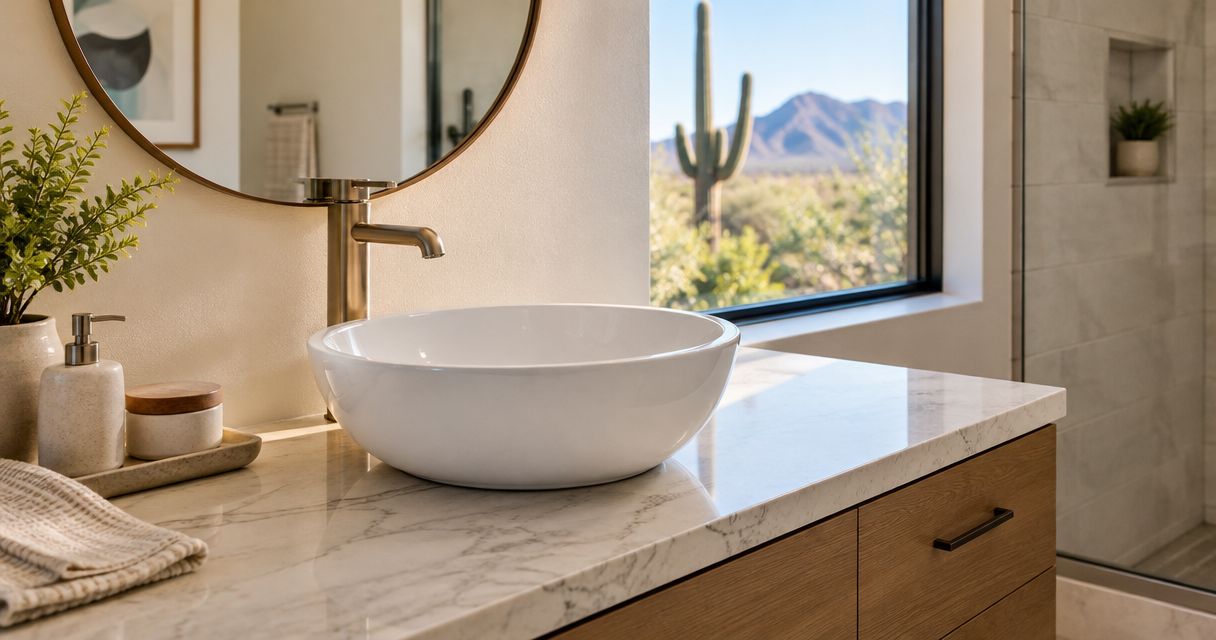
Best overall: vitreous china. Best for an integrated vanity: solid surface. Best for impact resistance: stainless steel. The best bathroom sink materials Tucson homeowners can choose in 2026 match daily cleaning habits, countertop support, and exposure to mineral deposits—not just the showroom finish.
- Vitreous china leads the best bathroom sink materials Tucson homeowners should compare for everyday use.
- Choose solid surface for an integrated basin; choose stainless steel when impact resistance matters most.
- Natural stone and tempered glass demand more careful cleaning than their appearance suggests.
- Priorityrooter provides residential plumbing repair and installation for Tucson homeowners replacing bathroom sinks.
Why this matters
A bathroom sink must handle toothpaste, soap, standing water, and dropped toiletries. In Tucson, hard-water deposits add another cleaning consideration: the material must tolerate the maintenance its manufacturer recommends.
No sink material prevents mineral buildup. A smooth surface helps you clean it, but water treatment and regular drying address different parts of the problem. A basin upgrade also will not correct a leaking supply connection or a poorly draining trap.
For a 2026 bathroom replacement, separate the fixture decision from the plumbing decision. Priorityrooter offers residential plumbing repair and installation in the Tucson metro area; choose the basin for your household, then confirm the connections and mounting requirements.
What makes the best bathroom sink material?
Use these criteria before comparing finishes:
- Cleaning compatibility: Choose a surface you can maintain with the cleaners its manufacturer permits. Abrasive powders and acidic descalers are not universally safe.
- Resistance to everyday damage: Distinguish scratches, chips, dents, and cracks. A material that resists one type of damage can remain vulnerable to another.
- Mineral visibility: Water spots show differently across colors, textures, and finishes. Appearance between cleanings matters as much as appearance immediately after cleaning.
- Installation fit: Check the countertop opening, mounting method, faucet arrangement, and drain assembly before selecting a basin.
- Repair options: Some surfaces allow professional refinishing or localized repairs. Others require replacement when damage affects the basin.
- Household workload: Match the sink to the person who will clean it—not an ideal maintenance routine nobody follows.
Bathroom sink materials at a glance
| Material | Best for | Standout feature | Key limitation |
|---|---|---|---|
| Vitreous china | Everyday family bathrooms | Glazed surface | Hard impacts can chip or crack it |
| Solid surface | Integrated vanity designs | Renewable surface | Heat and abrasive cleaning can damage it |
| Stainless steel | Bathrooms exposed to knocks | Resistance to brittle fractures | Scratches and water spots remain visible |
| Enameled cast iron | Traditional, substantial fixtures | Rigid metal body beneath enamel | Heavy and vulnerable to enamel chips |
| Natural stone | Design-led bathrooms | Individual stone pattern | Cleaning and sealing requirements vary |
| Tempered glass | Decorative vessel installations | Transparent or translucent appearance | Water marks and exposed surfaces need attention |
Material names do not tell you everything. In 2026, compare the actual basin's installation instructions and care sheet: finish, shape, and mounting style can change the maintenance burden within the same material category.
1. Vitreous china: best bathroom sink material for daily use
Vitreous china is ceramic with a fired, glassy glaze. The intact glazed surface is smooth and nonporous, making it a practical choice for toothpaste, soap residue, and routine bathroom cleaning.
Vitreous china is the default choice for a Tucson family bathroom. It gives you a straightforward cleaning surface without the sealing requirements associated with some natural stones. Choose the basin shape and faucet layout just as carefully as the material.
Vitreous china pros:
- The intact glaze does not require stone-style sealing.
- A smooth bowl is easy to wipe after use.
- It works in a range of bathroom mounting styles.
Vitreous china cons:
- A dropped hard object can chip or crack the ceramic.
- Glaze damage is not equivalent to a removable surface stain.
Best for: Shared bathrooms where straightforward upkeep matters more than an unusual finish.
Inspect the entire bowl, rim, and drain opening before installation. Do not install a visibly cracked basin and expect sealant to make the ceramic sound.
Verdict: Buy vitreous china for an everyday bathroom replacement.
2. Solid surface: best bathroom sink material for integrated vanities
Solid surface combines mineral fillers and resin into a manufactured material. An integrated vanity can join the countertop and basin without the separate sink rim found in many drop-in installations.
That connection is the main reason to choose it. You can wipe the counter into the bowl without working around a raised rim, although the faucet base, overflow, and drain still need cleaning.
Solid surface pros:
- Integrated designs reduce exposed joints around the basin.
- The material is nonporous.
- Some scratches can be professionally renewed, subject to the manufacturer's instructions.
Solid surface cons:
- Hot styling tools can damage the surface.
- Repair methods depend on the material, finish, and extent of damage.
Best for: A vanity replacement where easy counter-to-basin cleaning is the priority.
For a 2026 remodel, confirm whether the basin and countertop are supplied as an integrated assembly. Do not assume that every sink described as solid surface has the same joint construction or repair options.
Verdict: Buy solid surface when the integrated vanity is the feature you want.
3. Stainless steel: best bathroom sink material for impact resistance
Stainless steel does not chip like glazed ceramic. That makes it useful in a bathroom where dropped objects and rough handling matter more than a traditional porcelain appearance.
It is not maintenance-free. Steel can scratch, mineral deposits remain on the surface, and inappropriate cleaners can damage the finish.
Stainless steel pros:
- It resists the brittle fractures associated with ceramic and glass.
- It does not need natural-stone sealing.
- A brushed finish gives the basin a different appearance from glossy ceramic.
Stainless steel cons:
- Scratches can remain visible, especially across the finish grain.
- Water spots require regular wiping to control their appearance.
Best for: Utility-oriented bathrooms where resistance to knocks takes priority.
Check the specific basin's care instructions before using disinfectants or abrasive pads. Follow the finish direction when the manufacturer recommends it, and rinse away cleaner rather than leaving residue in the bowl.
Verdict: Buy stainless steel for impact resistance; skip it if visible scratches will bother you.
4. Enameled cast iron: best bathroom sink material for traditional fixtures
Enameled cast iron places a hard enamel surface over a heavy metal body. It suits homeowners who want a substantial fixture and a traditional bathroom appearance.
The enamel is the cleaning surface, not the underlying iron. Protecting that coating matters because a chip can expose the metal beneath it.
Enameled cast iron pros:
- The metal body provides rigidity.
- Intact enamel offers a smooth cleaning surface.
- The material suits traditional fixture designs.
Enameled cast iron cons:
- Its weight demands suitable mounting and support.
- Enamel can chip, and exposed iron can rust.
Best for: Traditional bathrooms with cabinetry and mounting designed for the fixture's weight.
Do not treat an existing vanity as proof that it can support any replacement sink. Confirm the fixture's specified support requirements, particularly when changing from a lighter basin or altering the countertop.
Verdict: Buy enameled cast iron only after confirming support and mounting.
5. Natural stone: best bathroom sink material for individual patterns
Natural stone brings variation in veining, color, and texture. Marble, granite, and other stones do not share identical care requirements, so the precise stone matters more than the broad category name.
Some stones are vulnerable to acidic cleaners. Marble, for example, can etch when exposed to acids; removing mineral residue with the wrong product can leave a different surface problem behind.
Natural stone pros:
- Individual patterns give each basin a distinct appearance.
- Stone provides options beyond uniform manufactured finishes.
- Some surfaces permit professional restoration.
Natural stone cons:
- Sealing and cleaner requirements vary by stone and finish.
- Acids can etch acid-sensitive stone, even when it is sealed.
Best for: Design-led bathrooms whose owners will follow material-specific care instructions.
Before choosing natural stone in 2026, get written instructions for both daily cleaning and mineral removal. A sealer is not permission to use any bathroom cleaner, and it does not make acid-sensitive stone acid-resistant.
Verdict: Hold until you accept the exact stone's cleaning requirements.
6. Tempered glass: best bathroom sink material for decorative vessels
Tempered glass creates a different visual effect from an opaque ceramic basin. It is particularly associated with vessel installations, where the bowl sits above the countertop.
The exposed exterior becomes another surface to clean. Clear glass also makes water marks and residue conspicuous, so choose it for the appearance rather than an expectation of less maintenance.
Tempered glass pros:
- Transparent and translucent finishes offer a distinct design option.
- The surface is nonporous.
- Vessel shapes can make the basin a focal point.
Tempered glass cons:
- Water marks show readily on clear surfaces.
- Glass can break, and damaged glass is not a candidate for a casual patch repair.
Best for: Decorative bathrooms where regular wiping is acceptable.
A vessel installation also changes the relationship between the countertop, bowl rim, and faucet outlet. Check the complete arrangement rather than choosing the bowl first and hoping the existing faucet fits.
Verdict: Buy tempered glass for its appearance; skip it for a low-attention bathroom.
How to choose before installation
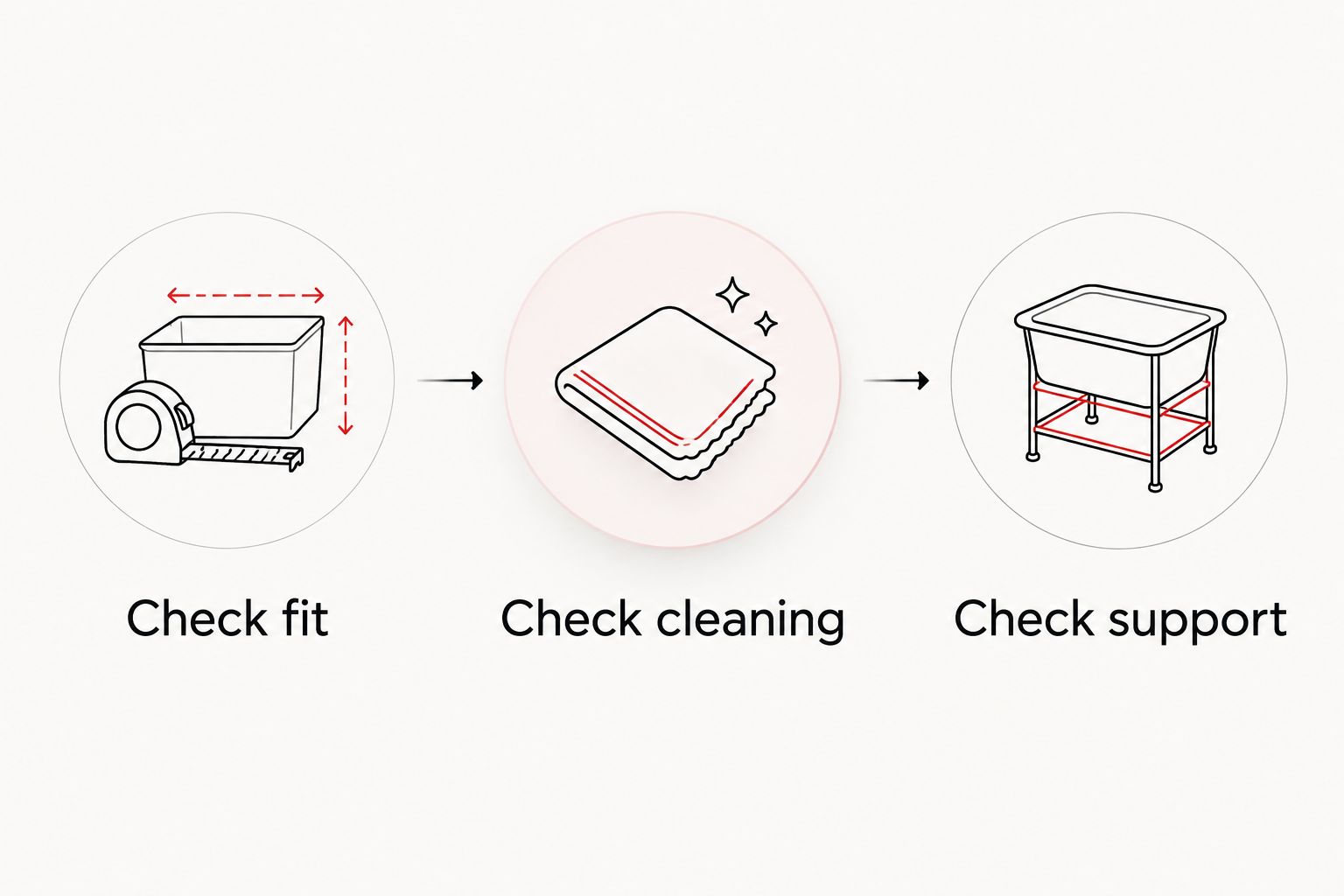
Check fit
Record 3 measurements before shopping: the existing countertop opening, available cabinet width, and faucet-hole spacing. For a new countertop, use the selected basin's template and installation specifications rather than copying the old opening.
Also inspect the space beneath the bowl. A deeper basin or a different drain position can conflict with drawers, shelves, or existing plumbing.
Check cleaning
Compare 2 samples of your leading finishes under your bathroom lighting when samples are obtainable. Read their care instructions alongside them; a finish you dislike maintaining is the wrong finish, regardless of its showroom appeal.
Do not experiment with acidic descalers on stone or abrasive pads on a polished finish. Start with the manufacturer's permitted cleaning method.
Check support
Keep a 1-page checklist covering mounting, support, faucet compatibility, drain hardware, and access to shutoff valves. Confirm each item before removing the existing sink.
A replacement basin should leave the plumbing accessible for service. Do not let a new cabinet layout hide a leaking connection or make the shutoff valves unusable.
Priorityrooter offers bathroom plumbing repair and installation as part of its residential plumbing services. Ask for the connection and drainage issues to be assessed separately from your material preference.
Plan your bathroom sink replacement
Discuss residential plumbing repair and installation in the Tucson metro area.
How the materials rank
This 2026 ranking prioritizes routine cleaning, resistance to everyday damage, and installation practicality. It compares material characteristics—not laboratory test results or individual manufacturers.
Vitreous china leads because its intact glaze provides a straightforward bathroom surface. Solid surface wins for integrated construction; stainless steel wins when avoiding brittle chips matters most. Stone and glass move lower because their appearance comes with more specific maintenance demands.
Which bathroom sink material should you choose?
Choose vitreous china unless you have a specific reason to choose something else. It is the clearest starting point for an everyday Tucson bathroom.
Choose solid surface when replacing the vanity as an integrated assembly. Choose stainless steel for resistance to knocks, enameled cast iron for a supported traditional fixture, and stone or glass when design outweighs cleaning convenience.
Priorityrooter is a licensed plumbing company for Tucson homeowners who need bathroom sink plumbing repair and installation. The right material and a sound installation solve different problems; your replacement needs both.
FAQ
What's the best bathroom sink material for a Tucson home?
Vitreous china is the best default for an everyday Tucson bathroom. Its intact glazed surface is smooth, nonporous, and straightforward to clean, although hard impacts can chip or crack it.
Which bathroom sink material prevents hard-water stains?
No bathroom sink material prevents mineral deposits from hard water. Choose a surface with cleaning instructions you can follow, and dry standing droplets to reduce visible residue.
Is solid surface better than vitreous china?
Solid surface is better when an integrated countertop and basin are your priority. Vitreous china remains the simpler default for a separate basin; solid surface needs protection from hot styling tools.
Can I use vinegar to clean every bathroom sink?
No, vinegar is not appropriate for every bathroom sink. Acid-sensitive stone such as marble can etch, so follow the specific basin manufacturer's cleaning instructions rather than using a universal descaling recipe.
Is a glass bathroom sink difficult to maintain?
A clear glass bathroom sink makes water marks and residue easy to see. Vessel installations also expose the bowl's exterior, adding another surface to your cleaning routine.
Do I need new plumbing when I replace a bathroom sink?
A sink replacement does not automatically require replacing all the plumbing. The new basin's depth, drain location, faucet arrangement, and existing connection condition determine what needs to change.
Can Priorityrooter help with bathroom sink installation?
Priorityrooter offers residential plumbing repair and installation in the Tucson metro area. Confirm the scope of the sink replacement and any connection or drainage repairs before work begins.
One last thing
A new bowl will not fix a slow drain. Before your 2026 sink replacement, identify whether the complaint is a damaged surface, difficult cleaning, a leak, or poor drainage. Replacing the fixture without addressing the actual problem leaves you with a new sink and the same frustration.