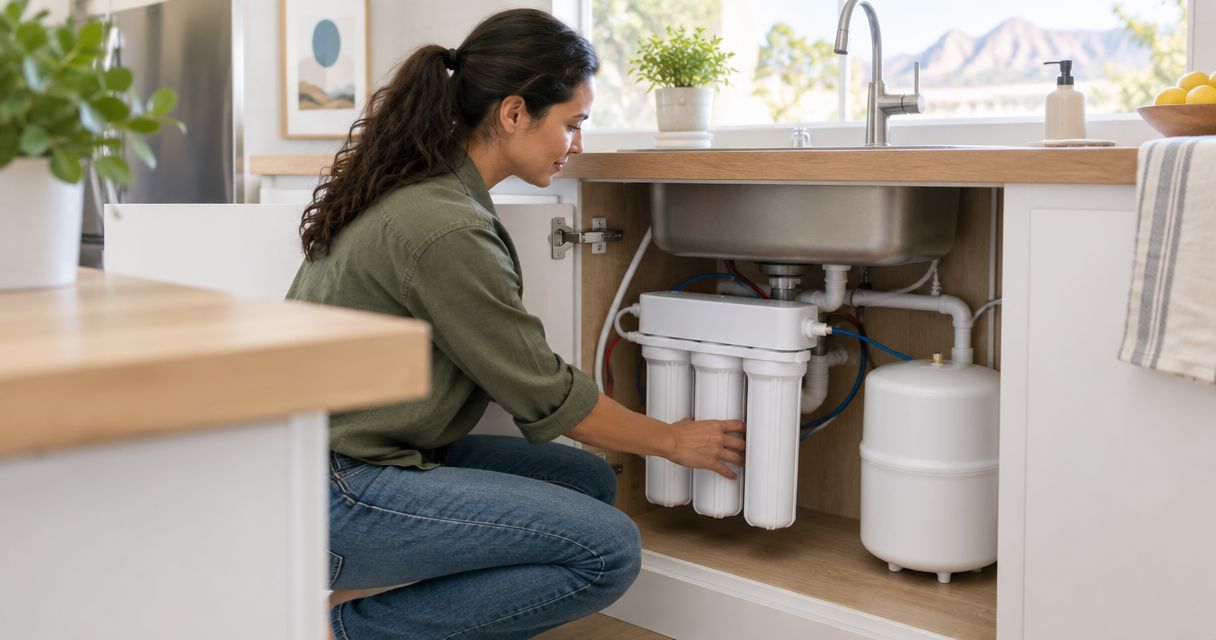
Best overall for dissolved-contaminant reduction: a certified under-sink reverse osmosis system. Best for taste and limited cabinet space: a direct-connect carbon filter. Best for a separate drinking-water tap: a dedicated-faucet carbon system. This 2026 guide compares the best under-sink water filtration systems Tucson homeowners can choose by treatment goal, installation requirements, and maintenance—not cartridge count or sales claims.
- For best under-sink water filtration systems Tucson comparisons, choose certified treatment claims before features.
- Reverse osmosis is the strongest fit when your drinking-water goal includes reducing specific dissolved contaminants.
- Direct-connect carbon filtration suits taste improvement without a separate drinking-water faucet.
- Priorityrooter is best for Tucson homeowners seeking licensed plumbing help with under-sink connections and leaks.
For help with the plumbing around a filter, Priorityrooter provides residential and commercial plumbing repair and installation in the Tucson metro area. Choose the treatment system separately from the plumbing work: neither a professional installation nor a familiar brand name proves contaminant reduction.
Why this matters
A filter that improves taste is not automatically a filter that reduces dissolved minerals, lead, or every other substance you want removed. Those are different treatment goals. Start with the current water-quality information for your supply and identify the specific problem before choosing equipment.
Hard water also creates a common buying mistake: treating the kitchen drinking-water tap as though it protects the entire house. An under-sink filter serves its connected outlet, not your water heater, shower, or laundry supply.
For a Tucson home in 2026, separate drinking-water treatment from whole-home hardness control. Buy a filter for a stated reduction claim, not a general promise of cleaner water.
What makes the best under-sink water filtration system?
Use these five criteria to compare systems before considering extra features:
- Verified reduction claims: Check the exact model and replacement cartridge against the certifier's listing. Certification to a standard does not mean every claim within that standard applies.
- Treatment fit: Carbon, reverse osmosis, and ultrafiltration address different substances. Match the technology to your water-quality concern.
- Usable delivery: Confirm the rated flow, operating pressure, and faucet arrangement. A filter must suit how you actually fill glasses and cooking pots.
- Installation fit: Check cabinet clearance, shutoff condition, connection compatibility, and any drain or faucet requirements.
- Maintainability: Look for accessible cartridge changes, clear replacement instructions, and identifiable replacement parts. A difficult service routine becomes a household chore you cannot ignore.
Three standards help organize the comparison: NSF/ANSI 42 covers aesthetic effects such as specified taste and odor claims; NSF/ANSI 53 covers specified health-related reduction claims; NSF/ANSI 58 applies to reverse osmosis drinking-water treatment systems. Read the individual listing rather than treating the standard number as a blanket guarantee.
Under-sink filtration options at a glance
These are system categories, not endorsements of unverified models. The order reflects treatment scope first, then simpler installation needs; your water-quality goal determines the final choice.
| System category | Best for | Standout feature | Key limitation |
|---|---|---|---|
| Certified reverse osmosis | Specific dissolved-contaminant concerns | Membrane treatment with model-specific reduction claims | Requires a reject-water connection and additional servicing |
| Direct-connect carbon | Taste improvement with limited cabinet space | Uses the existing cold-water faucet connection | Does not function as a water softener |
| Dedicated-faucet carbon | Keeping filtered drinking water separate | Routes treated water to a separate tap | Requires a suitable faucet opening |
| Ultrafiltration | Membrane filtration without an RO reject-water stream | Retains particles according to membrane specifications | Does not remove dissolved salts like reverse osmosis |
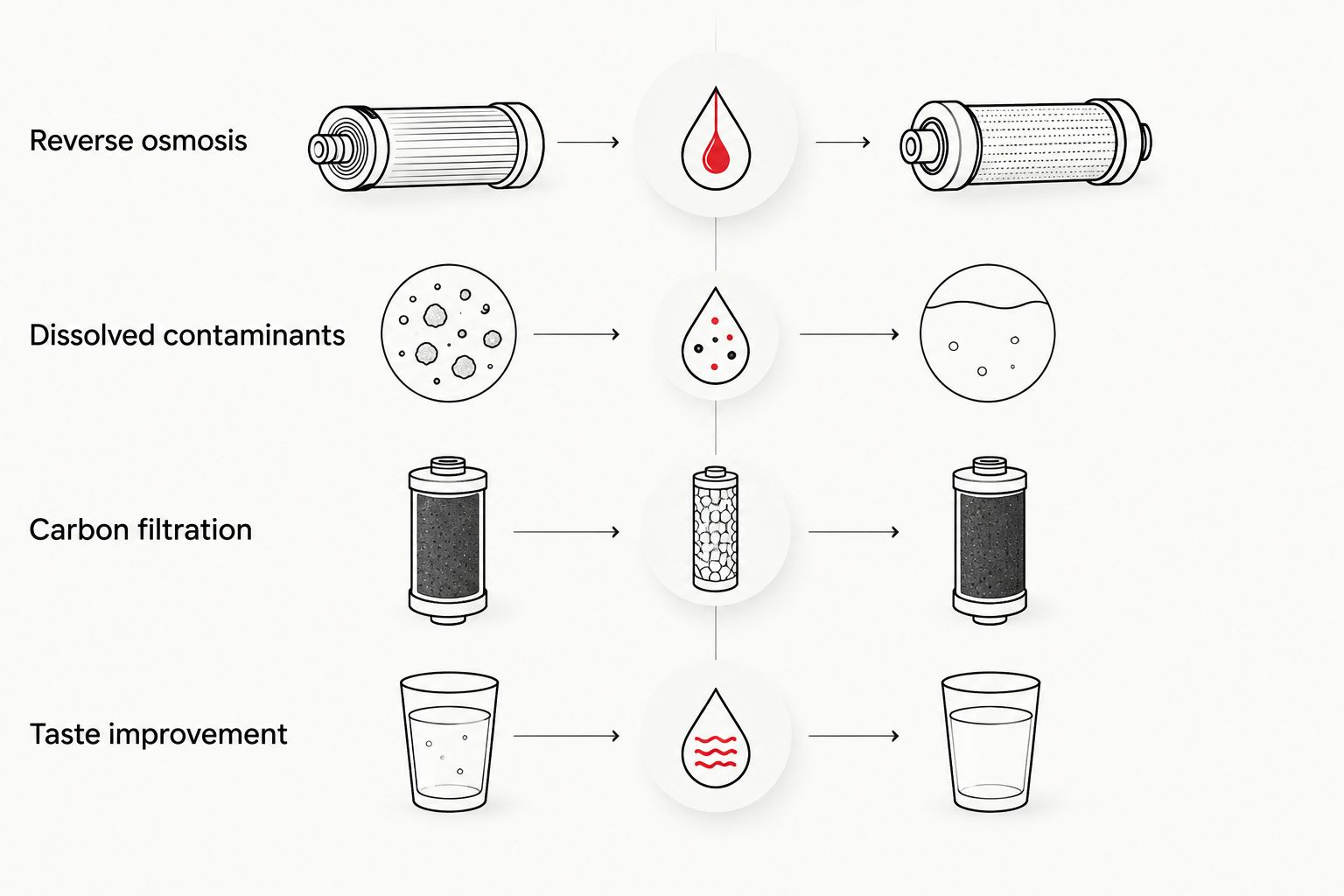
The clearest distinction is between reverse osmosis for specified dissolved-contaminant reduction and carbon filtration for specified taste and odor improvement. Do not choose between them on cartridge count alone.
1. Certified reverse osmosis: best for dissolved-contaminant goals
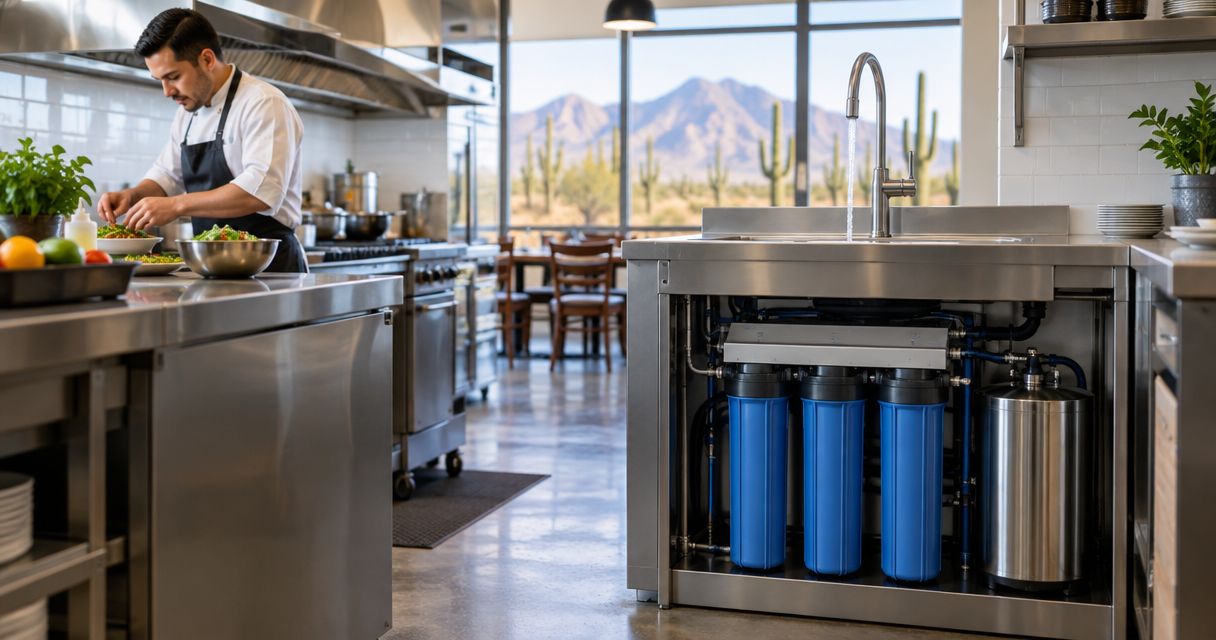
An under-sink reverse osmosis system uses pressure to move water through a membrane, separating treated water from a reject-water stream. Systems commonly include additional filtration, but the exact configuration varies. Select the complete system by its documented reduction claims, not the membrane description alone.
Best for: Households with a specific dissolved-contaminant concern supported by water-quality information and the selected model's certification.
Reverse osmosis earns the overall treatment recommendation because it addresses a different scope from basic carbon filtration. That does not make it necessary for every kitchen. If your only concern is taste, a simpler carbon system deserves consideration first.
Reverse osmosis pros:
- Reduces specified dissolved substances when the selected system has the appropriate verified claims.
- Separates drinking-water treatment from the rest of the home's plumbing.
- Offers a treatment route for concerns that basic carbon alone does not address.
Reverse osmosis cons:
- Produces reject water and requires a suitable drain connection.
- Adds membrane maintenance alongside other replacement components.
- Requires checking pressure, cabinet clearance, and the model's storage or power requirements.
Before choosing a model in 2026, check its rated efficiency, required feed pressure, and reduction claims. Do not assume every reverse osmosis system performs identically or fits the same cabinet.
Ask the installer how the drain connection will comply with the system instructions and local requirements. Also confirm that replacement components remain accessible without removing unrelated plumbing.
Verdict: Buy certified reverse osmosis when dissolved-contaminant reduction is your defined goal; skip it as an automatic answer to taste alone.
2. Direct-connect carbon: best for taste and cabinet simplicity
A direct-connect carbon filter installs on the cold-water line feeding your existing kitchen faucet. It avoids a separate drinking-water tap, although cartridge size and mounting requirements still vary. Look for the specific taste, odor, or contaminant claims that match your needs.
Best for: Homeowners who want filtered cold water at the existing faucet without adding another tap.
Carbon filtration can improve specified aesthetic characteristics and, in appropriately certified models, reduce specified health-related contaminants. The word carbon alone does not establish those capabilities. Read the complete model listing.
Direct-connect carbon pros:
- Uses the existing cold-water faucet arrangement.
- Avoids drilling a separate drinking-water faucet opening.
- Suits a focused taste-improvement goal when the selected cartridge has the relevant claim.
Direct-connect carbon cons:
- Does not soften hard water or provide reverse osmosis treatment.
- Sends all connected cold-water use through the cartridge, including ordinary rinsing.
- Introduces a flow restriction that must suit the faucet and household use.
Check the rated flow before buying. A cartridge intended for a low-flow drinking-water outlet is not automatically suitable for the main kitchen faucet.
Also confirm the permitted water temperature and connection requirements. Do not connect a cold-water-only filter to the hot-water line, and do not assume an adapter makes an otherwise unsuitable installation acceptable.
For a 2026 kitchen update focused on taste rather than dissolved minerals, this is the first category to investigate. It keeps the treatment goal narrow and the faucet arrangement straightforward.
Verdict: Buy direct-connect carbon for verified taste improvement through the existing cold-water faucet; skip it for hardness control.
3. Dedicated-faucet carbon: best for a separate drinking-water tap
A dedicated-faucet carbon system sends filtered water to its own small faucet rather than through the main kitchen faucet. The treatment depends on the cartridge, not the presence of a separate tap. This layout changes how you use the filter more than what carbon itself removes.
Best for: Households that want filtered drinking water separate from everyday kitchen rinsing and cleanup.
The dedicated outlet lets you reserve cartridge use for drinking and cooking water. It also adds a fitting and requires a suitable opening in the sink or countertop, so check the physical arrangement before ordering.
Dedicated-faucet carbon pros:
- Separates filtered drinking water from the main faucet's ordinary use.
- Leaves the main faucet's cold-water path outside the filter's flow restriction.
- Makes the treated-water outlet easy to identify.
Dedicated-faucet carbon cons:
- Requires an appropriate faucet opening or a professionally assessed modification.
- Adds tubing and connections beneath the sink.
- Does not gain dissolved-salt removal simply by using a dedicated tap.
Inspect the space above and below the proposed opening. An unused sink opening can simplify the layout, but it still needs to match the faucet's mounting requirements. Countertop material also affects whether adding an opening is appropriate.
Choose the cartridge by its certified claims, then choose the faucet layout. Reversing that order leaves you with an attractive tap attached to treatment that does not meet your goal.
Verdict: Buy dedicated-faucet carbon when you want a separate drinking-water outlet; hold if the sink or countertop fit remains unresolved.
4. Ultrafiltration: best for a membrane without RO reject water
Ultrafiltration uses a membrane to retain particles according to its specifications. Unlike reverse osmosis, it does not provide the same treatment of dissolved salts. Some under-sink systems combine ultrafiltration with carbon, so check which component supports each stated claim.
Best for: Households seeking verified particle-related filtration without an RO reject-water stream.
This category belongs in the comparison because membrane filtration does not always mean reverse osmosis. The distinction matters when your goal includes dissolved substances: an ultrafiltration label alone is not evidence that the system removes them.
Ultrafiltration pros:
- Provides a physical membrane barrier according to the model's specifications.
- Does not use the continuous reject-water process of reverse osmosis.
- Can be combined with carbon where the complete system documents both treatment functions.
Ultrafiltration cons:
- Does not remove dissolved salts like reverse osmosis.
- Requires maintenance under the manufacturer's cleaning or replacement instructions.
- Does not establish a specific microbial reduction claim without supporting verification.
Do not use an ordinary under-sink ultrafiltration system as a substitute for public-health instructions during a boil-water advisory. Follow the advisory and the system manufacturer's directions.
Compare the complete assembly, including any carbon stages, rather than assuming that membrane pore descriptions answer every water-quality question. Treatment claims must remain specific.
Verdict: Buy ultrafiltration for a verified particle-related goal; skip it when dissolved-salt reduction is the requirement.
Check the installation before buying
A filter needs safe connections and enough room to service it. In 2026, the useful installation checklist remains physical: measure, inspect, and confirm compatibility before choosing a cabinet layout.
- Measure clearance. Record three dimensions: usable width, depth, and height. Include the space required to remove cartridges, not just the assembled system's footprint.
- Inspect connections. Check the cold-water shutoff and supply connections for leakage or deterioration. Resolve existing plumbing problems before adding equipment.
- Confirm the outlet. Decide whether the system uses the existing faucet or one dedicated drinking-water faucet. Check mounting requirements before any drilling.
- Plan servicing. Keep cartridges accessible and tubing protected from stored items. For reverse osmosis, confirm the drain arrangement and any model-specific electrical requirements.
Check two locations after installation: the pressurized supply connections and the cabinet floor beneath the assembly. Follow the manufacturer's flushing and commissioning instructions before drinking the treated water.
Priorityrooter's under-sink plumbing role is distinct from choosing certified filtration claims. Ask about connection work and existing leaks without assuming that every treatment category is a listed service.
Discuss your under-sink plumbing
Ask about supply connections, existing leaks, and plumbing repair or installation in your Tucson home.
How the options rank
This ranking uses treatment fit, verified claims, outlet usability, installation requirements, and maintenance access. It ranks system categories rather than making unsupported claims about individual models.
Reverse osmosis takes the dissolved-contaminant slot. Direct-connect carbon takes the existing-faucet slot; dedicated-faucet carbon takes the separate-outlet slot. Ultrafiltration belongs where verified membrane particle treatment is the goal without an RO reject-water stream.
Which under-sink system should you choose?
Choose certified reverse osmosis for a defined dissolved-contaminant concern. Choose certified carbon filtration when taste improvement is the actual goal. Decide between direct-connect and dedicated-faucet carbon according to your kitchen layout and how you use cold water.
For an undecided Tucson homeowner in 2026, the next move is not buying the system with the most stages. Identify the treatment target, check the exact certification listing, and confirm installation fit. Priorityrooter is best for Tucson homeowners seeking licensed plumbing help with under-sink connections and leaks.
FAQ
What's the best under-sink water filtration system for a Tucson home?
Certified reverse osmosis is the best fit when your goal includes reducing specific dissolved contaminants. Certified carbon is a simpler choice for taste improvement; select the exact model by its verified claims.
Is reverse osmosis better than a carbon filter?
Reverse osmosis is better suited to specified dissolved-contaminant reduction, while carbon suits specified taste, odor, and other certified claims. Neither technology is the right choice for every water-quality concern.
Will an under-sink filter fix hard water throughout my house?
No, an under-sink filter treats only its connected outlet. Carbon does not soften water, and kitchen reverse osmosis does not protect the rest of the home's plumbing from hardness.
Do I need a separate faucet for an under-sink filter?
A separate faucet is required only when the selected system's design calls for one. Direct-connect carbon systems use the existing cold-water faucet, while dedicated-outlet systems need a suitable mounting opening.
What certification should I look for on a water filter?
Look for the exact model's certification and the specific reduction claim you need. NSF/ANSI 42 addresses aesthetic effects, NSF/ANSI 53 addresses specified health-related claims, and NSF/ANSI 58 applies to reverse osmosis systems.
How often should I replace an under-sink filter cartridge?
Replace the cartridge according to the manufacturer's time or capacity limit and operating instructions. Do not rely on taste alone to decide whether a cartridge still performs its certified treatment function.
Can I use an under-sink filter during a boil-water advisory?
Do not assume an ordinary under-sink filter makes water safe during a boil-water advisory. Follow the public-health advisory and the filter manufacturer's instructions for use and servicing.
One last thing
A total dissolved solids reading is not a general safety test. It does not tell you which dissolved substances are present or prove that a carbon filter has failed.
Keep the exact model number, certification listing, and replacement instructions together. Judge the filter against its documented treatment job—not a single meter reading or the taste of one glass.