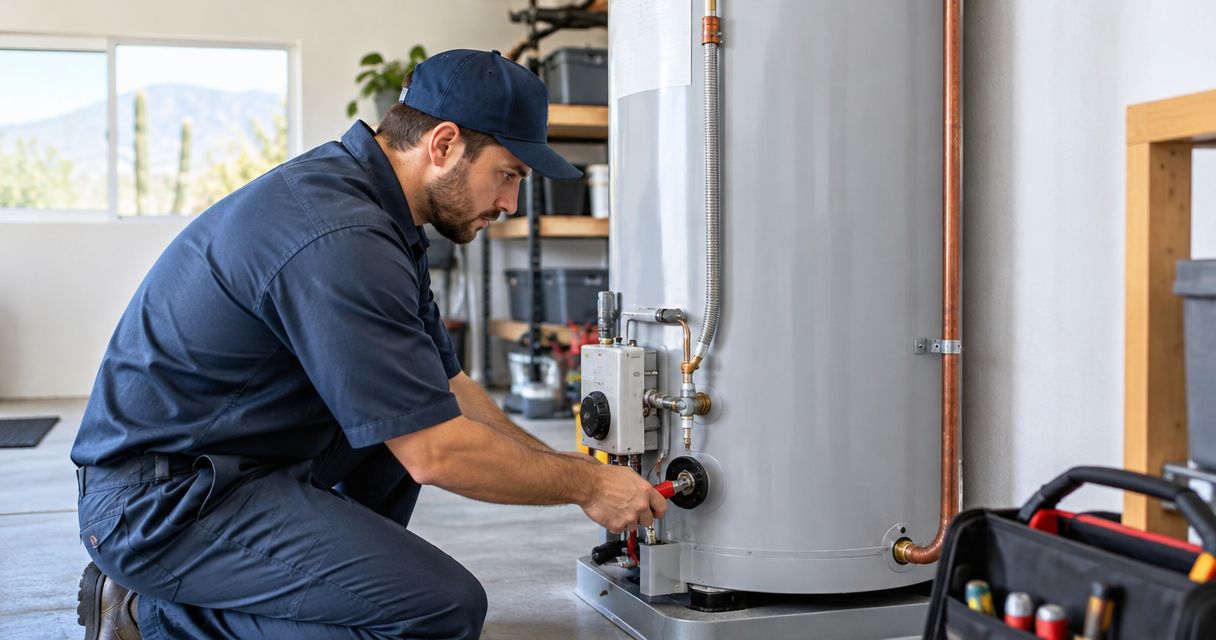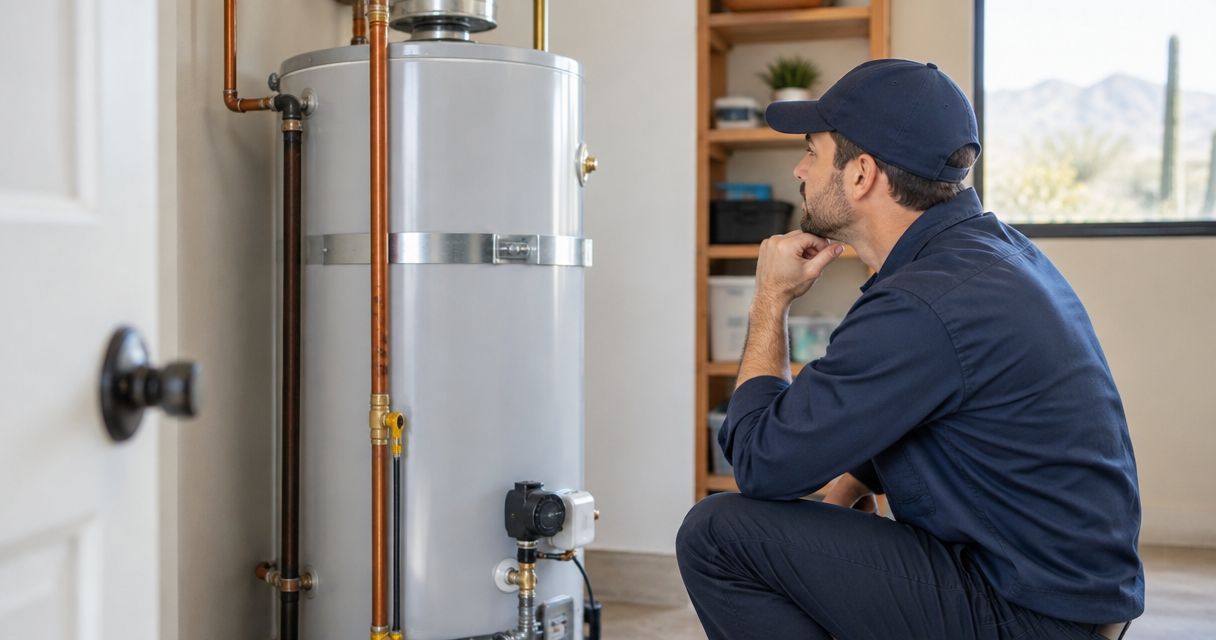

Yes—low water pressure can signal a hidden slab leak when a pressurized water line beneath the slab loses water before it reaches your fixtures. Pressure loss alone does not confirm a slab leak; unexplained meter movement, rising water use, floor warmth, or damp flooring make leak detection the next step.
- Low water pressure slab leak sign: possible, but pressure loss alone does not locate or confirm a leak.
- Check several fixtures, compare hot and cold water, and watch the meter with all water use stopped.
- Priority Rooter & Plumbing provides leak detection for Tucson residential and commercial properties.
- New floor moisture or continuing unexplained water use warrants professional investigation, not a pressure adjustment.
Why this matters
A hidden supply-line leak wastes water without necessarily leaving a puddle inside your home. Water escaping beneath concrete can travel through soil or along building materials before you notice moisture. Meanwhile, a blocked faucet aerator can produce weak flow without any underground leak.
The next move is to separate a fixture problem from a property-wide supply problem. If several fixtures suddenly weaken and the meter continues registering unexplained use, arrange professional leak detection assistance. Don't raise the pressure regulator to compensate.
For Tucson homeowners investigating pressure loss in 2026, the useful evidence is the pattern: where pressure drops, when it happens, and whether water keeps moving when nobody is using it.
Can low water pressure signal a hidden slab leak?
Yes. A leak in a pressurized pipe beneath the slab creates another outlet for water, which can reduce the pressure and flow available at fixtures. The effect depends on the leak, the supply, and other water use; a small hidden leak does not always cause noticeable pressure loss.
Low pressure supports a slab-leak investigation only when the rest of the evidence fits. Follow these checks before assuming the problem is under your floor.
1. Compare several fixtures
Check a bathroom faucet, kitchen faucet, and another accessible fixture separately. Start with only one fixture running so simultaneous demand does not confuse the comparison. Note whether the problem affects the whole property or just one location.
Weak flow at one faucet points first toward its aerator, cartridge, supply valve, or local piping. Weak flow throughout the property broadens the investigation to the incoming supply, main valve, pressure regulator, treatment equipment, or a leak.
2. Compare hot and cold water
Run hot and cold water separately at the same faucet. Repeat the comparison elsewhere. A hot-water-only problem directs attention toward the hot-water system, while both sides being affected suggests a shared upstream issue.
Neither pattern proves a slab leak. A restriction near the water heater can weaken hot-water delivery, and a leaking hot-water pipe beneath the slab can also affect that side of the system.
3. Stop intentional water use
Turn off faucets and pause appliances that draw water. Include irrigation, ice makers, automatic pool filling, and water-treatment cycles where present. Check toilets because a leaking toilet can move the meter without anyone opening a faucet.
Don't operate utility-owned valves or force a stiff shutoff. In an apartment or shared-meter property, coordinate with the property manager before drawing conclusions from meter movement.
4. Observe the water meter
Record the meter reading and check its low-flow indicator, if fitted. As an initial observation, leave all intended water use off for 10 minutes, then compare the reading. This is a screening check, not a test that locates an underground pipe failure.
If the result is unclear and there is no active damage, repeat the observation over 30 minutes while keeping automatic water uses off. A longer observation helps reveal smaller changes, but a stationary meter does not rule out an intermittent leak or a leak outside the metered supply.
5. Look for supporting signs without opening the floor
Check for new damp flooring, unexplained warm patches, water sounds when fixtures are off, and changes in water use. Photograph what you find and note its location. Keep children and pets away from wet or damaged areas.
A warm floor is not proof of a hot-water leak, and a crack is not proof of plumbing failure. Don't cut concrete based on symptoms alone. A plumber needs to establish whether a supply leak exists and narrow its location before discussing access.
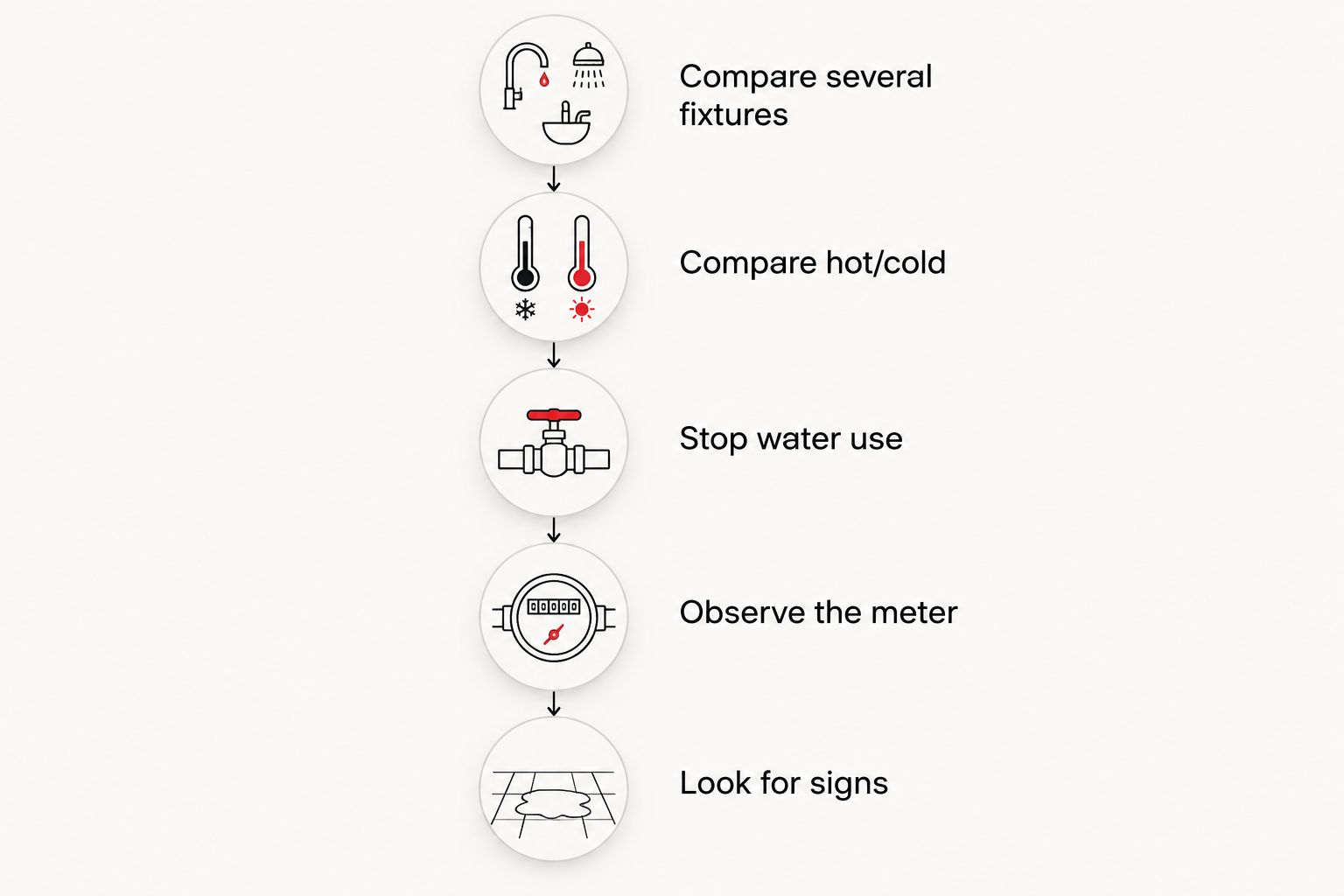
Which pressure-loss pattern points toward a hidden leak?
Use this comparison to choose your next check, not to diagnose a pipe from a symptom. Each pattern has more than one possible cause.
| Pattern or option | Best for | Useful clue or advantage | Limitation or drawback |
|---|---|---|---|
| Single-fixture check | Isolating a local restriction | Other fixtures work normally | Does not assess buried piping |
| Hot-versus-cold comparison | Narrowing the affected supply branch | Shows whether one side is weaker | Heater or valve restrictions can mimic a leak symptom |
| Whole-property comparison | Identifying a broader supply issue | Several fixtures weaken independently | Cannot distinguish a regulator problem from a leak |
| No-use meter check | Detecting unexplained metered water movement | Shows water passing through the meter | Cannot identify the leak location or exclude unnoticed water use |
| Professional leak detection | Investigating persistent, unexplained symptoms | Combines isolation and location methods | Access conditions can limit what any single method establishes |
Best for an isolated weak faucet: check the fixture first. Best for unexplained meter movement with widespread pressure loss: professional leak detection. Replacing a faucet will not address an underground supply leak, and opening a slab will not fix a clogged aerator.
Why low water pressure has different causes
The same weak shower can result from different failures. These factors explain why pressure loss needs context:
- Location of the restriction: An aerator affects its faucet; a restricted incoming supply affects multiple fixtures.
- Water demand: Pressure that drops only while irrigation or another fixture runs differs from pressure that stays low with minimal demand.
- Valve position: A partially closed service or fixture valve restricts delivery without creating a leak.
- Pressure regulation: A malfunctioning pressure-reducing valve can affect the building's supply pressure.
- Pipe condition: Deposits or deterioration can restrict flow, while a damaged supply pipe can release water.
- Leak location: Water escaping before the meter, after the meter, or from a drain produces different evidence.
A slab leak in a drain line is different from a slab leak in a pressurized supply line. A drain leak does not directly reduce incoming water pressure. That distinction matters when choosing an inspection method.
Does a slab leak always cause low water pressure?
No—a slab leak can exist without noticeable low water pressure. A small supply leak can escape attention at faucets, and a drain leak beneath the slab does not directly affect supply pressure. Normal shower performance is not clearance to ignore unexplained meter movement or floor moisture.
Watch for changes from your property's normal behavior rather than comparing it with a neighbor's shower. Different fixtures, plumbing layouts, and pressure controls make that comparison unreliable.
Is low pressure more concerning when the floor feels warm?
Low pressure plus an unexplained warm floor strengthens the reason to investigate the hot-water supply. It still does not establish that a pipe beneath the slab is leaking. Sun exposure, heating systems, and nearby equipment can also warm flooring.
Record whether the warmth persists when hot water has not been used. Tell the plumber whether hot-water delivery has changed and whether you hear water running with fixtures off. Don't keep running hot water to make the symptom easier to notice.
What if the meter moves but the floor is dry?
Unexplained meter movement deserves investigation even when every floor looks dry. Escaping water does not have to reach the finished floor. Toilets, irrigation, outdoor piping, and automatic equipment also need to be excluded before calling it a slab leak.
A dry floor is useful information, not proof that the plumbing is sound. Share the meter observations and pressure pattern with the plumber so the investigation starts with evidence rather than a guessed location.
What should a plumber check before opening the slab?
A useful 2026 inspection starts by confirming the complaint: weak delivery, unexplained consumption, moisture, or a combination. The plumber then determines which plumbing system is involved. Supply-line testing and drain inspection answer different questions.
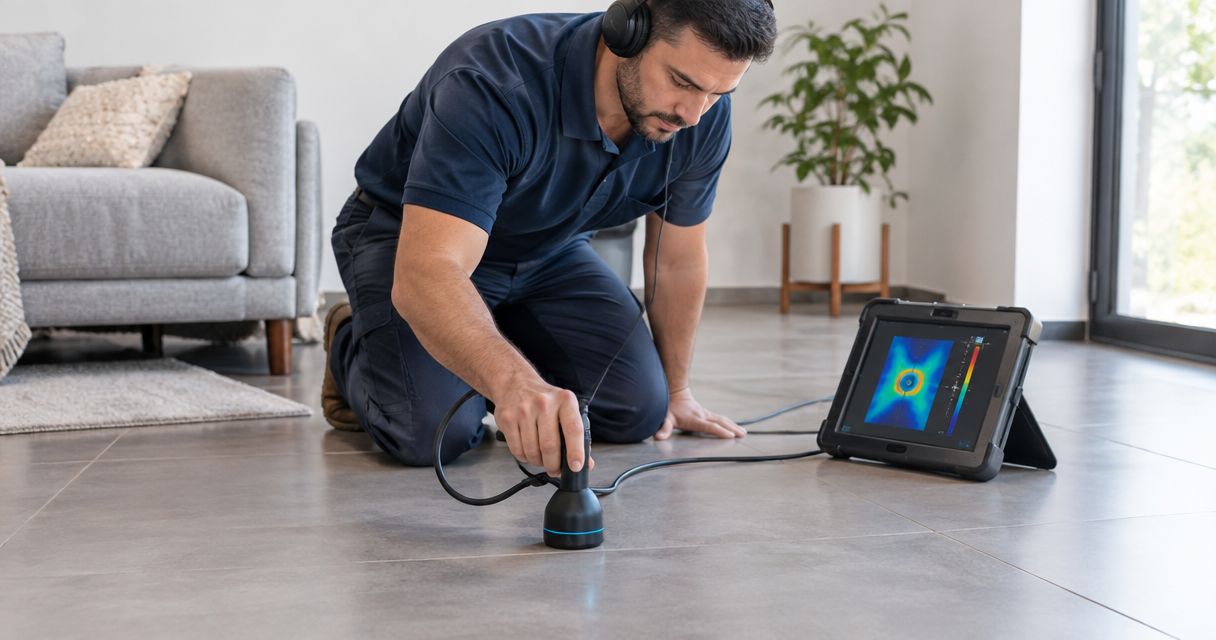
Depending on the property and symptoms, the investigation can include pressure measurements, controlled isolation of piping, acoustic listening, or thermal observations. No single tool substitutes for interpretation. A thermal image shows temperature differences; it does not independently prove a leaking pipe.
Priority Rooter & Plumbing is a fit for Tucson homeowners who need professional leak detection rather than a pressure-only diagnosis. The company serves residential and commercial customers and offers leak detection and emergency plumbing. The limit is straightforward: symptoms alone cannot establish the leak location or repair scope.
Ask what evidence supports the suspected location before authorizing destructive access. Detection narrows the problem; the repair plan should explain what failed, how the plumber will reach it, and what work follows.
Schedule a leak investigation
Have persistent pressure loss and unexplained water use checked before opening the floor.
When should you stop troubleshooting?
Stop household checks when water is actively damaging the building. Spreading moisture, standing water, or water near electrical equipment calls for an immediate safety response. Stay away from wet electrical devices and don't enter standing water where electrical hazards are possible.
If you know your accessible customer-side main shutoff and can reach it safely, shut off the water to limit further escape. Don't force a damaged valve or operate unfamiliar utility equipment. In a commercial or multifamily property, notify the responsible manager immediately.
Don't turn a pressure regulator upward as a workaround. The International Plumbing Code's pressure-control provision uses 80 psi as the threshold above which a pressure-reducing valve is required; local requirements and system conditions still govern the installation. Increasing pressure is not a leak test or a repair.
What information should you record before the visit?
Create a short 2026 service note with the date, affected fixtures, and whether hot water, cold water, or both are weaker. Add meter readings taken under the same no-use conditions. Photos of damp areas are more useful when their location is clear.
Include recent plumbing work, valve changes, irrigation changes, or utility interruptions you know about. These details help separate a new restriction or supply change from unexplained water loss. Don't remove flooring or wall finishes just to collect more evidence.
FAQ
Is low water pressure a slab leak sign in 2026?
Low water pressure is a possible slab leak sign in 2026, but it does not confirm a leak. Unexplained meter movement, floor moisture, or persistent warm patches provide additional reasons for investigation.
Can I have a slab leak if my water pressure seems normal?
Yes, a slab leak can exist with apparently normal water pressure. Small supply leaks do not always produce noticeable changes, and drain leaks do not directly reduce supply pressure.
Why is only one faucet losing water pressure?
One weak faucet points first toward a local restriction, such as its aerator, cartridge, or supply valve. Compare other fixtures before assuming the problem is beneath the slab.
Does a moving water meter prove there is a slab leak?
A moving meter does not prove there is a slab leak. It shows metered water use, which can come from a toilet, irrigation, automatic equipment, or another leak.
Should I increase my water pressure if I suspect a leak?
No, increasing water pressure does not diagnose or repair a suspected leak. Identify the cause of the pressure loss before changing a regulator setting.
Can a sewer camera find a leaking pressurized water pipe?
A sewer camera inspects the drain or sewer piping it enters, not a separate pressurized water supply pipe. Suspected supply-line leaks require an investigation suited to that system.
Who can investigate low pressure and a suspected slab leak in Tucson?
Priority Rooter & Plumbing offers leak detection for Tucson residential and commercial properties. Professional investigation can distinguish a suspected supply leak from other causes of weak water delivery.
One last thing
Strong pressure does not clear a house of leaks, and weak pressure does not condemn the slab. For a suspected slab leak in 2026, the decisive next step is to connect the symptoms to verified water loss and then locate its source. Start with comparisons and a no-use meter check—not concrete removal.