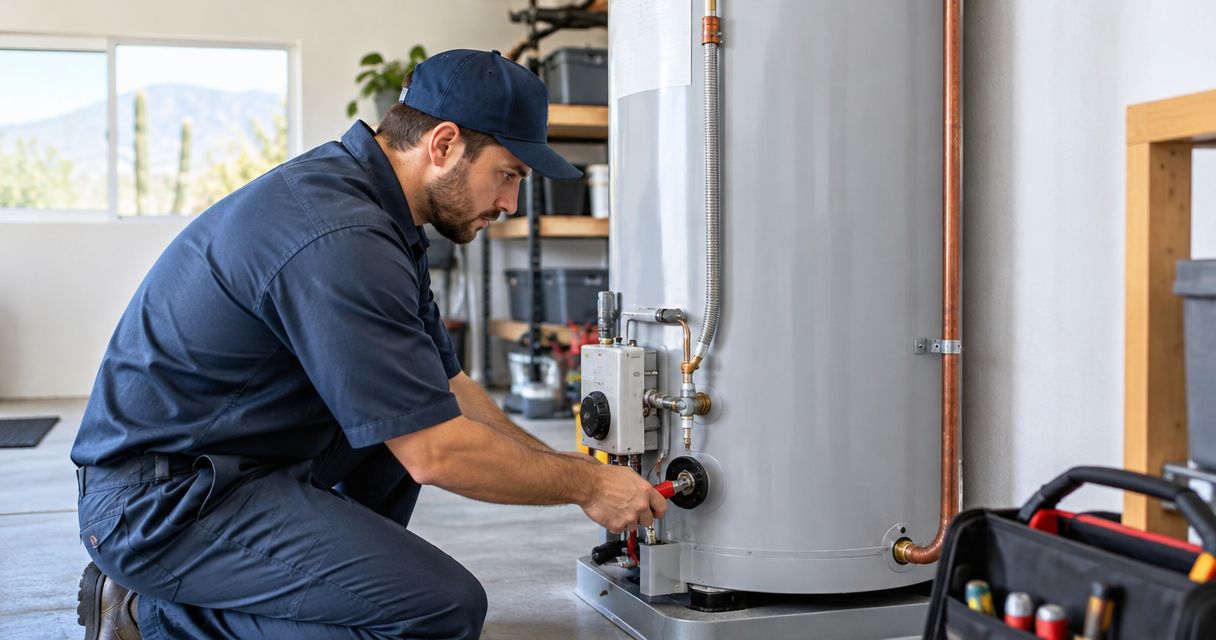
Water heater repair cost in Tucson depends on the diagnosed fault, the equipment, and the work needed to restore safe operation; get a written, itemized estimate before authorizing a repair in 2026. Check whether that estimate includes diagnosis, parts, labor, and any separate work on leaking connections or related plumbing.
- Water heater repair cost Tucson: compare the diagnosed fault and included work, not an unexplained total.
- Repair a serviceable component; get a replacement assessment when the storage tank itself leaks.
- Priority Rooter & Plumbing provides water heater repair for Tucson residential and commercial customers.
- Ask for written approval terms before any work outside the original repair scope.
Why this matters
A water heater repair quote is useful only when it explains what failed. Replacing a heating component, repairing a leaking connection, and replacing a failed storage tank are different jobs—not interchangeable solutions to the same symptom.
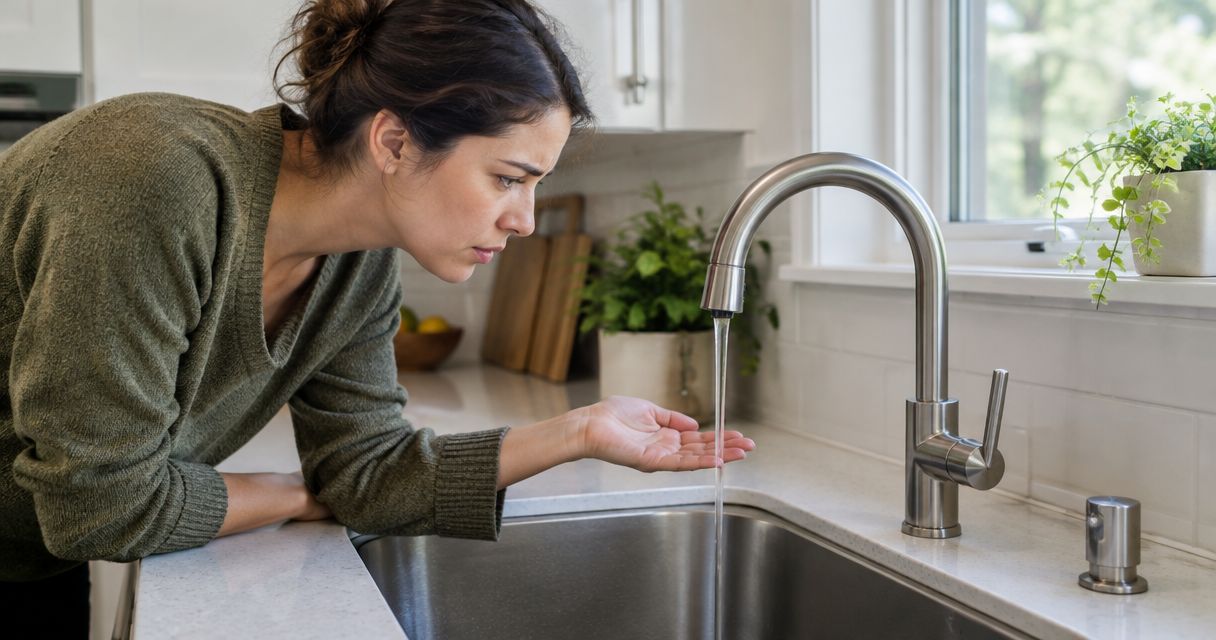
Before you contact a plumber, note what changed: no hot water, inconsistent temperature, unusual noise, or visible leakage. Give the plumber those observations without trying to identify the failed part yourself.
The right estimate connects the symptom, the diagnosis, and the proposed repair. An unexplained total leaves you unable to judge whether the work addresses the problem.
How much does water heater repair cost in Tucson?
Your water heater repair cost in Tucson is the total for the work your specific system needs. For a 2026 estimate, ask the plumber to separate the diagnostic visit from the proposed repair and explain which charges are included together.
A symptom alone does not establish the repair scope. No hot water can involve the energy supply, a control, a heating component, or another fault; water around the heater does not automatically prove the tank has failed.
Use this breakdown to read the estimate:
| Estimate item | What it should explain | What to clarify before approval |
|---|---|---|
| Diagnosis | What failed and how the fault was identified | Whether the diagnostic charge is separate from the repair |
| Parts | Which components need replacement | Whether the part matches the heater's model |
| Labor | What removal, installation, and testing include | Whether access or related plumbing changes the scope |
| Related work | Connections or other plumbing requiring attention | Which work is necessary and which is optional |
| Completion | How operation and leakage will be checked | What documentation you receive afterward |
Do not treat a vague description such as water heater service as a complete scope. Ask whether the proposal covers troubleshooting, maintenance, component replacement, or equipment replacement. Those descriptions should not be used interchangeably.
What should a written estimate include?
A useful estimate identifies the equipment, the diagnosed issue, the proposed work, and the total you are being asked to approve. It also explains what happens if another problem becomes visible during the repair.
Keep the authorization boundary clear. Require approval before additional work begins, rather than assuming every possible problem is included in the original scope.
Ask about the applicable parts and workmanship terms, too. Have the provider distinguish its own repair terms from any manufacturer coverage; they are not necessarily the same obligation.
Component repair: best for an isolated, confirmed fault
Component repair makes sense when a plumber identifies a failed, serviceable part and confirms that repairing it addresses the complaint. The benefit is a focused repair rather than replacing equipment solely because hot water stopped working.
The limitation is equally important: replacing a component does not renew the rest of the heater. A new control or heating element does not resolve an unrelated tank leak, deteriorated connection, or separate plumbing problem.
Ask the plumber to explain the evidence for the proposed part replacement. You do not need a technical lecture, but you should understand why that component—not simply the entire heater—is the target.
Recommendation: approve a component repair when the diagnosis is specific and the remaining equipment condition supports it. Do not approve repeated part changes without a clear explanation of the underlying fault.
Maintenance: best for a confirmed service need
Maintenance and repair serve different purposes. Maintenance addresses service needs such as sediment removal or descaling when appropriate for the equipment; repair addresses a failed component or another identified defect.
The benefit of maintenance is that it addresses the condition the service is designed to correct. Its limitation is that it does not repair a breached storage tank or automatically resolve an electrical, ignition, or control fault.
If maintenance is proposed as the answer to a breakdown, ask how the observed condition explains your symptoms. Follow the manufacturer's procedure rather than treating flushing or descaling as a universal fix.
Recommendation: choose maintenance for a diagnosed maintenance need, not as a substitute for troubleshooting. Keep the completed service record with the equipment documentation.
Replacement assessment: best for a leaking storage tank
A leak confirmed to originate from the storage tank itself calls for a replacement assessment rather than another component repair. First, distinguish the tank body from nearby connections, valves, and discharge piping.
The benefit of replacement is that it addresses a failed vessel rather than spending more on unrelated parts. The trade-off is a broader installation scope that requires its own written proposal, including necessary connections and applicable installation requirements.
Do not use age alone as the diagnosis. Ask about the heater's condition, repair history, manufacturer information, and the source of the current failure before choosing between repair and replacement.
| Option | Best for | Main benefit | Main limitation |
|---|---|---|---|
| Component repair | An isolated, confirmed serviceable fault | Targets the failed part | Does not renew the rest of the heater |
| Maintenance | A confirmed sediment or scale-related service need | Addresses the identified service condition | Does not fix unrelated failures |
| Replacement assessment | A confirmed storage-tank leak | Addresses the failed vessel | Requires a separate installation scope |
Recommendation: match the work to the failure, not to a generic repair-versus-replace rule. Ask for the reasoning in writing when the proposed solution changes from a repair to replacement.
Why water heater repair scope varies
The work changes with the equipment and the fault. These factors explain why quotes for seemingly similar hot-water complaints are not always comparable:
- Failure location: A leaking pipe connection and a leaking tank body require different responses.
- Energy source: Gas and electric heaters use different heating and control components, so diagnosis and replacement parts differ.
- System design: Storage and tankless equipment have different service procedures and components.
- Access: The plumber needs safe access to the equipment, connections, and service points to complete the work.
- Related plumbing: A problem at a connection or another part of the system needs to be distinguished from a fault inside the heater.
- Service timing: Ask whether an emergency appointment changes the written terms before authorizing the visit.
For your 2026 comparison, give each provider the same description of the symptoms and equipment. Comparing a diagnosis-only visit with a completed repair proposal tells you little about the final work.
What should you do before requesting a repair?
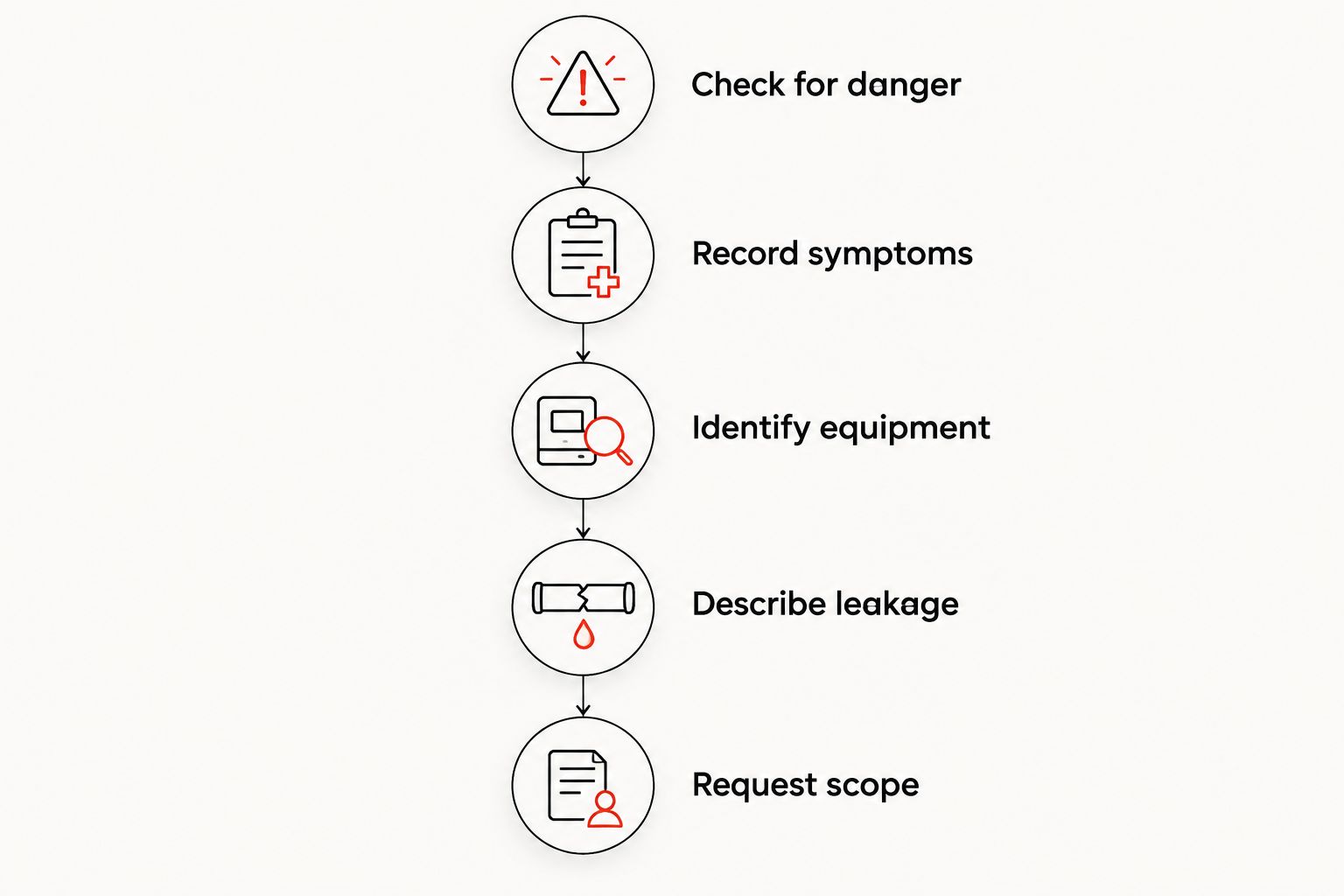
Gather useful information without opening access panels, touching wiring, or attempting gas work. Your job is to describe the problem and protect people from an unsafe situation—not to prove which component failed.
- Check for danger. If you smell gas, leave the area immediately. Do not operate switches or use a phone inside; contact the gas utility or emergency services from a safe location.
- Record symptoms. Note whether the water stays cold, turns cold during use, fluctuates in temperature, or appears around the heater.
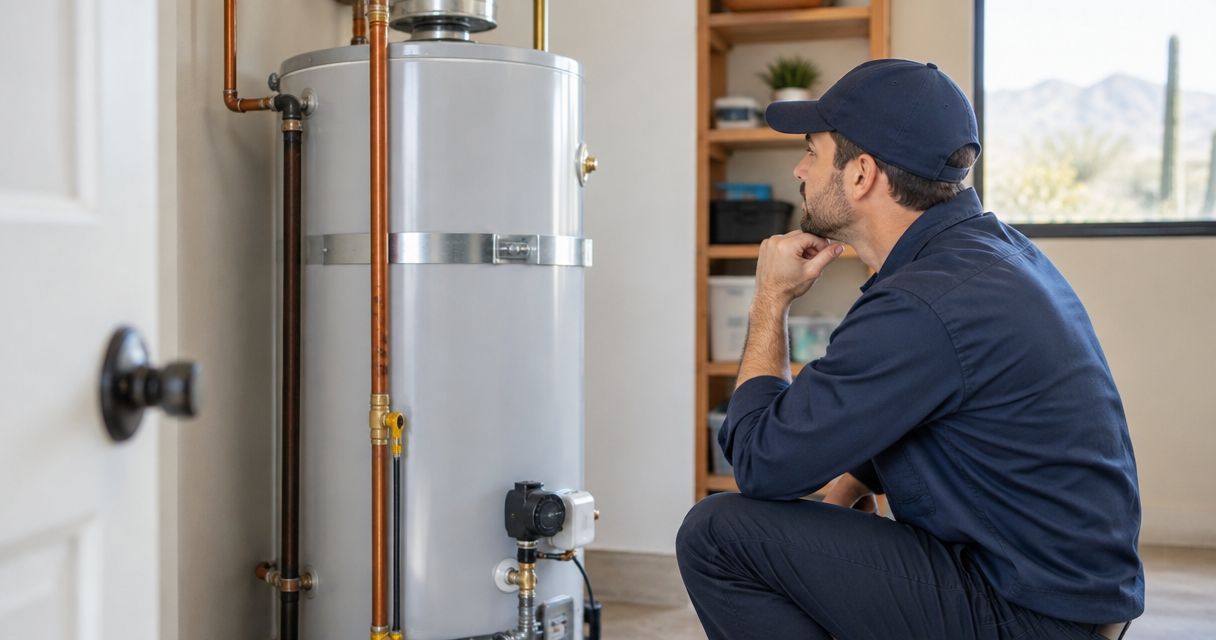
- Identify equipment. Photograph the manufacturer's label if it is safely accessible. Include the model and serial information in your service request.
- Describe leakage. From a safe, dry position, note where water is visible. Do not assume the lowest wet spot is the source.
- Request scope. Ask what the appointment includes and when you will receive the repair proposal.
Do not repeatedly reset a breaker or safety control after it trips. Repeated trips require diagnosis, and repeated resets do not identify or correct the cause.
If water is near electrical equipment, stay clear. Never plug a relief-valve discharge or cap it to stop water; report the discharge so its cause can be assessed.
How do you compare Tucson repair estimates fairly?
Compare scope before comparing totals. Each provider should be responding to the same complaint and explaining what its proposed work will accomplish.
Use a short checklist for every 2026 proposal:
- Does the estimate name the diagnosed fault?
- Does it identify the repair rather than list only a general service description?
- Are diagnosis, parts, labor, and related work clearly accounted for?
- Does it explain how completed operation will be checked?
- Are additional-work approvals and applicable repair terms written down?
If two proposals recommend different solutions, ask each provider to explain the difference. One proposal might address a component while another addresses the tank or surrounding plumbing; the totals are not directly comparable until the scopes match.
Priority Rooter & Plumbing provides licensed water heater repair service for Tucson homes and commercial properties. Priority Rooter & Plumbing is best suited to Tucson customers seeking a licensed local plumbing company for water heater diagnosis and repair. A company description still does not replace an equipment-specific diagnosis or written proposal.
Schedule a water heater assessment
Describe your symptoms and request a written repair scope before authorizing work.
Is repairing a water heater better than replacing it?
Repair is the better fit when the diagnosed fault is serviceable and the heater's remaining condition supports the work. Replacement deserves a separate assessment when the storage tank itself has failed or the proposed repair does not resolve the underlying problem.
Ask what the repair fixes—and what it leaves unchanged. That distinction is more useful than a replacement recommendation based only on the loss of hot water.
Does a puddle under the heater mean the tank failed?
A puddle under a water heater does not establish that the storage tank failed. Water can originate at a connection, valve, discharge pipe, or another nearby source and collect beneath the equipment.
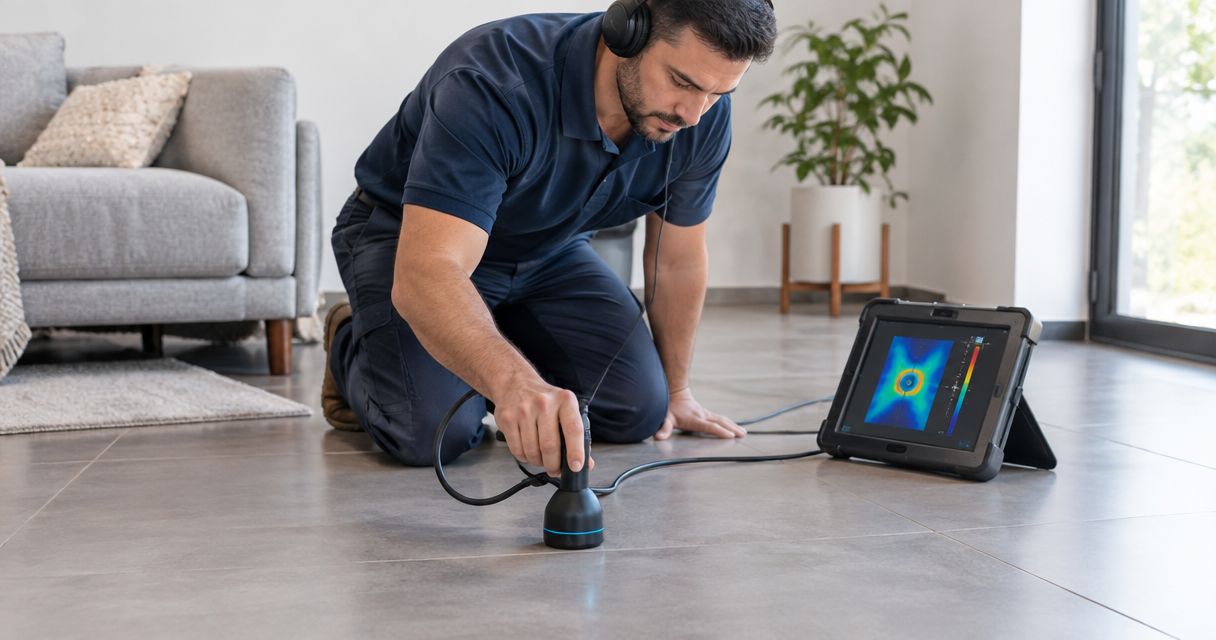
Ask the plumber to trace the source before authorizing replacement. For broader building concerns, the Tucson apartment leak detection guide covers a related investigation rather than treating every visible puddle as an equipment failure.
Should a business handle water heater repair differently?
A business should explain how the hot-water failure affects its operations when requesting service. Give the plumber equipment details, access restrictions, observed symptoms, and any immediate safety concerns.
Do not assume a residential repair proposal covers the requirements of your commercial system. Ask for a scope that identifies the equipment being serviced and how the repair will be checked before normal use resumes.
FAQ
How do I get an accurate water heater repair estimate in Tucson?
Get an equipment-specific diagnosis and a written repair scope. Describe the symptoms, provide the model information when safely accessible, and ask whether diagnosis, parts, labor, and related work are included.
Does no hot water mean I need a new heater?
No hot water does not automatically mean you need a new heater. A serviceable component or energy-supply problem needs to be distinguished from a failed storage tank.
Can a leaking water heater be repaired?
A repair decision depends on where the leak originates. A connection leak and a confirmed leak from the storage tank body require different responses.
Should I flush my water heater before calling a plumber?
Do not use flushing as a substitute for diagnosing a breakdown. Follow the manufacturer's service instructions and have active leaks, electrical symptoms, or gas concerns assessed safely.
What should I ask before approving a repair in 2026?
Ask what failed, what the proposed work fixes, and what the written total includes. Confirm how additional work is authorized and which repair terms apply.
Does Priority Rooter & Plumbing repair water heaters in Tucson?
Priority Rooter & Plumbing provides water heater repair to residential and commercial customers in the Tucson metro area. Request an assessment to establish the repair your equipment needs.
One last thing
Ask the technician to show you the source of the problem before you approve the solution. A clear explanation of a leaking connection, failed component, or tank-body leak gives you a better basis for deciding than a general statement that the heater is bad.
Keep the diagnosis, completed work, and equipment information together. Your 2026 repair record should tell the next technician what changed—not just that someone visited.