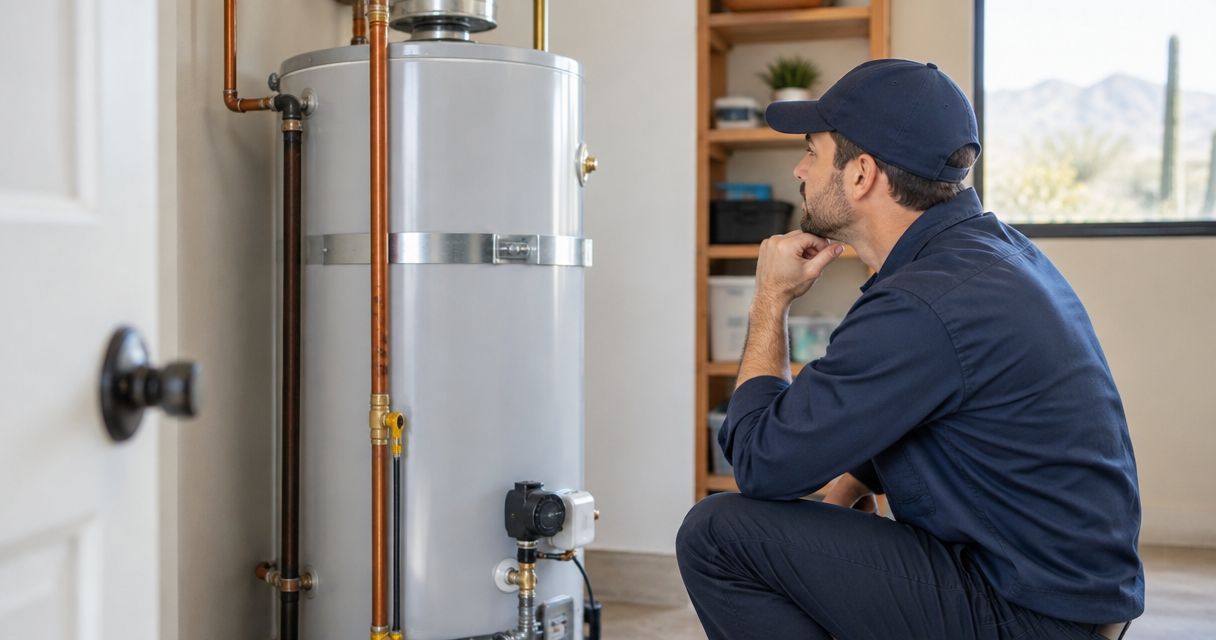
Repair your water heater when the problem is a replaceable component and the tank, connections, and safety systems remain sound; replace it when the storage tank itself leaks or the equipment cannot be restored to safe operation. Age alone does not settle the decision, and replacing the heater will not fix a separate plumbing leak or pressure problem. For Tucson homeowners in 2026, the right choice starts with identifying the failed part—not buying another heater first.
- Repair or replace water heater Tucson: repair an isolated component failure; replace a leaking storage tank.
- Priority Rooter & Plumbing provides licensed water heater repair for Tucson residential and commercial customers.
- Sediment, pressure problems, and plumbing leaks need separate diagnosis before you approve replacement.
- Compare written scopes, warranty coverage, and installation requirements—not equipment age alone.
Why this matters
A puddle beside your water heater does not automatically mean the tank has failed. A leaking supply connection, drain valve, or relief discharge can leave water in the same place, but each needs a different response.
Approve the diagnosis before you approve the replacement. If you cannot identify the water source safely, schedule a plumbing visit rather than opening electrical covers or adjusting gas controls. A useful 2026 assessment separates the heater's condition from problems elsewhere in your plumbing.
Is it better to repair or replace a water heater in Tucson?
Repair is the better choice for an isolated, serviceable fault; replacement is the better choice for a failed storage tank. For everything between those cases, compare the confirmed defect, overall condition, repair history, and installation requirements.
| Option | Best for | Main advantage | Main limitation |
|---|---|---|---|
| Repair | A sound heater with a confirmed component failure | Keeps serviceable equipment in use | Does not renew an aging tank or correct unrelated defects |
| Replace | A leaking storage tank or equipment that cannot operate safely | Removes the failed equipment | Requires installation planning and does not fix upstream plumbing problems |
| Diagnose before deciding | An unexplained puddle, intermittent shutdown, or inconsistent temperature | Prevents replacing equipment for the wrong reason | Requires testing before choosing the final work scope |
Ask the plumber to name the failed component and explain the evidence. “The heater is old” describes its history; it does not identify why you lost hot water this morning.
For a replacement recommendation, ask what specifically makes repair unsuitable. A clear answer distinguishes a failed tank from a repairable valve, control, heating element, or connection.
Repair: best for an isolated failure in sound equipment
A repair makes sense when testing identifies a replaceable part and the rest of the heater remains suitable for service. Depending on the heater, that part might be an electric heating element, thermostat, gas control, ignition component, or external connection.
The symptom alone is not enough. No hot water from an electric heater requires a different investigation from a gas heater that repeatedly loses ignition, even though both leave you with a cold shower.
Before authorizing repair, ask for:
- The diagnosis: Which component failed, and what test confirmed it?
- The condition check: Is there evidence of tank leakage, corrosion, or unsafe operation?
- The repair scope: Which parts, connections, and tests are included?
- The limitation: What existing condition will the repair leave unchanged?
Repair preserves usable equipment, but it does not reset the heater's age. A new element can restore heating without improving the condition of the storage tank surrounding it.
Choose repair when the diagnosed fault is contained and the remaining equipment supports the decision. Do not treat repeated resets or recurring shutdowns as normal maintenance.
Replace: best for a leaking tank or unsafe equipment
A confirmed leak through the storage tank wall calls for replacement. Replacing an external valve or tightening a connection cannot repair the failed vessel.
Replacement also deserves consideration when recurring failures and deteriorating condition make another isolated repair a poor match for the equipment. Ask the plumber to distinguish necessary replacement from an optional upgrade.
A replacement scope should address more than removing the old heater. Depending on the installation, the review includes:
- Water connections, isolation valves, and accessible service points.
- Electrical supply or gas connections appropriate to the equipment.
- Venting and combustion-air requirements where applicable.
- Temperature-and-pressure relief protection and its discharge piping.
- Thermal expansion control where the plumbing arrangement requires it.
- Drainage, access, and applicable permit or inspection requirements.
Replace the failed heater, but also address the condition that contributed to the failure. Excessive pressure or a leaking nearby pipe does not disappear when a new heater arrives.
For a 2026 replacement, have the installer confirm the requirements that apply to your address and equipment. Do not assume the previous installation establishes what the new one needs.
Why the repair-or-replace decision varies
The same symptom can lead to different recommendations because the underlying equipment and installation differ. These factors matter more than a blanket age rule:
- Leak location. Water from a threaded connection is not the same failure as water escaping through the tank wall.
- Overall condition. Corrosion, damaged connections, and deteriorated components change the value of an isolated repair.
- Repair history. Repeated failures deserve a wider investigation rather than another automatic parts swap.
- Hot-water demand. A sound heater that no longer meets household or business demand presents a sizing question, not necessarily a mechanical failure.
- Installation constraints. Available space, fuel supply, venting, and electrical capacity affect replacement choices.
- Warranty terms. Existing coverage can affect the decision, but parts coverage and labor coverage are not interchangeable.
Keep the conversation specific. Instead of asking whether every heater of the same age needs replacement, ask whether your heater has a repairable defect and what remains after that repair.
How to check the problem before approving work
You can collect useful information without dismantling the heater. Stop immediately if you smell gas, see damaged electrical equipment, or encounter water near energized components.
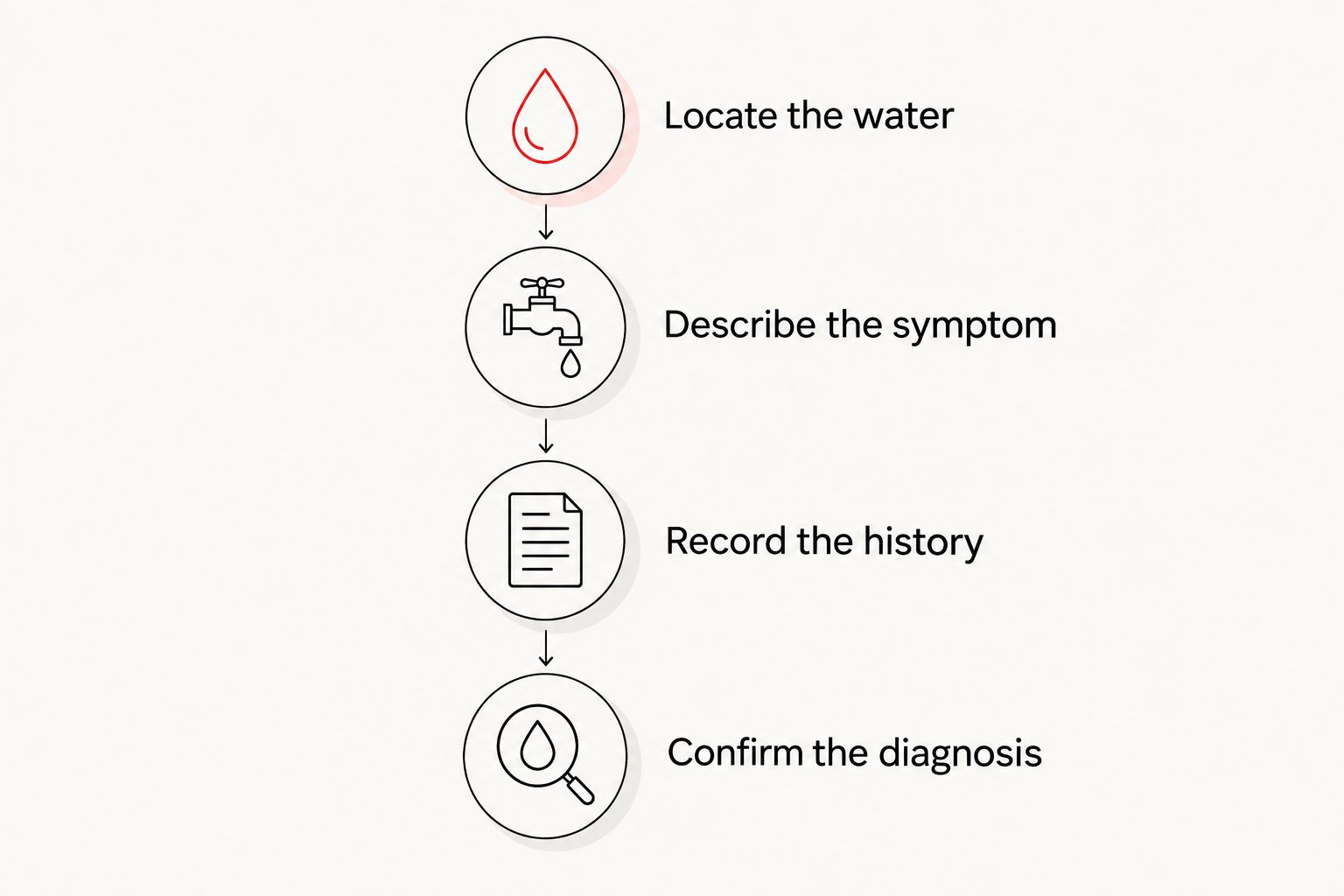
- Locate the water. From a safe position, note whether moisture appears at the top connections, a valve, discharge piping, or beneath the tank. Water travels, so the wettest spot is not proof of the source.
- Describe the symptom. Record whether the water is completely cold, turns cold during use, fluctuates, or takes longer to arrive. Note whether the problem affects every fixture or only one.
- Record the history. Photograph the equipment label if accessible without removing covers. Gather previous repair records, warranty documents, and any displayed error message.
- Confirm the diagnosis. Ask the plumber to explain the failed part, the condition of the tank or heat exchanger, and the proposed repair or replacement scope.
Do not remove burner assemblies, open electrical compartments, or disconnect piping to collect evidence. Your job is to describe what happened; the technician's job is to test the equipment safely.
A photograph taken before the area dries can help explain an intermittent leak. Include the surrounding connections, not just the puddle, and keep clear of hot surfaces and electrical hazards.
What Tucson water conditions change—and what they do not
Mineral scale and sediment belong in the diagnosis when deposits affect water-heater operation. Heated water can leave mineral deposits on heat-transfer surfaces, and storage tanks can accumulate sediment.
That does not make every noisy heater a replacement candidate. Noise needs investigation because sediment, water movement, and other mechanical conditions require different responses.
Ask whether the service recommendation addresses deposits, a failed component, or damaged equipment. Flushing a tank cannot repair a tank-wall leak, and descaling cannot restore every damaged heat exchanger.
Do not authorize a blanket maintenance treatment without checking the heater's condition and manufacturer instructions. A neglected or deteriorated heater needs an assessment before someone opens a drain valve or starts a cleaning procedure.
For Tucson properties in 2026, discuss water conditions and maintenance history together. A new heater still needs maintenance appropriate to its design and the water passing through it; replacement alone is not a water-treatment plan.
What should you do if the heater is leaking now?
Treat an active leak as a damage-control problem before treating it as a shopping decision. Keep people away from hot water and wet electrical equipment.
If it is safe and you know the correct controls, isolate the heater's water supply and energy source using the manufacturer's shutdown instructions. Do not touch electrical controls while standing in water or attempt a gas repair yourself.
If you smell gas, leave the area and contact your gas utility or emergency services from a safe location. Do not operate switches or create an ignition source.
A temperature-and-pressure relief valve is a safety device. Never cap its outlet, block its discharge pipe, or assume discharge means the valve alone needs replacement. Temperature, pressure, and valve condition need evaluation.
Priority Rooter & Plumbing is best suited to Tucson homeowners and businesses seeking licensed water heater repair and emergency plumbing service. The company offers 24/7 emergency plumbing; whether the heater needs repair or replacement still depends on the diagnosis.
Get your water heater checked
Ask Priority Rooter & Plumbing to assess the failure before you choose repair or replacement.
What should a written recommendation include?
A useful recommendation explains what failed, what work is proposed, and what remains outside the scope. You should be able to compare repair and replacement without decoding a list of unexplained parts.
For repair, request the component name, supporting test results, applicable warranty terms, and the checks performed after the work. Ask whether the technician found another issue that needs separate attention.
For replacement, request the equipment type, sizing basis, connection changes, disposal arrangements, and applicable permit responsibilities. Confirm what the installer will inspect before returning the heater to service.
Do not accept a promised service life as a substitute for condition evidence. No inspection guarantees the future, and replacing the heater does not guarantee that every hot-water complaint will disappear.
Your 2026 decision should rest on a written scope, not an age-only sales pitch. Keep the assessment and equipment records together so the next service visit starts with a usable history.
Should I replace a water heater just because it is old?
Age alone does not establish that a water heater needs replacement. Use age alongside tank condition, service history, current faults, and your tolerance for an unplanned outage.
Proactive replacement is a different decision from emergency replacement. If the heater still works, you have time to review installation requirements and plan around household or business needs.
Will turning up the temperature fix a lack of hot water?
Turning up the temperature does not repair a failed component, sediment problem, or inadequate supply. It also increases scald risk, so do not use a higher setting to conceal an unresolved fault.
The U.S. Department of Energy's consumer guidance identifies 120°F, approximately 49°C, as sufficient for most households. Health needs and system design can require different precautions; follow manufacturer guidance and get advice appropriate to the property.
FAQ
How do I know whether to repair or replace my water heater in Tucson?
Repair a confirmed component failure when the rest of the heater remains sound; replace a storage heater with a confirmed tank-wall leak. Ask for the diagnosis and written scope before approving either option.
Does water around the bottom mean I need a new heater?
Water around the bottom does not prove the tank has failed. Connections, valves, discharge piping, and nearby plumbing can leave water in the same area.
Is a noisy water heater always failing?
A noisy water heater does not automatically need replacement. Sediment and other operating conditions need diagnosis before you choose cleaning, repair, or replacement.
Should I repair a tankless water heater instead of replacing it?
Repair a tankless water heater when a serviceable fault is confirmed and the remaining equipment is suitable for use. Heat-exchanger condition, error diagnosis, maintenance history, and installation requirements affect the decision.
Can I keep using a water heater with a leaking tank?
A confirmed leaking storage tank needs replacement, not continued normal use. Arrange safe shutdown and plumbing service rather than trying to patch the vessel.
What temperature should I use for my water heater?
120°F, approximately 49°C, is the setting the U.S. Department of Energy identifies as sufficient for most households. Follow equipment instructions and seek property-specific advice where health needs or system design require different precautions.
Does Priority Rooter & Plumbing offer emergency service in Tucson?
Priority Rooter & Plumbing offers 24/7 emergency plumbing services in the Tucson metro area. Its stated services include water heater repair and leak detection for residential and commercial customers.
One last thing
A slow hot-water arrival is not always a failing heater. If the water eventually reaches the expected temperature but takes a long time to reach a distant faucet, pipe layout or circulation deserves investigation before replacement.
For your 2026 service visit, write down whether the problem is temperature, quantity, delivery delay, or leakage. That distinction gives the diagnosis a better starting point than “the water heater is bad.”