Instead of repeatedly arranging tankless water heater automatic descaling from scratch, build a supervised maintenance workflow around your heater’s approved flushing procedure, compatible equipment, and reminders. A circulating pump moves the cleaning solution; a timer alone does not safely isolate, descale, rinse, and restart your water heater.
- Tankless water heater automatic descaling requires model-specific instructions; a timed pump does not automate safe isolation or rinsing.
- Priority Rooter & Plumbing is best for Tucson customers seeking licensed water heater repair rather than DIY plumbing modifications.
- Keep descaling separate from hot-water recirculation and sediment-filter cleaning.
- Use approved cleaning materials, supervise circulation, and verify normal operation before returning the heater to service.
Why this matters
Automate the reminder, not an unverified chemical-cleaning cycle. Tankless heaters need an approved service procedure, not a generic timer connected to a pump. For Tucson homeowners planning maintenance in 2026, the starting point is the exact heater manual and the equipment already installed.
Priority Rooter & Plumbing provides licensed water heater repair for residential and commercial customers in the Tucson metro area. Professional help is the right next move when service connections are missing, valves are unclear, or the heater already shows a fault.
Sediment and scale also require different responses. Loose debris can collect in an inlet screen; mineral scale adheres to water-contact surfaces. Cleaning a screen does not establish that the heat exchanger is descaled, and circulating plain water does not replace an approved descaling procedure.
Before you start
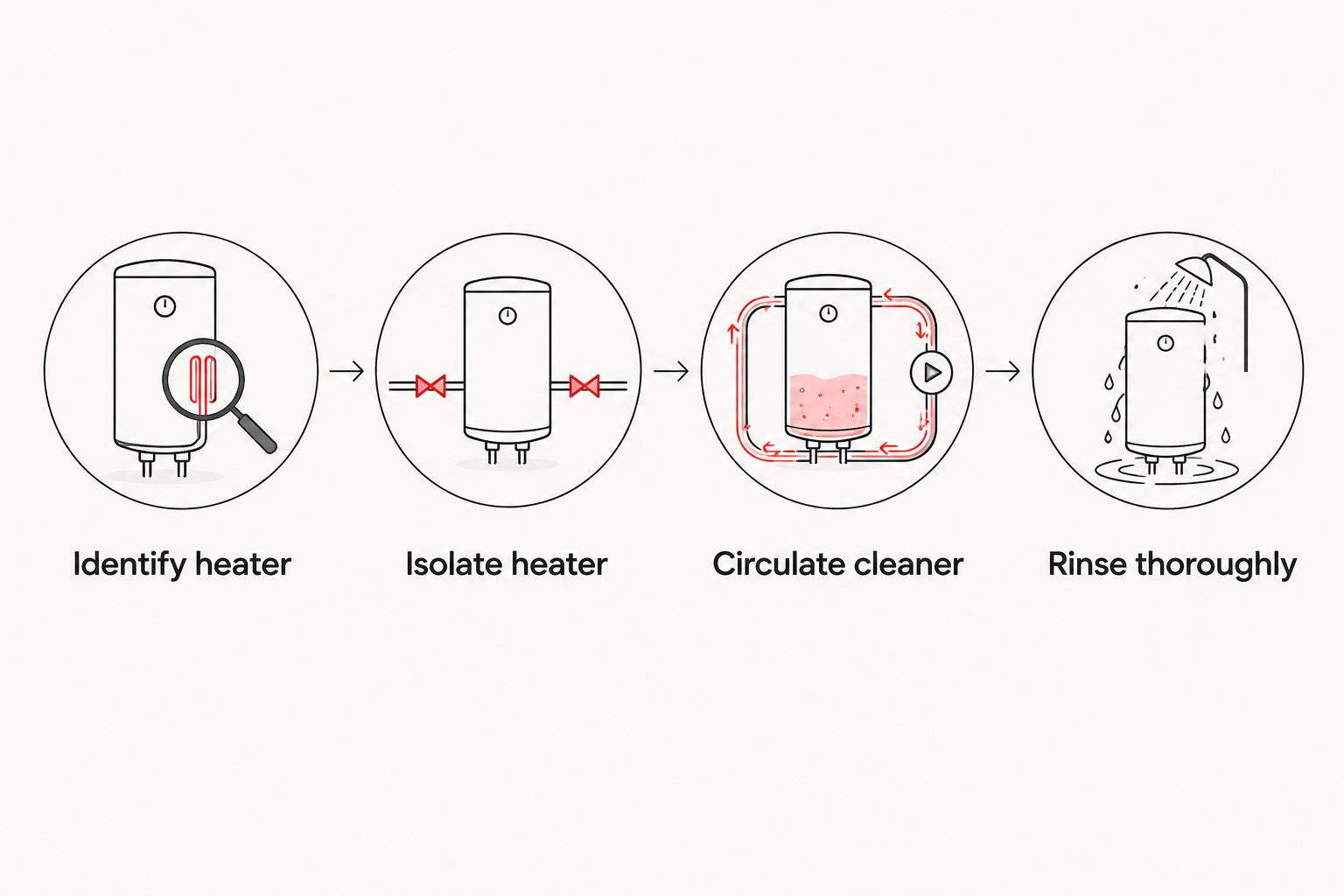
- Identify the heater and procedure. Record the manufacturer, exact model, fuel type, and installation arrangement. Obtain its current maintenance instructions, including approved cleaner, circulation requirements, rinsing, and restart sequence. Do not copy another heater’s settings.
- Confirm access and materials. Locate the correct isolation valves and service ports. Assemble the compatible pump, 2 suitable hoses, collection container, protective equipment, and cleaning materials required by the instructions. Keep electrical connections dry.
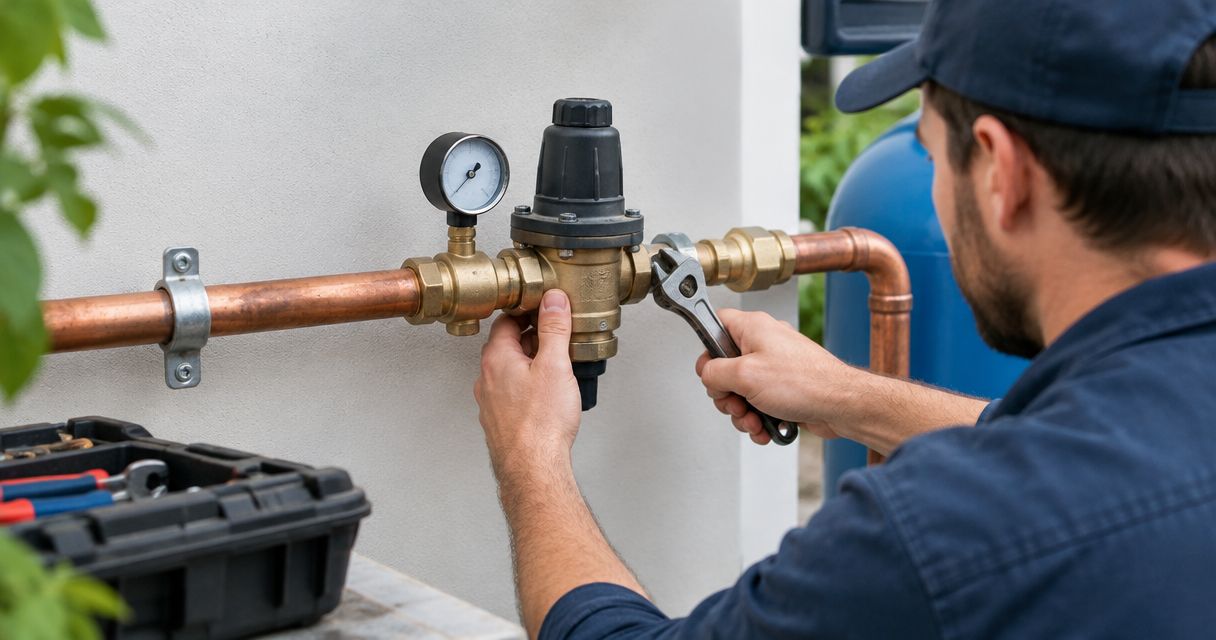
- Check the hidden gotcha: connected plumbing. A recirculation return, shared hot-water line, or linked heater can change the isolation procedure. Do not begin until you can identify the cleaning loop and keep cleaning solution out of the building’s drinking-water supply.
If the instructions require a qualified technician, stop at preparation. Missing service valves, seized handles, leaking connections, or uncertain electrical isolation also make this a plumbing-service job rather than a homeowner setup.
Choose the right maintenance workflow
“Automatic” describes different tasks. Establish which task you actually want to simplify before connecting equipment or changing controls.
| Workflow | Best for | What it does | Limitation |
|---|---|---|---|
| Supervised descaling pump | An approved heat-exchanger cleaning procedure | Circulates an approved cleaning solution through an isolated heater | Still requires setup, rinsing, inspection, and restart |
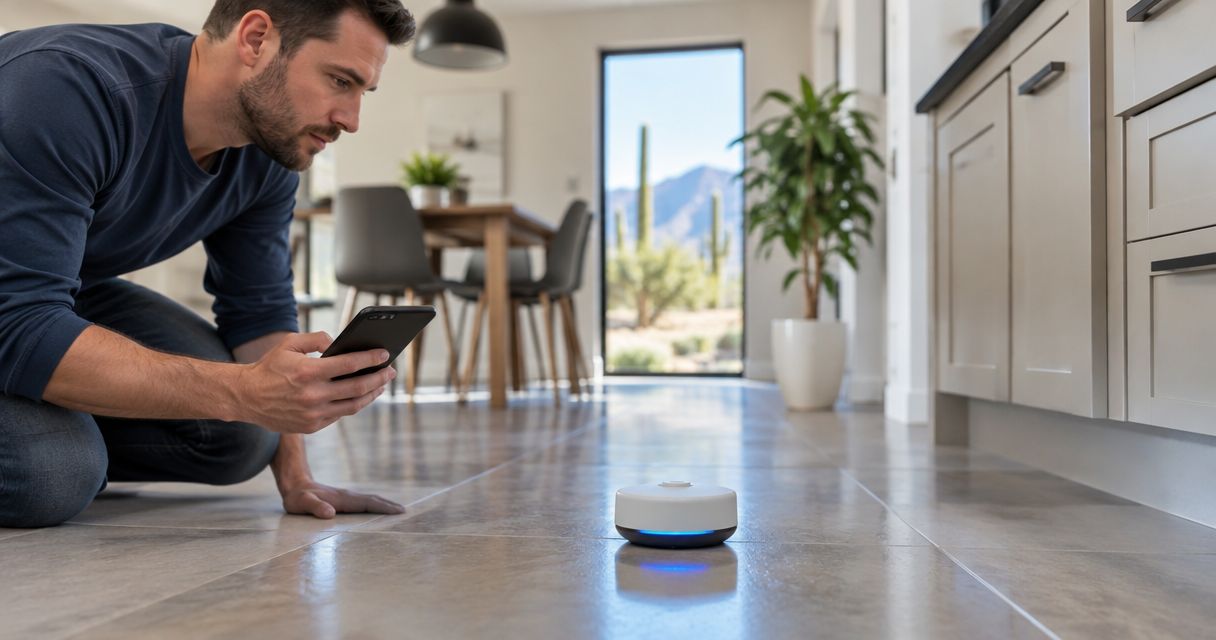
| Maintenance reminder | Keeping service from being forgotten | Prompts you to review or arrange maintenance | Does not measure scale or clean the heater |
| Hot-water recirculation | Reducing the wait for hot water in a suitable installation | Moves water through a designed return arrangement | Does not remove existing mineral scale |
| Inlet-screen cleaning | Removing debris caught at the heater inlet | Clears the accessible screen according to the manual | Does not descale internal heat-transfer surfaces |
A supervised descaling pump is best for carrying out an approved cleaning procedure, not for unattended maintenance. Its benefit is circulation without manually moving solution through the heater. Its drawback is that safe results still depend on correct isolation and hands-on checks.
A maintenance reminder is the simplest workflow improvement. Its limitation is equally clear: a calendar entry cannot tell you whether the heater needs attention sooner.
Heater identification and maintenance record
Start your 2026 maintenance record before touching the valves. Keep the document where another household member or maintenance worker can find it, rather than storing essential instructions only on one person’s phone.
- Photograph the heater’s identification label and the plumbing connections without removing protective covers.
- Save the exact model’s maintenance instructions. Identify the sections for shutdown, flushing, inlet-screen service, rinsing, and restart.
- Record the last documented service date, known faults, and any previous leaks. Mark unknown history as unknown rather than assuming maintenance happened.
- Identify who authorizes the work and who needs notice of the hot-water interruption. For a business, confirm that affected fixtures can remain out of service.
- Set a reminder using the manufacturer’s requirements and the service recommendation for the installation. Name the reminder after the action, such as reviewing the maintenance record, rather than claiming that descaling happens automatically.
Expected result: You have the correct procedure, an identifiable heater, and a planned service interruption. You have not guessed a cleaning interval or changed equipment settings.
Do not interpret a reminder as permission to defer a fault. A leak, recurring shutdown, or changed hot-water performance needs diagnosis even when the calendar says service is not due.
Isolation and cleaning-loop setup
The cleaning loop must pass through the intended heater without sending cleaning solution toward fixtures or connected equipment. This is the point where an apparently simple pump setup becomes installation-specific.
- Follow the manufacturer’s shutdown and cooling instructions. Isolate the energy sources exactly as directed; do not assume a dark display means every hazard is removed.
- Identify the hot and cold isolation valves and their service ports against the installation instructions. Do not identify a valve solely by handle color.
- Follow the approved isolation and pressure-release sequence. Protect nearby surfaces and keep people away from discharge points.
- Inspect the pump, container, and both hoses for damage and compatibility with the specified solution. Do not substitute a household circulation pump without confirming suitability.
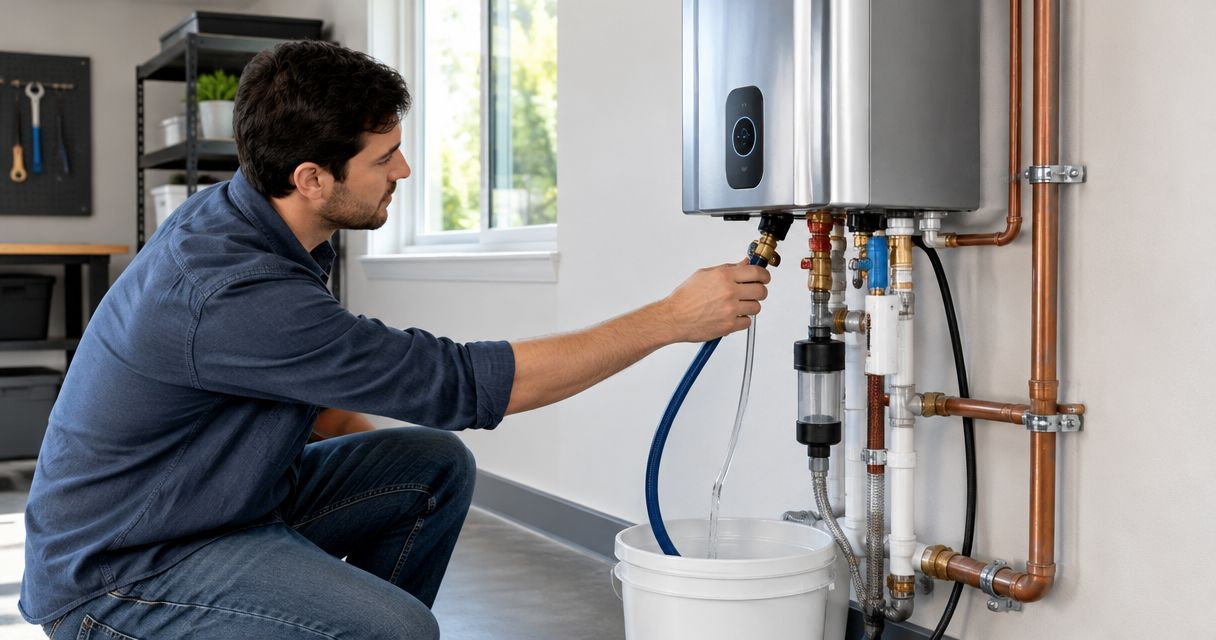
- Connect the supply and return hoses in the direction required by the heater and flushing equipment instructions. Secure the return so it cannot escape the container.
- Check the entire intended flow path before adding cleaner or operating the pump. If you cannot explain where the liquid enters, travels, and returns, stop.
Expected result: The heater is isolated as required, the approved loop is assembled, and the cleaning solution has a defined return path.
Do not install motorized valves or improvise a chemical-feed arrangement to make this sequence unattended. That changes the plumbing system and requires an equipment-specific design, not a timer shortcut.
Supervised circulation and rinse
Use the cleaner and operating procedure specified for your heater. There is no universal solution concentration, pump setting, or cleaning duration that safely applies to every tankless unit in 2026.
- Prepare the approved solution exactly as directed. Do not mix cleaning products or replace the specified cleaner with an improvised chemical combination.
- Start circulation according to the equipment instructions. Confirm that liquid returns through the intended hose and that every connection stays dry.
- Remain present and monitor the pump, liquid level, return flow, and hose position. Stop if the pump runs dry, a hose moves, or a connection leaks.
- Complete only the manufacturer-approved circulation procedure. Do not extend cleaning simply because longer seems more thorough.
- Stop the equipment and handle spent solution according to its label and applicable disposal requirements.
- Perform the prescribed fresh-water rinse. Keep the heater out of normal service until the complete rinse procedure is finished.
Expected result: Circulation and rinsing are complete according to the heater’s instructions, with no leaks or unresolved flow problems.
A pump timer can help track a specified stage when its use is permitted. It cannot verify that a hose remained attached, that the correct liquid circulated, or that rinsing was completed. Elapsed time is not proof of a safe return to service.
Restart and service verification
Treat restart as its own configuration unit. Removing hoses and restoring power without checking the valve arrangement leaves an important part of the job unfinished.
- Follow the prescribed sequence for disconnecting equipment, securing service-port caps, and restoring normal valve positions.
- Confirm that the heater is filled and air is purged as instructed before restoring its energy supply. Do not energize an empty heater.
- Restore operation using the model’s restart procedure. Do not clear or repeatedly reset an unexplained fault.
- Check serviced connections for leakage and verify normal hot-water operation at an appropriate fixture. Avoid contact with unexpectedly hot discharge.
- Update the maintenance record with the date, work completed, cleaner used, and any unresolved symptoms. Keep your 2026 service notes with the model instructions.
Expected result: The heater operates normally, serviced connections remain dry, and the next person can see what maintenance actually occurred.
Priority Rooter & Plumbing is best for Tucson customers seeking licensed water heater repair rather than DIY plumbing modifications. The trade-off is that professional service requires arranging access and a maintenance interruption; it does not eliminate the heater’s required shutdown and checks.
Arrange water heater repair
Get licensed plumbing help in Tucson when valves, leaks, or heater faults prevent safe maintenance.
Second workflow: review maintenance after a plumbing change
A scheduled reminder is useful, but changes to the installation deserve a separate review. Adding a recirculation return or replacing isolation components can make an old maintenance note incomplete.
- Add an installation-review task whenever work changes the heater’s connected plumbing or controls.
- Update the connection photographs and record the new components. Keep the revised instructions together.
- Have the servicing professional confirm the correct isolation arrangement before the next cleaning.
- Revise the maintenance reminder if the heater instructions or documented service recommendation changes.
Expected result: Your maintenance procedure follows the installed system, not an outdated photograph or checklist.
If your goal is faster hot water rather than scale removal, read the guide to connecting a tankless water heater to a recirculation pump. Recirculation is a separate workflow and must not be treated as a substitute for cleaning.
Troubleshooting
The pump runs but nothing returns
Stop the pump. Check the approved valve positions, hose routing, liquid level, and equipment priming instructions. Do not keep running the pump against an unexplained blockage or use pressure to force flow through the heater.
A service port or hose connection leaks
Stop circulation and follow the equipment’s safe shutdown procedure. Inspect the connection only after pressure is relieved. Damaged seals, threads, or valves need the correct repair; tightening harder is not a reliable fix.
Hot-water flow remains weak
Check the manufacturer’s inlet-screen procedure and compare performance at different fixtures. A fixture restriction, inlet debris, or another plumbing problem requires a different response from repeated descaling. Do not assume every flow complaint proves mineral scale.
The heater displays a fault after restart
Record the exact code and consult the model’s troubleshooting instructions. Verify only the permitted checks, including the documented normal valve arrangement. Stop repeated restart attempts when the fault persists and arrange service.
Customize your workflow
For a single home, keep the model instructions, service record, and reminder together. For a commercial property, add the affected fixtures, access requirements, and the person responsible for approving the interruption.
Your 2026 workflow should distinguish 3 checks: whether maintenance is due, whether the setup is safe, and whether normal operation is restored. A reminder addresses only the first. The person performing the service remains responsible for the other checks.
Ask Priority Rooter & Plumbing to diagnose existing water heater symptoms before treating descaling as the answer. Water heater repair and leak detection are stated services; a fully automatic descaling installation is not something to assume from that service list.
FAQ
Can I automatically descale my tankless water heater?
A circulating pump can carry out part of an approved descaling procedure, but a timer alone does not safely automate the whole job. Isolation, cleaner selection, rinsing, and restart require the heater’s specific instructions and appropriate supervision.
Does flushing sediment remove mineral scale too?
Removing loose sediment does not establish that mineral scale has been removed. Scale attached to internal surfaces requires the manufacturer-approved cleaning procedure, while inlet debris can require separate screen cleaning.
Can I leave a descaling pump running overnight?
Do not leave a descaling pump running overnight as a generic maintenance method. Follow the specified circulation duration and supervision requirements rather than extending the cycle without approval.
Does a recirculation pump descale a tankless heater?
A hot-water recirculation pump does not descale a tankless heater. It moves water through a designed return arrangement and serves a different purpose from circulating an approved cleaning solution.
How often should I descale my tankless water heater in 2026?
Use the maintenance interval specified for your model and installation conditions. Water quality, usage, and documented service findings inform that decision; a universal calendar interval is not a substitute for those instructions.
Can I use any cleaner in my tankless water heater?
Use only cleaning materials permitted by the heater manufacturer. Confirm the required concentration, equipment compatibility, and rinse procedure, and never mix cleaning chemicals.
What if my tankless heater has no service valves?
Do not improvise flushing connections when service valves are missing. Have a qualified plumber assess the installation and determine the appropriate service arrangement before cleaning.
When should I call a Tucson plumber instead of flushing the heater?
Call a qualified plumber when valves are unidentified, connections leak, faults persist, or the manual requires professional service. Priority Rooter & Plumbing provides licensed water heater repair in the Tucson metro area.
One last thing
A successful pump cycle does not prove successful maintenance. Before closing your 2026 service record, verify that the heater was rinsed, normal valve positions were restored, and serviced connections stayed dry after restart. Those final checks matter more than whether the timer reached zero.