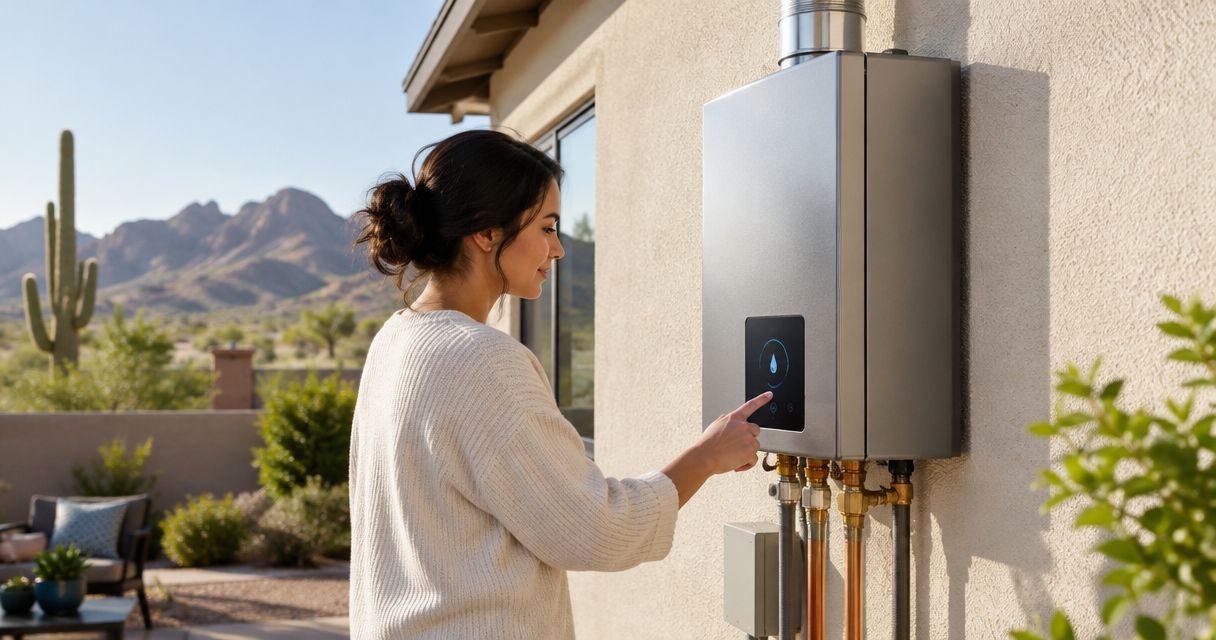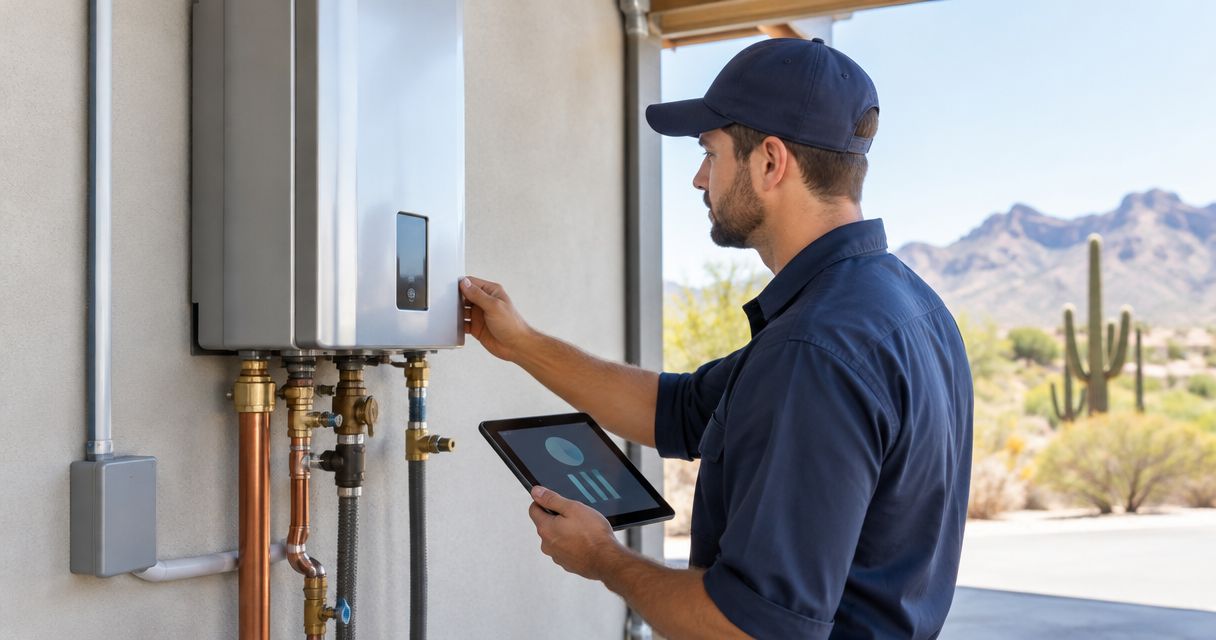
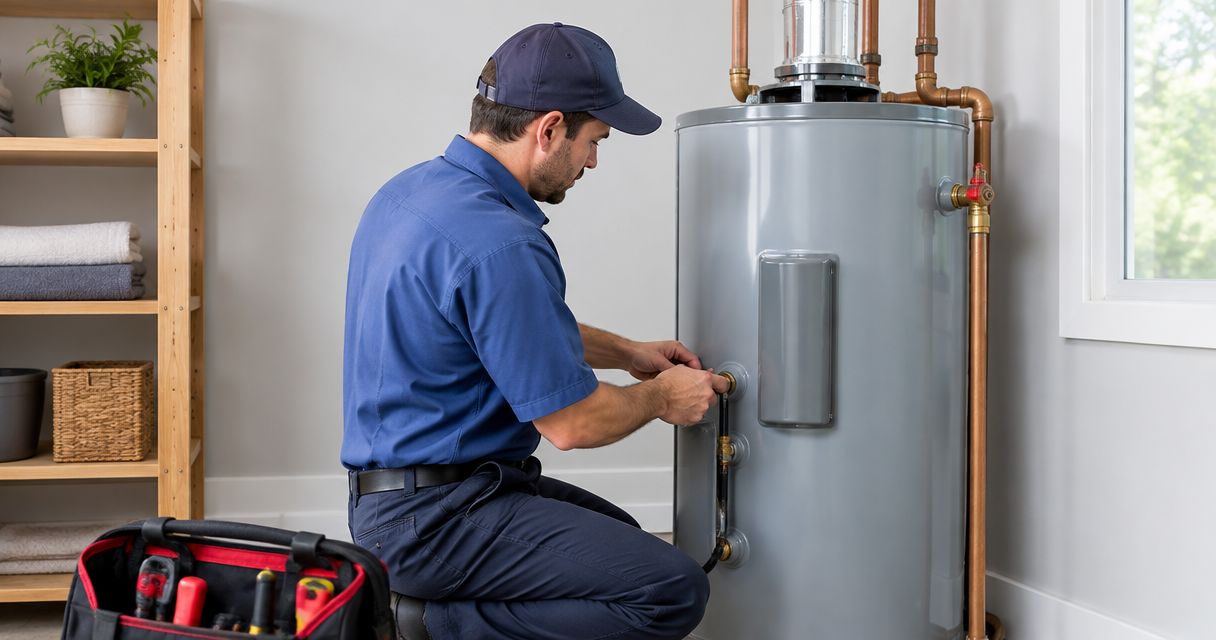
Water heater installation time depends on the work involved: replacing a heater in the same location requires fewer steps than relocating it or changing fuel types. The installation appointment also needs to account for draining, safe disconnection, reconnection, testing, and startup—not just setting the new heater in place. Ask for both the expected work window and the point when you can use hot water again.
- Water heater installation time depends on the replacement scope, connections, access, and startup requirements.
- A like-for-like replacement avoids the additional work involved in relocation or fuel conversion.
- Confirm the hot-water interruption separately from the installation appointment.
- Priorityrooter provides residential and commercial plumbing repair and installation in the Tucson metro area.
Why this matters
An appointment window and a hot-water outage are not the same thing. Your plumber needs to explain when work starts, when water service is interrupted, and what must happen before the heater is ready to use.
For Tucson homeowners planning work in 2026, that distinction helps with showers, laundry, and access to the property. Priorityrooter provides residential and commercial plumbing repair and installation; describe the existing heater and your replacement plans when discussing the job.
How long does a water heater installation take?
The installation timeline follows the scope of work, not simply the size of the heater. A replacement that keeps the location, fuel type, and compatible connections involves fewer changes than a conversion or relocation.
The useful estimate is the one based on your actual installation. Have the plumber identify which steps belong in the appointment and which require separate scheduling, approvals, or work by another trade.
| Installation scope | Best for | Scheduling advantage | Limitation to confirm |
|---|---|---|---|
| Like-for-like tank replacement | Replacing an existing tank without redesigning the system | Keeps the existing location and fuel arrangement | Existing valves, connections, and venting still need evaluation |
| Tankless replacement | Replacing an existing tankless unit with a compatible setup | Retains the established system layout | Connection and venting compatibility still need checking |
| Tank-to-tankless conversion | Changing how the property produces hot water | Allows a different system design | Gas, electrical, venting, and mounting work can expand the scope |
| Water heater relocation | Moving equipment to suit a revised layout | Changes where equipment occupies space | New pipe routes, access, and applicable requirements need review |
| Fuel-type conversion | Changing the heater's energy source | Supports a different energy arrangement | Requires evaluation of the new energy supply and connections |
Use this comparison to describe your project, not as a promised completion schedule. Two replacements that look similar from outside can have different connection and access requirements.
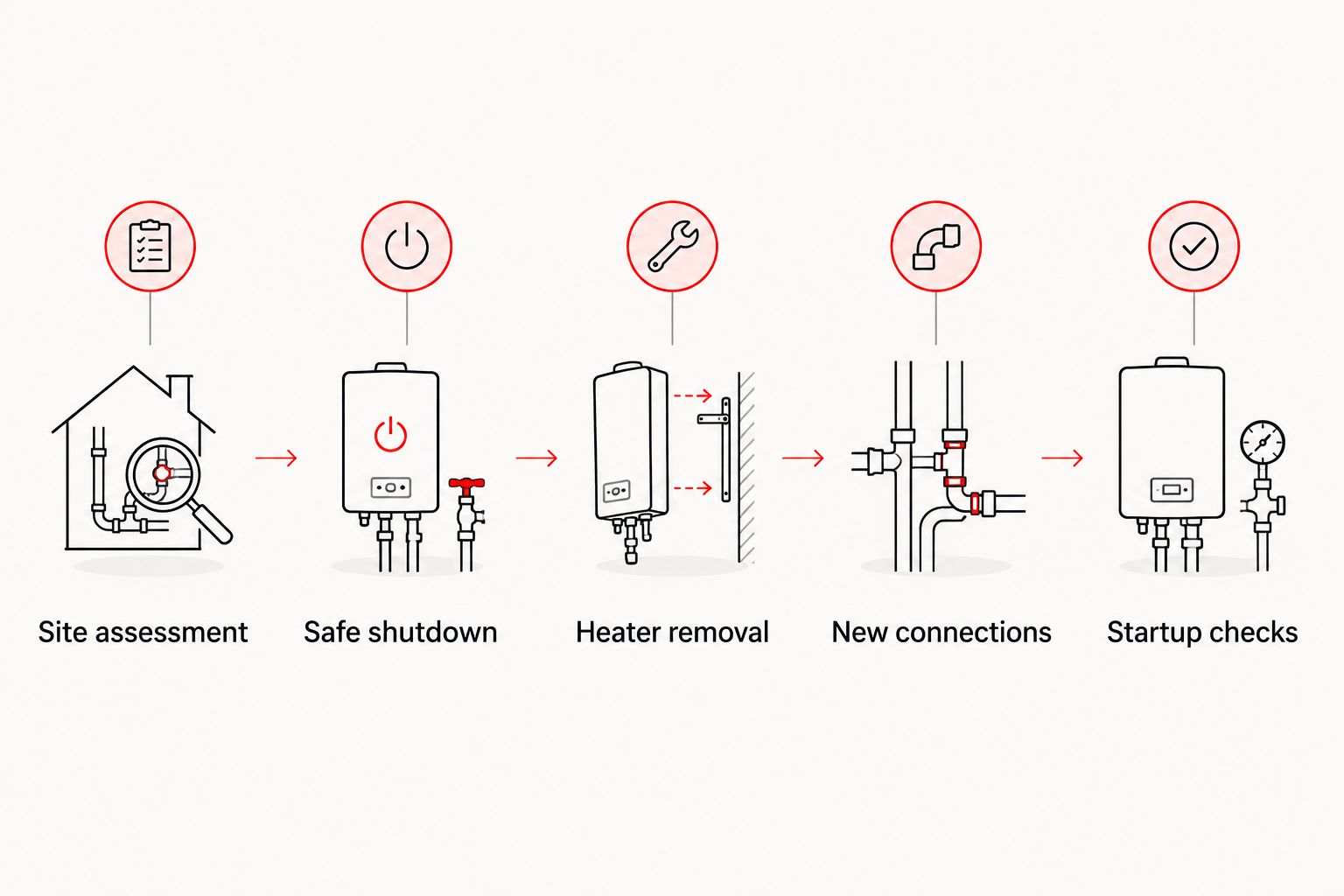
The installation sequence
The following sequence explains why installation involves more than removing one appliance and connecting another. These are professional work stages, not instructions for a homeowner installation.
- Site assessment: Confirm the replacement equipment, access, connections, and applicable installation requirements before disconnecting the existing heater.
- Safe shutdown: Isolate the water and energy supply using the procedures appropriate to the equipment.
- Heater removal: Drain and disconnect the old unit, then remove it through the available access route.
- New connections: Position the replacement and complete the required water, energy, drainage, and venting connections.
- Startup checks: Follow the manufacturer's filling and startup procedures, check the installation, and explain operation to the owner.
The sequence matters because startup depends on the earlier work being complete. A heater that is physically in place is not automatically ready for use.
Like-for-like replacement: Keep the scope clearly defined
A like-for-like replacement keeps the basic arrangement: the same general equipment type, fuel source, and location. That reduces redesign work, but it does not establish that every existing component is suitable for reuse.
Ask the installer to distinguish reusable connections from components that need replacement or correction. A deteriorated shutoff valve or unsuitable vent connection changes the work even when the new heater occupies the same space.
Best for: Homeowners who want to replace an existing tank without changing the system layout. The advantage is a narrower scope; the limitation is that the condition of the existing installation still controls the work.
For a 2026 replacement, share the heater's data plate and clear photographs of its surroundings before the appointment. Keep the full equipment area visible rather than sending only a close-up of the tank.
Tank-to-tankless conversion: Plan the supporting work
A tankless conversion is not simply a smaller appliance taking the place of a tank. The installer must evaluate the equipment's water, energy, venting, mounting, and drainage requirements against the property.
For gas equipment, fuel supply and venting deserve specific attention. For electric equipment, the electrical supply needs evaluation against the selected unit's requirements. Neither arrangement should be assumed compatible because the old heater worked.
Best for: Property owners deliberately changing system design, rather than seeking only a direct replacement. The benefit is a different hot-water arrangement; the trade-off is a broader installation scope.
Ask whether the proposed work includes all supporting changes. A schedule covering only mounting and plumbing is not a complete plan if electrical or gas-supply work remains unresolved.
Relocation: Account for the route, not just the destination
Moving a heater changes more than its position. Water lines must reach the new location, and the energy supply, drainage, venting, and service access need to suit that location.
Before approving a relocation in 2026, ask the installer to explain the proposed connection routes. Also confirm whether walls, ceilings, or other finishes need opening and who handles restoration afterward.
Best for: Renovation projects with a clear reason to move the equipment. Relocation changes the use of space, but it introduces work that a replacement in the existing location avoids.
Keep plumbing completion and finish restoration separate in your planning. Restored hot water does not necessarily mean every surrounding renovation task is finished.
Why water heater installation time varies
The replacement category is only the starting point. These factors determine what the installer must complete before handing the system back to you:
- Equipment access: Stairs, narrow openings, and confined work areas affect removal and placement. Clear the route without moving or disconnecting plumbing equipment yourself.
- Existing connections: Water valves, pipe connections, energy connections, and venting require evaluation. Keeping the old layout does not eliminate those checks.
- System changes: A relocation or fuel conversion adds connection work beyond a direct replacement. Make those changes explicit when requesting an estimate.
- Equipment requirements: The selected heater's installation instructions determine its required connections, clearances, and startup procedure. Different equipment does not automatically use the same setup.
- Permits and inspections: Applicable requirements depend on the property and project. Confirm who checks them and whether any required inspection affects the completion schedule.
- Startup and handover: Leak checks, operating checks, and owner instructions belong in the job. Do not treat them as optional work after installation ends.
Get the scope settled before relying on a completion estimate. A short appointment description is not a substitute for knowing which of these tasks it includes.
How can I help the installation stay on schedule?
Preparation starts with accurate information, not dismantling the old heater. Send photographs, describe any active leak, and tell the plumber whether you want a direct replacement or a different system.
Use this preparation checklist for your 2026 appointment:
- Clear stored belongings from the equipment area and access route.
- Keep children and pets away from the work area.
- Identify access arrangements for a garage, utility room, or secured building.
- Tell the plumber about known shutoff problems or previous connection repairs.
- Explain any business operations or household needs affected by losing hot water.
- Ask which fixtures will be unavailable and when they can be used again.
Do not disconnect gas lines, electrical wiring, or the heater to save appointment time. Leave shutdown and removal to the qualified installer.
Priorityrooter is best for Tucson property owners seeking a licensed plumbing company for residential or commercial water heater work. Confirm the installation scope and handover expectations when arranging service.
Schedule your water heater installation
Discuss your existing setup, replacement scope, and hot-water interruption before the appointment.
When will I have hot water after installation?
Hot water returns after the heater is connected, safely started, and ready to deliver heated water. Ask for this milestone separately from the time the installer expects to finish the physical connections.
A storage heater needs to heat its water after filling and startup. Tankless equipment heats flowing water during operation, but hot water still has to travel through the pipework to the fixture.
Your handover should explain normal operation and any remaining restrictions. Before using the system, confirm that the installer has completed startup rather than assuming a connected heater is ready.
Does the whole house lose water during installation?
The area affected depends on how the plumbing can be isolated. Ask whether the installer expects to shut off only the heater's supply or a broader part of the property's water service.
This matters especially in occupied commercial buildings. Tell the plumber which activities require water so the shutdown plan accounts for those needs rather than leaving occupants to discover the interruption.
Do not operate valves or fixtures against the installer's instructions during the work. Confirm when normal use can resume.
What should I ask before booking in 2026?
Ask for a scope-based timeline and a clear explanation of what counts as completion. These questions make the estimate useful:
- Is this a direct replacement, conversion, or relocation?
- Which existing connections need correction or replacement?
- Does the appointment include removal, startup, and operating checks?
- Are permits, inspections, or another trade part of the plan?
- When will water service stop, and when should hot water return?
- Who explains operation and any follow-up work before leaving?
Keep the answers with the written scope. That makes it easier to distinguish an agreed task from additional work discovered after the old heater is disconnected.
FAQ
Can a plumber guarantee water heater installation time before seeing the setup?
A useful installation estimate needs the replacement scope and site conditions. Photographs help establish the plan, but access, connections, and equipment requirements still need confirmation.
Is replacing a water heater faster than switching to tankless?
A like-for-like replacement involves fewer system changes than a tank-to-tankless conversion. A conversion requires evaluation of the new equipment's energy supply, venting, mounting, and water connections.
Will I have hot water as soon as the new heater is connected?
Connections alone do not mean the heater is ready to use. Filling, startup, operating checks, and any necessary heating must happen before normal hot-water use resumes.
Do I need to drain my water heater before the plumber arrives?
Leave draining and disconnection to the installer unless the installer specifically directs otherwise. Clear access and provide equipment information instead of starting removal yourself.
Can a water heater installation involve an inspection?
A water heater installation needs review for applicable permit and inspection requirements. Ask who handles those requirements and how they affect the project's completion schedule.
Who handles water heater work for Tucson homes and businesses?
Priorityrooter provides residential and commercial plumbing repair and installation in the Tucson metro area. Describe the existing heater and any planned system changes when discussing water heater work.
One last thing
Ask the installer to define “finished” before the appointment. Equipment in place, connections complete, startup complete, and hot water ready are different milestones.
The most useful question is practical: when can you safely use the shower again? Get that answer alongside the installation estimate, not after the old heater has been disconnected.